Are Digital Night Vision Binoculars Better Than Thermal Imaging Devices?
What Is the Difference Between Digital Night Vision and Thermal Imaging?
Digital night vision uses infrared light to create visible images, while thermal imaging detects heat emitted by objects. Although both are used at night, they serve different observation purposes.
Many buyers mistakenly assume that digital night vision and thermal imaging are interchangeable. In reality, they complement rather than replace each other.
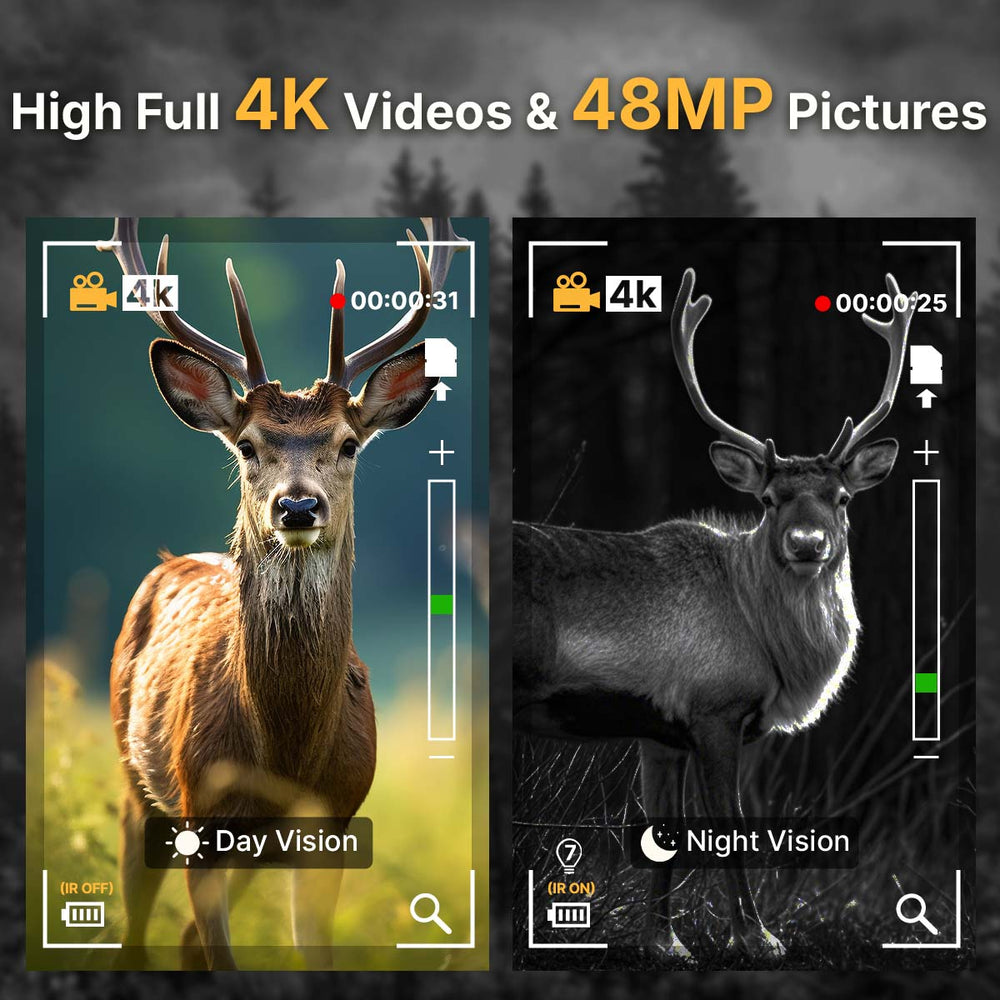
Digital night vision works by combining a digital image sensor with an infrared (IR) illuminator. The device projects invisible infrared light, captures the reflected light, and converts it into a visible image.
Thermal imaging, however, does not require infrared illumination. Instead, it detects differences in heat emitted by living beings and surrounding objects, creating a heat map regardless of visible light conditions.
| Feature | Digital Night Vision | Thermal Imaging |
|---|---|---|
| Imaging method | Infrared illumination + digital sensor | Heat detection |
| Image appearance | Natural grayscale or color | Heat map |
| Identifying animal details | Excellent | Limited |
| Detecting hidden animals | Moderate | Excellent |
| Photo & video recording | Excellent | Available on some models |
| Typical cost | Lower | Higher |
For most outdoor consumers and retailers, digital night vision offers greater versatility because it combines observation, recording, and identification in one device.
How Does Digital Night Vision Work?
Digital night vision binoculars capture reflected infrared light instead of relying solely on natural light, making them effective in complete darkness.
The technology follows a simple process:
- Infrared LEDs illuminate the scene with invisible light.
- The reflected infrared light reaches the CMOS image sensor.
- The processor enhances brightness and contrast.
- The image appears on the digital display.
This allows users to recognize:
- Animal species
- Antler shape
- Tree branches
- Trail conditions
- Human movement
- Terrain details
Unlike thermal imaging, digital night vision allows users to distinguish physical features rather than simply detecting warm objects.
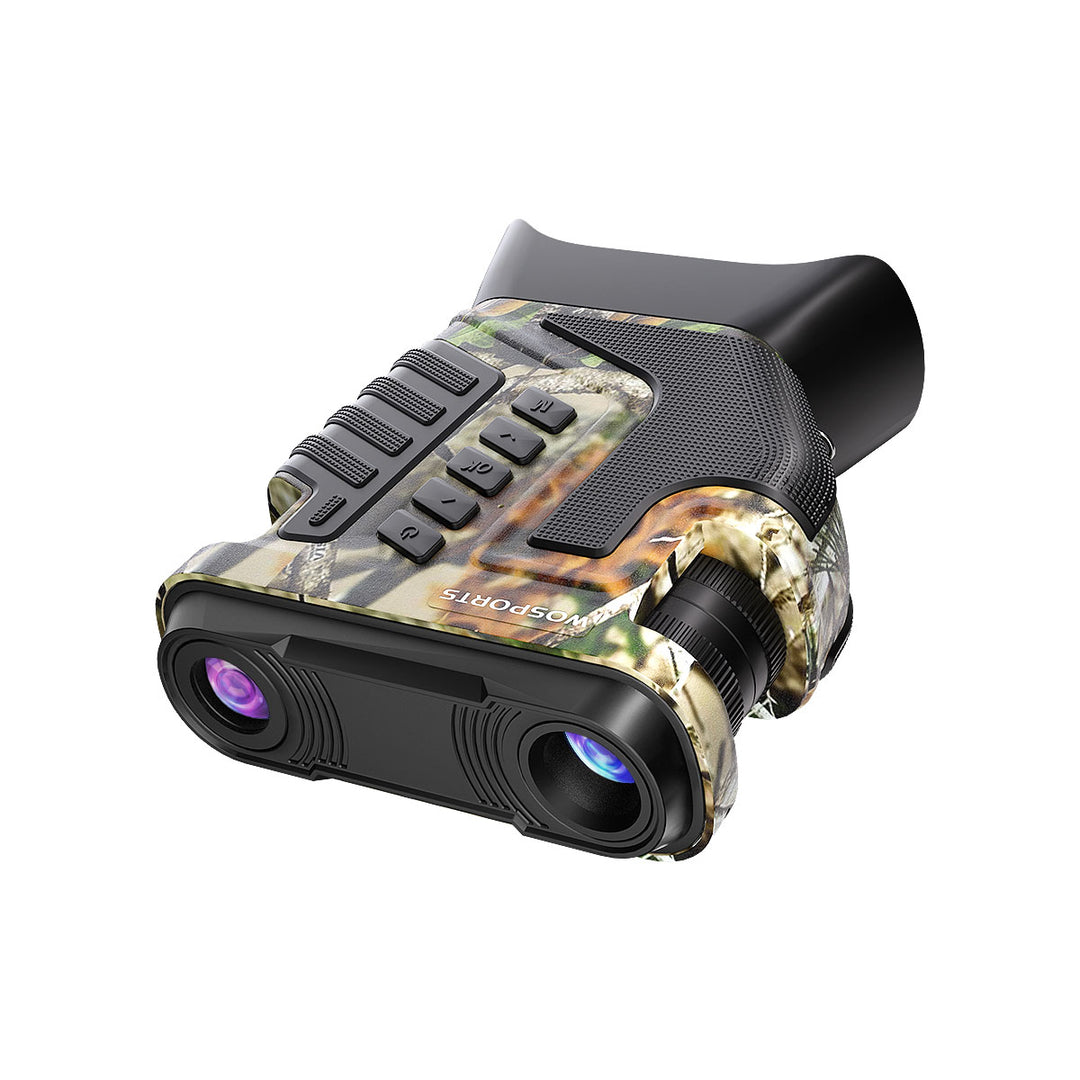
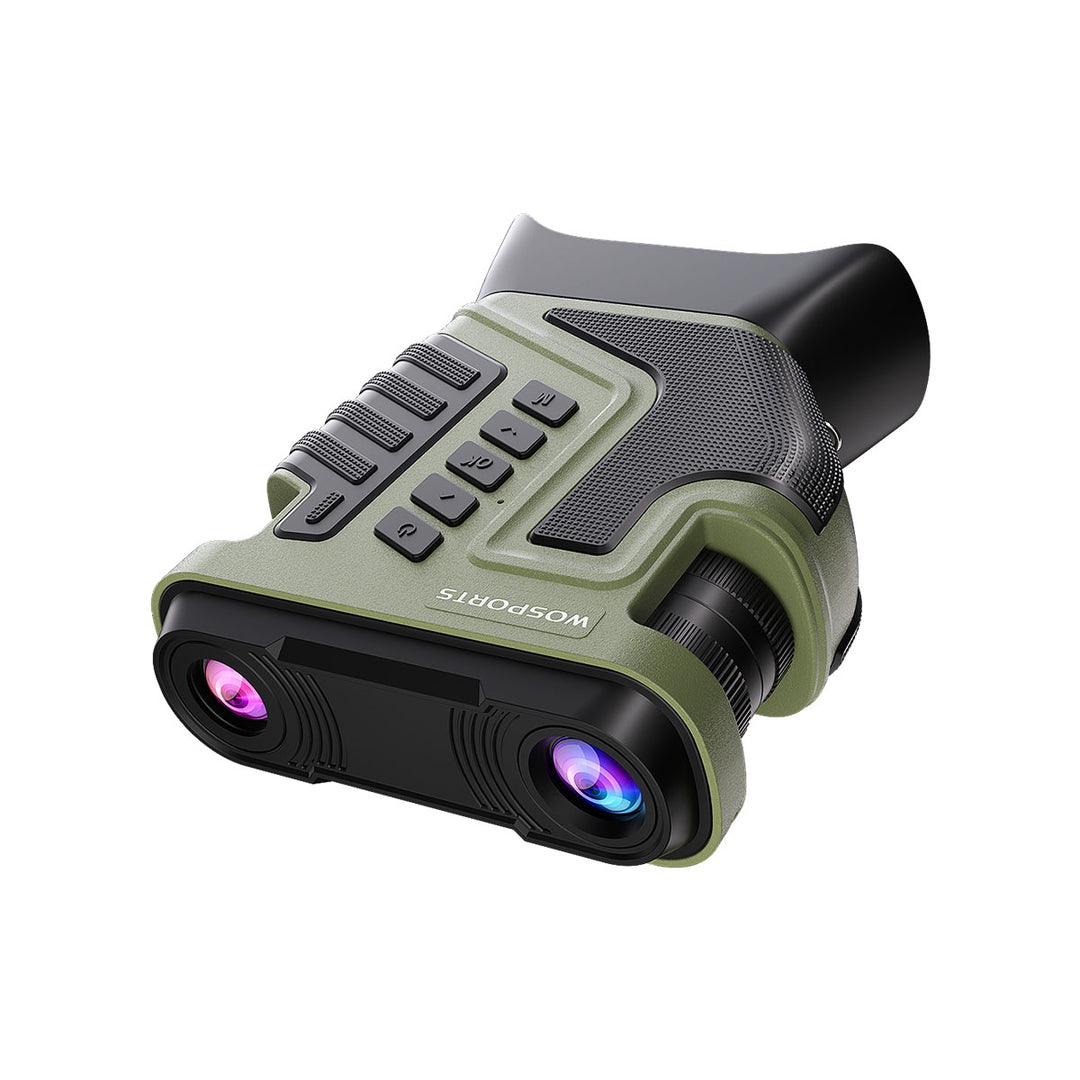
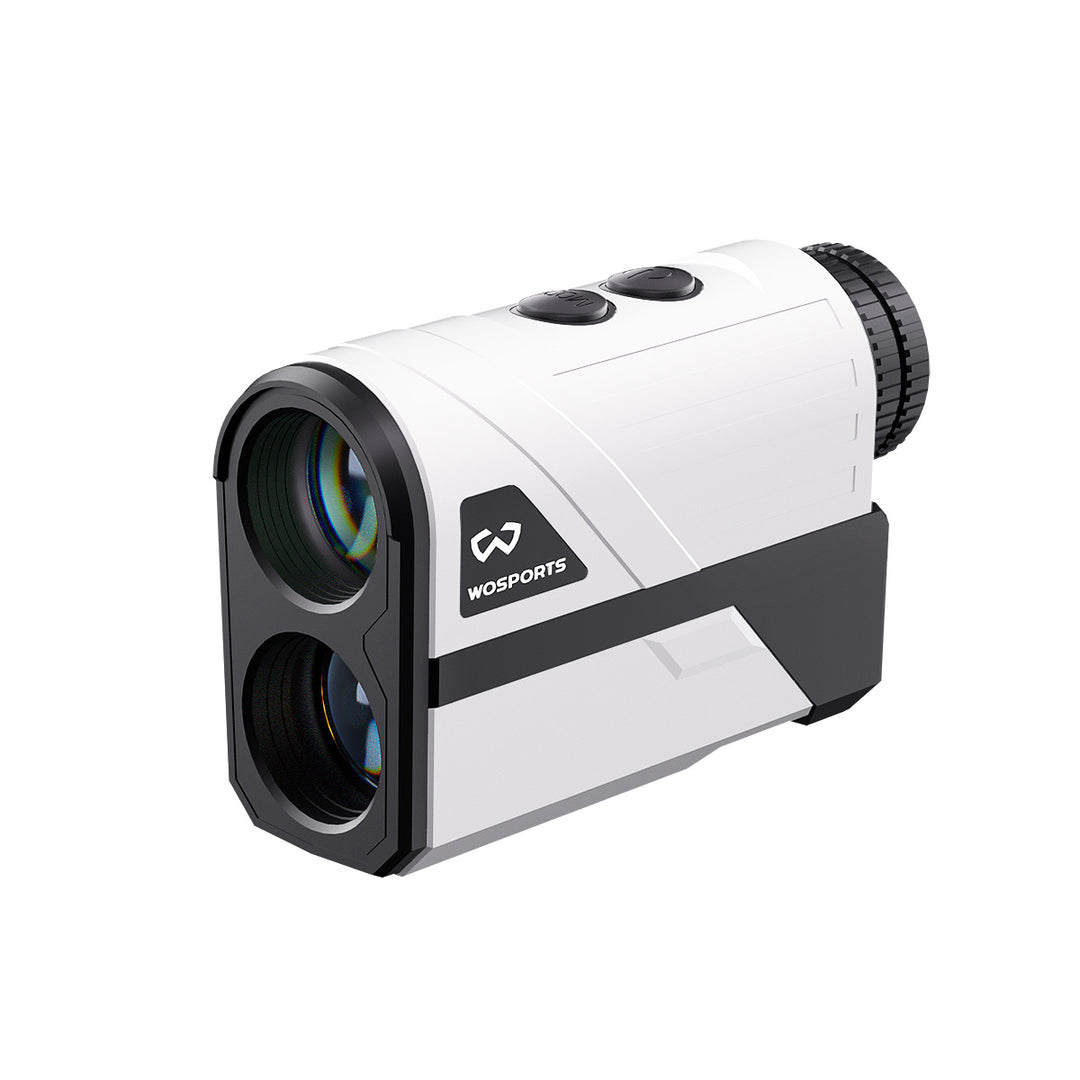
The WOSPORTS NV400 combines:
- 10X optical zoom
- Infrared night vision
- 4K video recording
- 36MP image capture
- Long battery life
These features make it suitable for wildlife observation, hunting, camping, and property monitoring.
When Is Thermal Imaging the Better Choice?
Thermal imaging performs best when detecting heat sources rather than identifying visual details.
Because thermal devices measure temperature differences, they remain effective even when:
- Animals are partially hidden by vegetation
- Smoke reduces visibility
- Light conditions are extremely poor
- Background colors make visual identification difficult
However, thermal images cannot always identify exactly what the object is.
Example:
| Observation Task | Better Choice |
|---|---|
| Detect an animal hidden in bushes | Thermal imaging |
| Identify deer antlers | Digital night vision |
| Record hunting videos | Digital night vision |
| Wildlife photography | Digital night vision |
| Search and rescue detection | Thermal imaging |
According to the U.S. Geological Survey (USGS), different remote sensing technologies provide different types of environmental information, and selecting the appropriate imaging method depends on the monitoring objective.
Source:
U.S. Geological Survey (USGS) – Remote Sensing Technologies
https://www.usgs.gov/core-science-systems/nli/landsat/remote-sensing
Which Technology Is Better for Wildlife Observation?
For most wildlife observation, digital night vision provides more useful visual information because users can identify species, behavior, and environmental details.
Wildlife enthusiasts often want to do more than simply detect movement. They need to recognize:
- Species
- Age
- Physical characteristics
- Behavior
- Habitat conditions
Digital night vision provides these visual details while also allowing users to record high-resolution photos and videos.
According to the National Park Service, observing wildlife without disturbing natural behavior is an important principle of wildlife monitoring and public education.
Source:
National Park Service – Wildlife Viewing Guidelines
https://www.nps.gov/subjects/watchingwildlife/index.htm
Original Market Analysis
Based on current outdoor retail trends, digital night vision products continue to attract broader consumer audiences because they combine multiple functions within one device.
| Customer Segment | Digital Night Vision | Thermal Imaging |
|---|---|---|
| Hunters | ★★★★★ | ★★★★☆ |
| Wildlife observers | ★★★★★ | ★★★☆☆ |
| Campers | ★★★★☆ | ★★☆☆☆ |
| Farm owners | ★★★★☆ | ★★★★☆ |
| Outdoor retailers | ★★★★★ | ★★★☆☆ |
For wholesalers, digital night vision generally appeals to a wider customer base because of its lower entry cost and broader applications.
Why Is NV400 a Practical Choice for Retailers?
Retailers benefit from products that satisfy multiple outdoor activities instead of serving only one specialized purpose.
The WOSPORTS NV400 Night Vision Binoculars support:
- Wildlife observation
- Hunting
- Camping
- Property security
- Outdoor exploration
- Night photography
Its combination of digital night vision, infrared optics, and multimedia recording makes it suitable for both beginner and experienced outdoor users.
For B2B buyers, this versatility helps reduce inventory complexity while serving multiple customer segments.
Customer Case: Outdoor Equipment Retailer
A regional outdoor equipment retailer wanted to expand beyond traditional hunting accessories. Customers increasingly asked for night observation devices suitable for camping and wildlife viewing.
After introducing digital night vision binoculars similar to the WOSPORTS NV400, the retailer reported:
- Increased interest from wildlife photographers
- Growing demand from campers
- More repeat purchases from hunting customers
- Expanded customer demographics beyond hunters
The retailer found that products combining observation and recording features generated more customer engagement than single-purpose optics.
Expert Insight
"Selecting the right optical technology depends on the user's objective. Detection, identification, documentation, and observation often require different imaging approaches rather than a single universal solution."
Source:
U.S. Geological Survey (USGS) – Remote Sensing Overview
https://www.usgs.gov/core-science-systems/nli/landsat/remote-sensing
FAQ
Are digital night vision binoculars better than thermal imaging?
Not universally. Digital night vision is generally better for identifying objects and recording images, while thermal imaging is better for detecting heat sources.
Which technology is better for hunting?
Many hunters prefer digital night vision for identifying game, while thermal imaging is useful for locating animals before identification.
Which option offers better value for retailers?
Digital night vision products usually serve a broader consumer market because they support wildlife observation, camping, hunting, and outdoor recreation.
Can digital night vision work in complete darkness?
Yes. Devices equipped with infrared illuminators, such as the WOSPORTS NV400, can produce clear images in complete darkness.
Conclusion
Digital night vision and thermal imaging are designed for different purposes rather than direct competition. Thermal imaging excels at heat detection, while digital night vision provides superior visual identification, image recording, and overall versatility.
For outdoor retailers, distributors, and wholesale buyers seeking products with broad consumer appeal, digital night vision binoculars represent an excellent balance between performance, affordability, and usability. The WOSPORTS NV400 Night Vision Binoculars combine infrared optics, 10X optical zoom, 4K video recording, and high-resolution imaging, making them a practical solution for wildlife observation, hunting, camping, and outdoor monitoring.
Search
Popular Posts
Recent Posts


Nov 28, 2024
Troubleshooting Common Trail Camera Issues
Jan 10, 2025
Why Does My Trail Camera Stop Working at Night?