How Can Small Businesses Use Night Vision for After-Hours Property Checks?
For a small business with a warehouse, farm, storage yard, campground, workshop, or large outdoor property, after-hours checks can be difficult when visibility drops. Night vision gives small business owners and staff a practical way to inspect outdoor areas, check property boundaries, observe movement, and identify potential issues without relying on bright flashlights.
For small businesses, the value of night vision is not necessarily about replacing a complete security system. It can be a portable tool for quick property checks when someone needs to see what is happening outside after dark.
This also creates a useful opportunity for small outdoor retailers and wholesalers. A single night vision product can serve customers interested in farm monitoring, wildlife observation, camping, hunting, rural property checks, and outdoor work.
What Can Night Vision Do for a Small Business?
Night vision can help small businesses see and inspect outdoor areas when normal visibility is limited. It is particularly useful when employees need to check a property without walking through every dark area.
Common uses include:
- Checking a warehouse or storage yard after closing
- Inspecting gates and fence lines
- Looking across a large farm or rural property
- Checking livestock areas
- Observing wildlife around a property
- Inspecting outdoor equipment or vehicles
- Checking a campground or recreational property
- Looking for unexpected movement before approaching an area
The important distinction is that a handheld night vision device is an observation tool, not a replacement for every type of security equipment. A small business can use it for mobile checks where a fixed camera cannot provide the same flexibility.
For retailers, this makes night vision easier to explain. Instead of selling a device based only on technical specifications, the product can be positioned around a simple customer question: “What do you need to see after dark?”
Why Are After-Hours Property Checks a Practical Use Case?
After-hours property checks often involve large outdoor areas where installing or monitoring multiple fixed cameras is not always practical. A portable night vision device lets one person move between different locations and inspect them from a distance.
For example, a small farm may need to check a barn, pasture entrance, equipment area, and fence line. A warehouse operator may need to look across a loading yard or storage area. A campground operator may want to inspect trails, parking areas, or surrounding outdoor spaces.
This is where night vision can complement existing security measures.
A practical SMB setup may include:
| Business situation | Night inspection use |
|---|---|
| Farm or ranch | Check livestock areas, gates, and fields |
| Warehouse | Inspect loading areas and outdoor storage |
| Workshop | Check vehicles, equipment, and entrances |
| Campground | Observe trails and outdoor areas |
| Rural property | Check fences, gates, and remote sections |
| Outdoor retailer | Demonstrate products for multiple customer uses |
The common factor is simple: the user needs to see farther and more clearly after dark without constantly carrying a flashlight into every area.
What Should Small Businesses Look for in a Night Vision Device?
Small businesses should prioritize usable viewing distance, infrared performance, image clarity, battery life, and ease of operation rather than simply choosing the device with the biggest specification numbers.
This is especially important for small wholesale buyers. A product that looks impressive on a specification sheet but is difficult for ordinary customers to understand can create more questions, returns, and support work.
A practical checklist includes:
- Night vision performance: Can the device produce a usable image in low or zero ambient light?
- Viewing distance: Is the range appropriate for typical property sizes?
- Optical zoom: Can users inspect distant objects without depending entirely on digital enlargement?
- IR adjustment: Can the infrared illumination be adjusted for different distances?
- Battery life: Can it support a reasonable inspection session?
- Display: Can users see the image clearly while checking a property?
- Recording: Can users save photos or video when documentation is useful?
- Portability: Can one person easily carry and operate it?
University of Utah State University Extension guidance on wildlife cameras similarly emphasizes practical factors such as detection distance, battery efficiency, and the usefulness of an onboard viewing screen. Its guidance recommends considering the actual environment rather than simply choosing the longest advertised range.
How Far Does Night Vision Need to See?
The required viewing distance depends on the property, but small businesses should think in terms of usable observation distance, not just the maximum number printed on a product page.
A 100-foot viewing requirement for a compact workshop is very different from checking a 500-foot field boundary. Terrain, vegetation, weather, ambient light, and the size of the object being observed all affect what a user can actually identify.
Oregon State University Extension notes that detection range should be considered together with image quality and the environment. A long detection distance is more useful in an open area than in dense vegetation, where shorter-range observation may be more practical.
This leads to an important purchasing insight for small retailers:
Do not sell “long range” as the entire benefit. Sell the ability to observe the right area clearly.
For a retailer, that distinction also makes product education easier. Customers can match the device to their property instead of assuming that the largest range number automatically means better performance.
How Can Optical Zoom Help During a Night Inspection?
Optical zoom is useful when a small business needs to inspect something at a distance without physically walking closer to it. This can be particularly helpful when checking a far fence line, field edge, gate, vehicle, or movement across an open area.
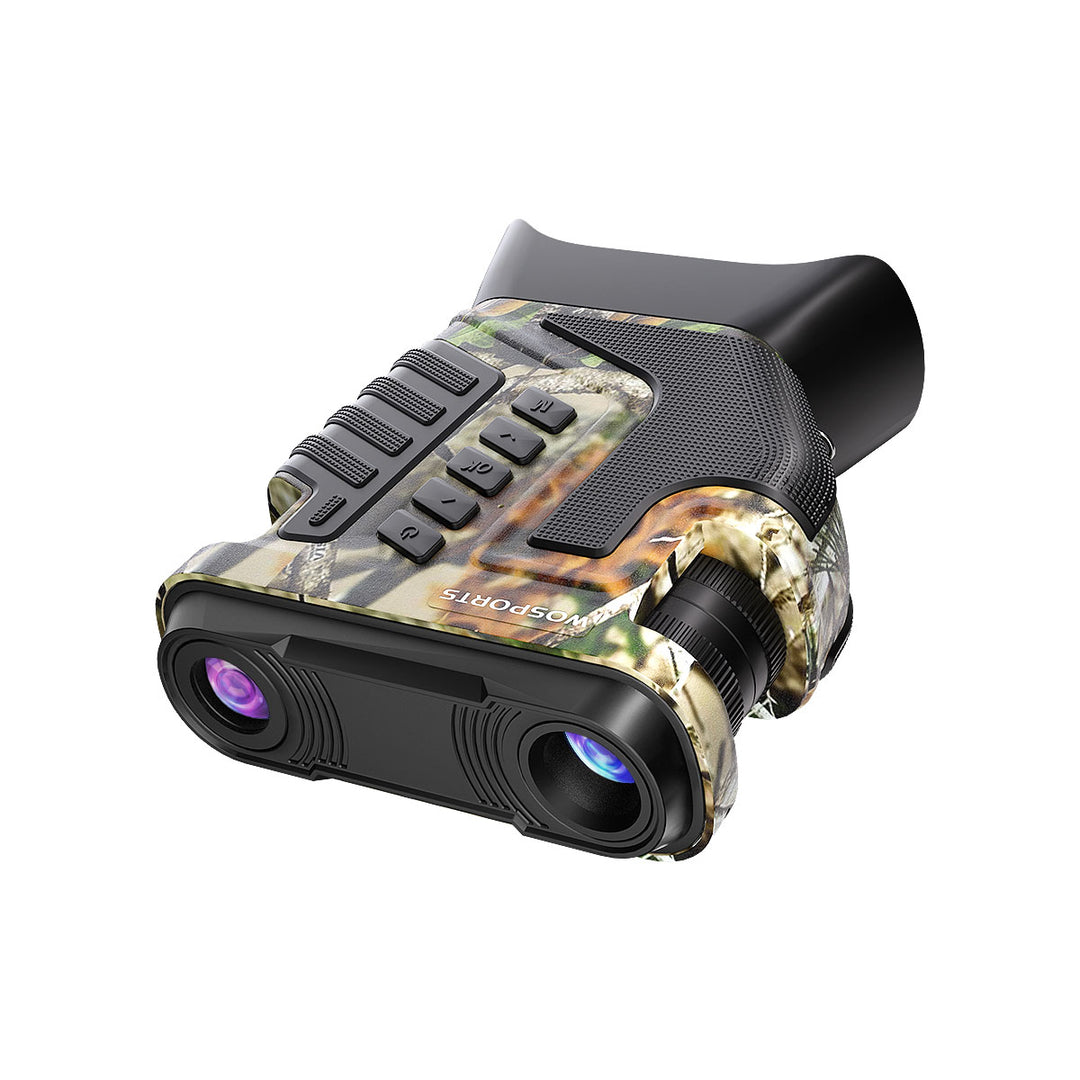
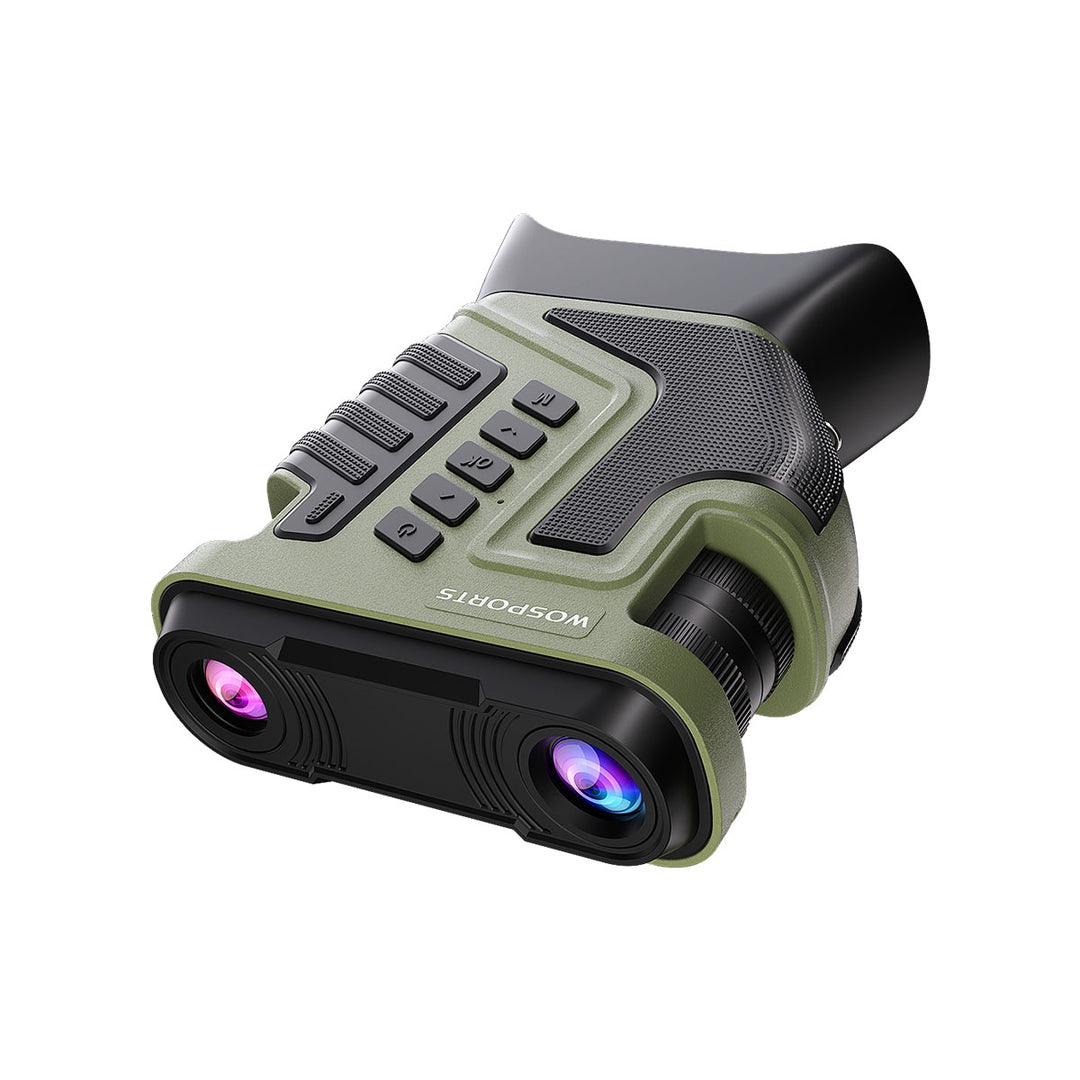
The WOSPORTS NV400 combines 1–10X optical zoom with 1–8X digital zoom, allowing users to adjust magnification depending on the observation distance. It also provides up to 1315 feet of viewing distance under favorable conditions.
For a small business, the practical advantage is flexibility. Someone checking a 50-foot area does not necessarily need the same magnification as someone observing activity several hundred feet away.
The University of Minnesota Extension also explains that magnification and objective size need to be considered together when choosing binoculars. Higher magnification can make an object appear closer, but it can also affect brightness, stability, and portability.
That is why usable magnification matters more than a large zoom number by itself.
How Can Small Businesses Use the WOSPORTS NV400?
The WOSPORTS NV400 is designed for handheld nighttime observation and can fit several SMB use cases where portable visibility matters.
The device combines:
| NV400 feature | Practical use for SMB customers |
|---|---|
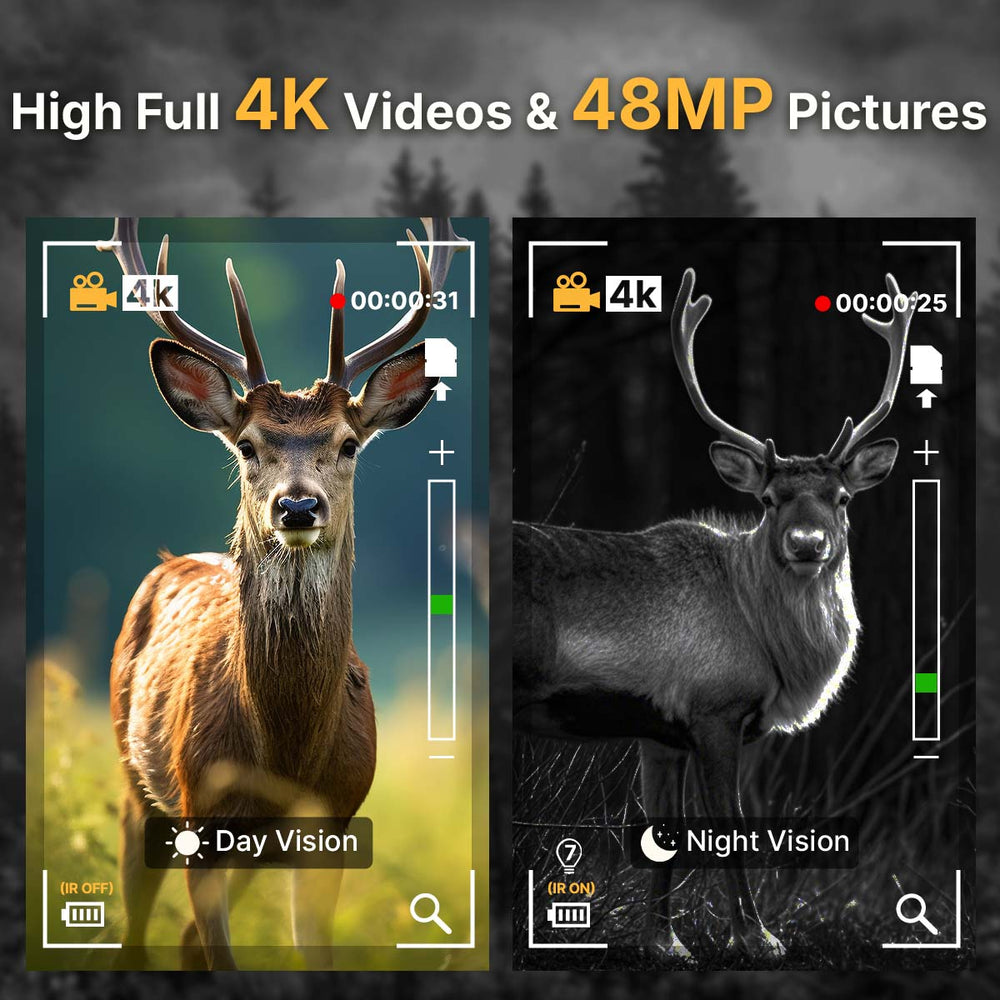
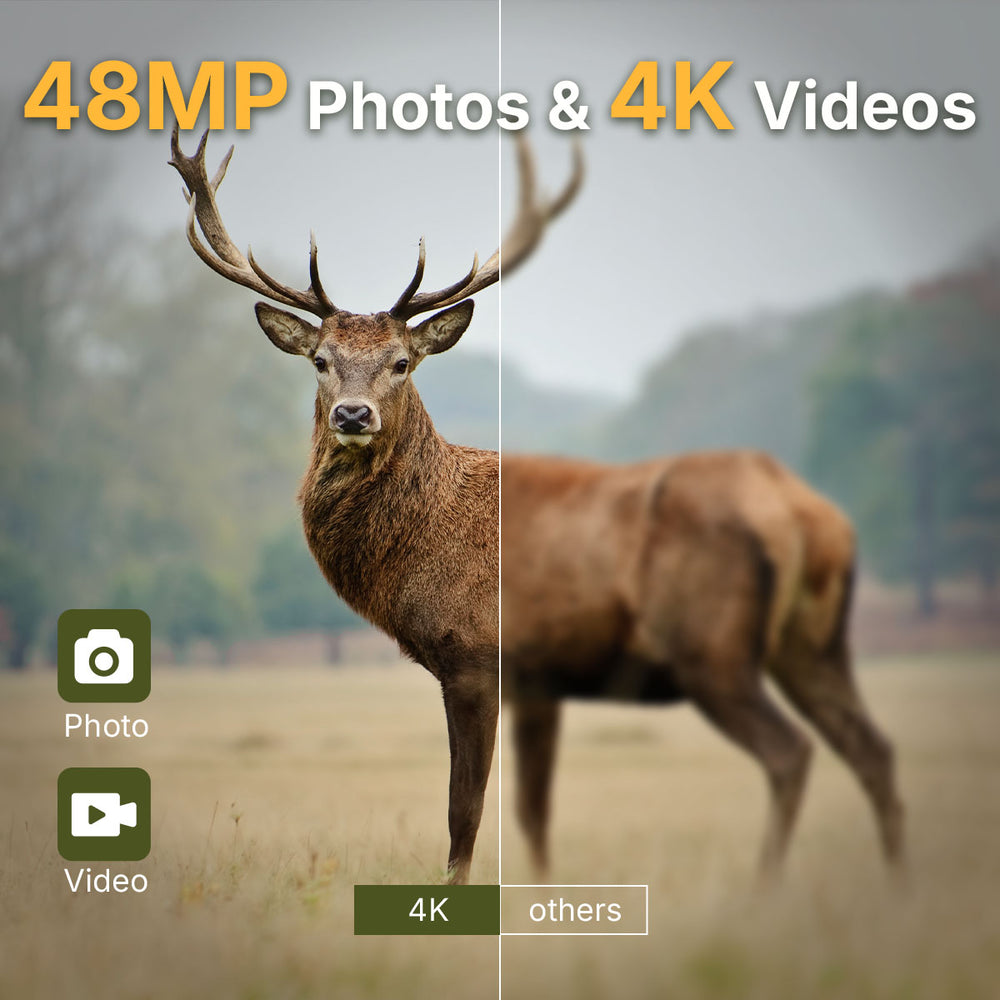
| 4K video | Record nighttime observations |
| 48MP photos | Capture still images for documentation |
| 1–10X optical zoom | Inspect distant objects |
| 1–8X digital zoom | Additional magnification when needed |
| 7-level 850nm IR | Adjust infrared illumination |
| Up to 1315 ft viewing distance | Observe larger outdoor areas |
| 5000mAh rechargeable battery | Support extended field sessions |
| 3-inch HD display | View scenes directly on the device |
| 32GB SD card included | Store photos and videos |
The NV400 is therefore not limited to one customer segment. A retailer can introduce the same product to customers looking for property observation, farm monitoring, wildlife viewing, hunting, camping, or general outdoor night inspection.
That versatility can be particularly useful for small wholesalers that cannot afford to carry a large number of highly specialized SKUs.
What Does a Real NV400 Use Example Look Like?
A publicly documented NV400 use example comes from outdoor creator Moe Sargi, who used the device on his property to observe and record a nighttime wolf encounter.
In a June 24, 2026 video, Sargi described using the NV400 to explore and film at night, including wildlife and activity around his property. The video was sponsored by WOSPORTS, so it should be understood as sponsored product content rather than an independent laboratory test.
The example is still useful for SMB buyers because it demonstrates a practical scenario: the user remained on the property while using portable night vision to observe activity in darkness rather than relying only on normal eyesight.
For retailers, this type of real-world demonstration can also be easier for customers to understand than a specification chart.
The lesson is straightforward:
Night vision becomes more valuable when customers can connect the product to a specific nighttime task.
What Does the Outdoor Market Tell Small Retailers?
The broader outdoor market provides a meaningful customer base for products that support nighttime observation.
The U.S. Fish & Wildlife Service reported that wildlife watchers spent $118.6 billion on equipment in 2022, including binoculars, cameras, clothing, and other wildlife-watching equipment. The same national survey reported 14.4 million hunters age 16 and older.
The Bureau of Economic Analysis also estimated that the U.S. outdoor recreation economy contributed $563.7 billion in value added in 2022, equal to 2.2% of U.S. GDP. Retail trade was the largest industry group within outdoor recreation, contributing $153.6 billion in value added.
For small wholesalers, these figures suggest an important product-positioning opportunity:
Night vision does not have to be sold to only one niche.
A retailer can potentially reach several customer groups with the same inventory:
- Hunting and wildlife customers
- Farm and rural property owners
- Campers and outdoor enthusiasts
- Property owners needing occasional nighttime observation
- Outdoor education and nature groups
- Customers looking for practical outdoor technology
Why Can One Versatile Night Vision Product Help a Small Retailer?
One versatile product can be easier for a small retailer to manage because the same inventory can support several customer needs. This reduces the pressure to stock a separate device for every niche application.
For example, a retailer could create different product messages without changing the underlying SKU:
| Customer | Possible product positioning |
|---|---|
| Farm owner | “Check your property and livestock after dark.” |
| Rural property owner | “See farther when checking your property at night.” |
| Hunter | “Observe wildlife in low-light conditions.” |
| Camper | “Explore your surroundings after sunset.” |
| Outdoor enthusiast | “Capture nighttime wildlife and outdoor activity.” |
This approach matters because small businesses generally have less room for slow-moving inventory than large retailers.
The current e-commerce environment also supports clear, use-case-based product education. The U.S. Census Bureau estimated U.S. retail e-commerce sales at $340.2 billion in Q2 2026, up 12.2% from Q2 2025 and representing 17.1% of total retail sales.
For a small online retailer, this makes product explainability increasingly important: customers need to understand what a device does before they decide whether it belongs in their cart.
How Should a Small Business Plan a Night Inspection?
A simple night inspection routine can make a handheld night vision device much more useful. The goal is not to walk randomly around the property but to check the areas where nighttime activity matters most.
A practical routine is:
- Identify priority areas. Start with gates, entrances, equipment areas, livestock spaces, or remote sections.
- Check from a safe position. Use distance to observe before approaching a dark area.
- Adjust IR and zoom. Match the settings to the observation distance.
- Scan systematically. Move across the area instead of repeatedly checking the same spot.
- Record unusual activity when necessary. Photos or video can help document what was observed.
- Keep a simple inspection record. Note the date, time, location, and anything unusual.
The point is to turn night vision from a gadget into a repeatable inspection tool.
For property owners, this can make after-hours checks faster and more consistent. For retailers, it also provides a straightforward way to explain the product without overpromising what night vision can do.
Night Vision vs. a Flashlight for Property Checks
Night vision and flashlights serve different purposes. A flashlight is useful for illuminating a nearby area, while night vision allows users to observe without flooding the entire scene with visible light.
| Task | Flashlight | Night vision |
|---|---|---|
| Close-up inspection | Strong | Useful |
| Looking across an open field | Limited | Stronger fit |
| Checking distant movement | Limited | Stronger fit |
| Lighting up an object | Strong | Not the primary purpose |
| Recording nighttime activity | Usually requires another device | Built-in on NV400 |
| Hands-free permanent monitoring | Not designed for it | Not designed for it |
| Mobile observation | Yes | Yes |
The best approach for many small businesses is not to treat the two as competing products. A flashlight can handle close-range work, while night vision can help with distance, low-light observation, and documentation.
This distinction is also useful for B2B retailers because it creates a clear product category rather than positioning night vision as simply an expensive flashlight.
What Should Small Wholesale Buyers Check Before Ordering?
Small wholesale buyers should test the product against the situations their customers are most likely to encounter before committing to a larger inventory order.
A practical test checklist includes:
- Test viewing in complete darkness
- Check several distances rather than one advertised distance
- Test optical zoom at different levels
- Adjust IR levels for near and far objects
- Record short videos
- Take still photos
- Check battery performance during extended use
- Test the display and controls
- Confirm included accessories
- Check packaging and user instructions
- Review warranty and after-sales support
This approach helps a retailer answer real customer questions before the product reaches the shelf.
For small businesses, that can be more valuable than simply comparing specification sheets. A product that is easy to demonstrate and explain can also be easier for sales staff to recommend.
Frequently Asked Questions
Can a small business use night vision for property checks?
Yes. Night vision can be used as a portable observation tool for checking farms, warehouses, storage yards, gates, fences, outdoor equipment, and other areas after dark. It should be viewed as an observation aid rather than a complete replacement for a fixed security system.
Is night vision useful for large properties?
It can be. Viewing distance becomes more important as property size increases, but actual performance depends on terrain, weather, vegetation, lighting conditions, and the size of the object being observed.
Is the WOSPORTS NV400 suitable for night inspection?
The NV400 is designed for low-light and complete-darkness observation and includes adjustable IR, 1–10X optical zoom, 4K video, 48MP photos, a 5000mAh rechargeable battery, and a 3-inch display. WOSPORTS lists a viewing distance of up to 1315 feet under favorable conditions.
Can small retailers sell night vision to more than one customer group?
Yes. A versatile digital night vision product can be positioned for hunting, wildlife observation, farm monitoring, camping, outdoor recreation, and property observation. This can allow a small retailer to serve multiple customer segments without carrying a separate product for every use case.
What matters more: maximum range or image quality?
Both matter, but maximum range alone does not tell you how useful the image will be. Oregon State University Extension recommends considering detection range together with image quality and the environment in which the device will be used.
Final Takeaway
For a small business, night vision is most useful when it solves a specific nighttime visibility problem: checking a property, scanning a field, inspecting a fence line, observing livestock, or looking across an outdoor work area.
The strongest B2B opportunity is not simply selling a device with a long specification list. It is offering a product that retailers can explain through everyday situations and sell to more than one customer group.
The WOSPORTS NV400 fits this approach with long-distance viewing, adjustable infrared illumination, optical zoom, photo and video recording, and a rechargeable battery. For small wholesalers and outdoor retailers, its broader use cases can make it easier to position the same inventory across property checks, farm monitoring, wildlife observation, hunting, and outdoor recreation.
For businesses considering a night inspection tool, the basic question is simple:
What part of your property still needs to be checked after the sun goes down?
That is where night vision can become a practical business tool rather than just another piece of outdoor gear.
Search
Popular Posts
Recent Posts


Nov 28, 2024
Troubleshooting Common Trail Camera Issues
Jan 10, 2025
Why Does My Trail Camera Stop Working at Night?