Do Small Farms Really Need Night Vision Binoculars?
Yes, night vision binoculars can be useful for small farms, especially when livestock, pastures, barns, gates, or other outdoor areas need to be checked after dark. They are not a replacement for every farm security or livestock-monitoring system, but they can give farmers a portable way to observe animals and property before deciding whether a closer inspection is necessary.
For small farms, the value is straightforward: see what is happening at night without immediately walking into a dark pasture or outdoor area.
This makes night vision relevant to everyday tasks such as livestock monitoring, pasture observation, fence checks, wildlife observation, and nighttime property inspections.
For small outdoor retailers and wholesalers, the same versatility creates a broader opportunity. One pair of night vision binoculars can potentially serve farmers, ranchers, hunters, wildlife observers, and rural property owners instead of being limited to one niche.
Why Would a Small Farm Need Night Vision?
A small farm may benefit from night vision when animals and property are spread across areas that are difficult to check after sunset. A portable device allows the farmer to scan an area first and decide whether a closer inspection is actually needed.
Common situations include:
- Checking livestock in a pasture after dark
- Looking toward a barn or animal shelter
- Checking gates and fence lines
- Observing unusual animal movement
- Looking across fields or wooded areas
- Checking equipment stored outdoors
- Watching for wildlife around livestock areas
- Investigating an unfamiliar sound at night
The market itself is large enough to make small farms a relevant customer segment for outdoor retailers. According to the USDA Economic Research Service, small family farms accounted for about 86% of all U.S. farms in 2024. These farms operated 40% of U.S. agricultural land and generated 17% of total agricultural production value.
Source: USDA Economic Research Service, “Small family farms accounted for 86 percent of U.S. farms and generated 17 percent of the value of production in 2024,” May 28, 2026.
https://ers.usda.gov/data-products/charts-of-note/114161
For B2B sellers, that matters because the small-farm market is not one narrow niche. It includes a large number of operations with different livestock, land sizes, and nighttime monitoring needs.
How Can Night Vision Help With Livestock Monitoring?
Night vision can make livestock monitoring easier by allowing farmers to observe animals from a distance before approaching them. This can be useful when animals are spread across a pasture, gathered near a shelter, or behaving differently from their normal routine.
Livestock monitoring is not simply about finding an animal. Farmers may also want to notice changes in location, behavior, group activity, or the condition of the surrounding area.
A practical nighttime check might include:
| Area | What the farmer may check |
|---|---|
| Pasture | Animal location and movement |
| Barn | Unusual activity or animals gathering |
| Calving area | Changes that may require closer observation |
| Fence line | Animals near or outside the boundary |
| Water area | Animal activity and access |
| Equipment area | Unexpected movement or activity |
Penn State Extension recommends regular observation of beef cattle because routine observation can help producers notice changes in animal behavior and surroundings before problems become more serious. Its guidance specifically notes that pasture cattle may receive less frequent observation than cattle kept in pens or dry lots.
Source: Penn State Extension, “Observing Beef Cattle Pastures and Pens,” updated March 30, 2026.
https://extension.psu.edu/observing-beef-cattle-pastures-and-pens
The practical takeaway is simple: night vision does not replace livestock management; it can make visual observation easier when natural light is no longer available.
Can Night Vision Help During Calving Season?
Night vision can be useful as an observation aid during calving season, particularly when cattle are kept outdoors or in areas that are difficult to monitor continuously. It allows a producer to observe from a distance before deciding whether closer attention is needed.
This is important because a handheld night vision device should not be marketed as an automated calving-monitoring system. It is better understood as a tool that supports normal observation.
Penn State Extension's guidance on predicting calving time emphasizes the importance of combining monitoring methods with farm personnel rather than relying on one technology alone.
Source: Penn State Extension, “Predicting Calving Time: What Are Your Options?”
https://extension.psu.edu/predicting-calving-time-what-are-your-options/
For a small farm without sophisticated monitoring infrastructure, the practical role of night vision is therefore fairly simple: observe first, then decide whether to approach.
Why Is Distance Important for Livestock Monitoring?
Distance matters because approaching livestock can change their behavior. Observing animals from farther away can sometimes provide useful information before the farmer enters the animals' immediate space.
This is particularly relevant with cattle. Oklahoma State University Extension explains that cattle have a flight zone, or personal space, and that cattle may move when a person enters that zone. The size of the flight zone can vary substantially depending on the animal and situation.
For range cattle, Oklahoma State University notes that the flight zone can extend as far as 300 feet.
Source: Oklahoma State University Extension, “Cattle Handling Safety in Working Facilities.”
https://extension.okstate.edu/fact-sheets/cattle-handling-safety-in-working-facilities.html
This gives long-distance observation a practical role. A farmer may be able to check where animals are located without immediately walking into the herd.
For night vision binoculars, that means retailers should look beyond maximum range claims and consider:
- Image clarity at useful distances
- Optical zoom
- Infrared illumination
- Ease of focusing
- Battery capacity
- Ease of operation in the field
How Far Should Night Vision Binoculars See on a Small Farm?
There is no single viewing distance that fits every small farm. A compact property may only require short-range observation, while a farm with open pasture may benefit from substantially longer viewing capability.
The better question is not “How far can it see?” but “How far away can I still identify what I need to check?”
For example:
| Farm situation | Observation goal |
|---|---|
| Small barnyard | Identify animals and movement |
| Small pasture | Check animal location |
| Open field | Observe distant livestock |
| Fence line | Look for movement or animals near the boundary |
| Larger rural property | Scan distant areas before approaching |
This distinction is useful for B2B buyers because extreme range numbers can create unrealistic customer expectations.
A night vision product with useful infrared illumination and optical magnification may be more practical than a device that advertises an impressive maximum range but provides limited usable detail at that distance.
What Makes the WOSPORTS NV400 Useful for a Small Farm?
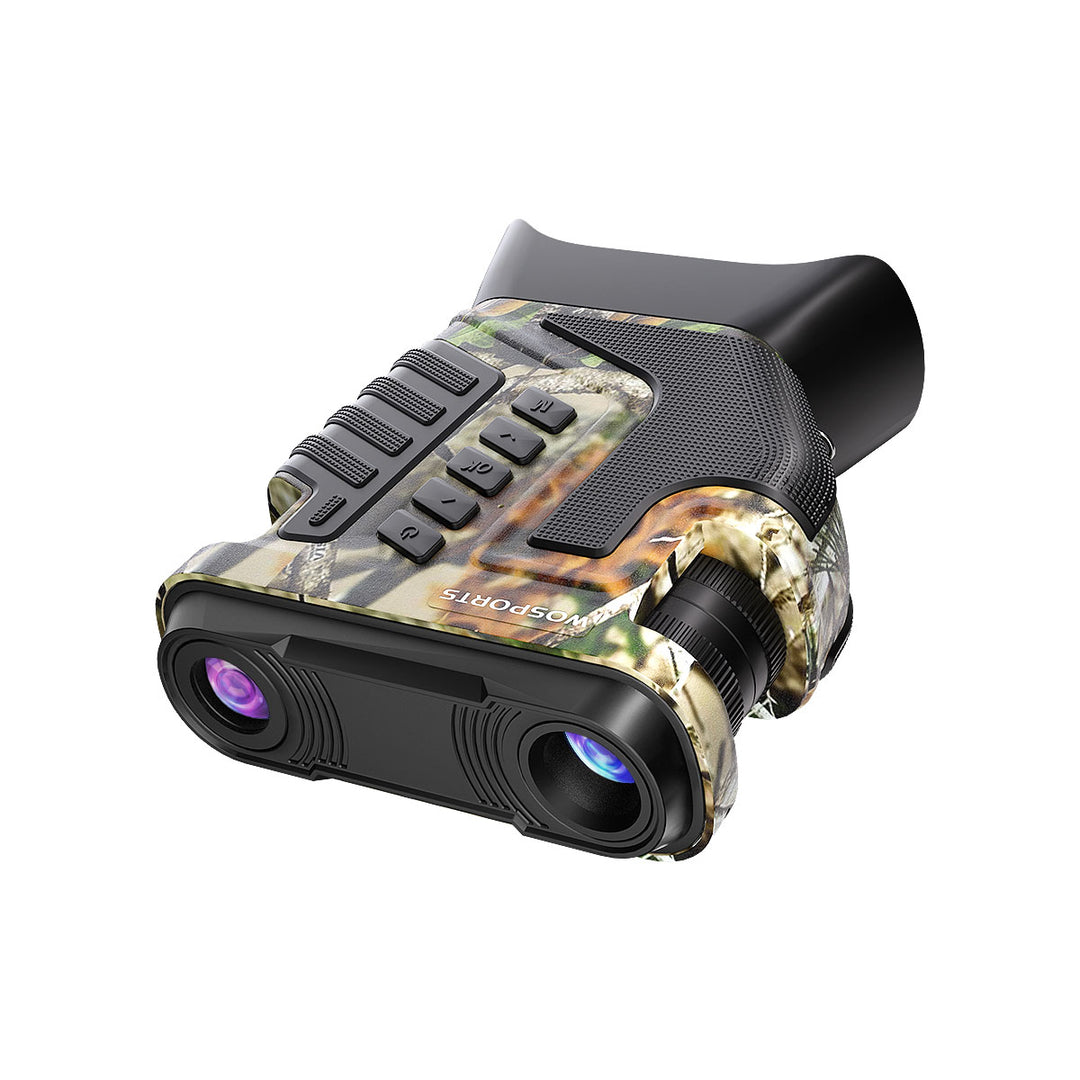
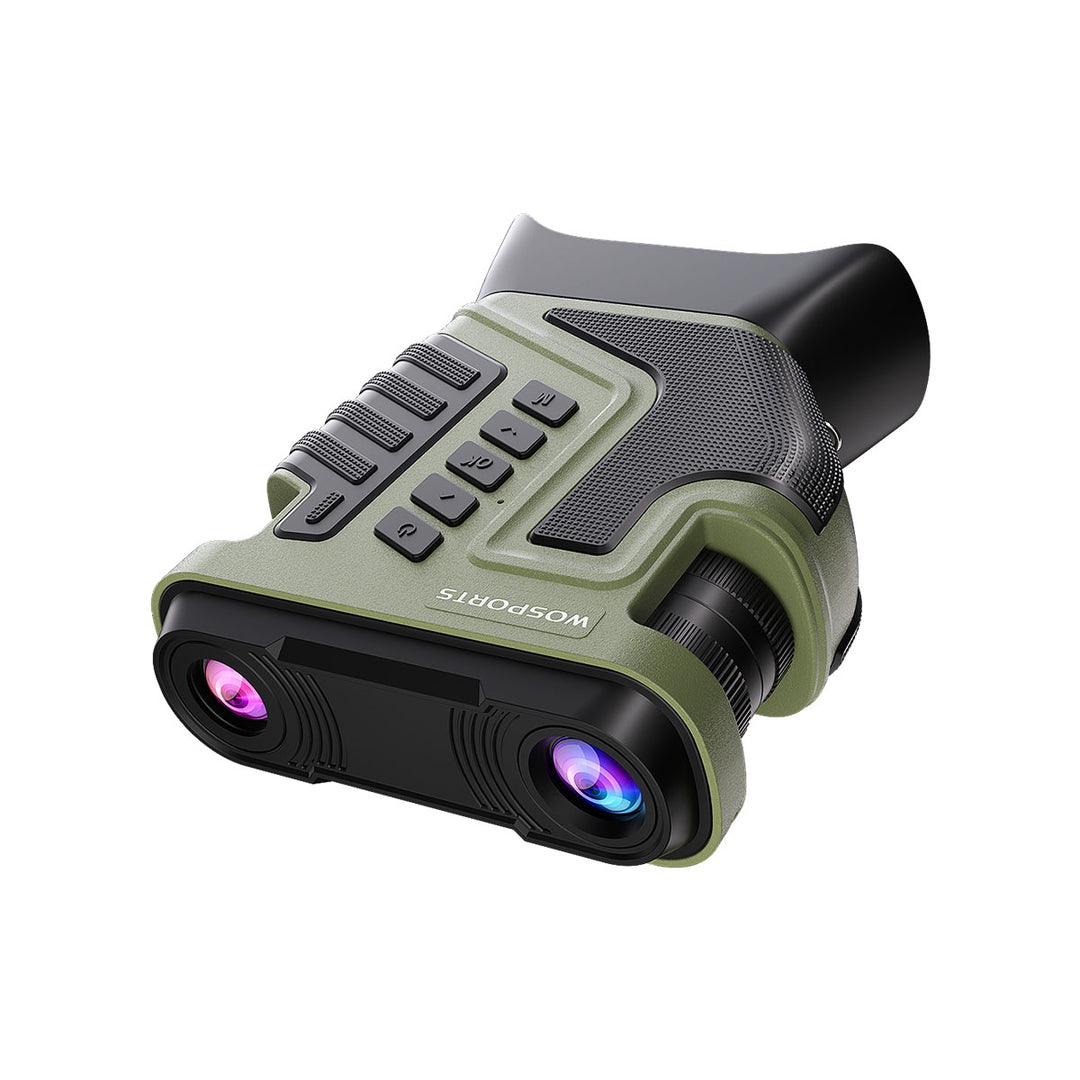
The WOSPORTS NV400 combines long-distance observation, optical zoom, infrared illumination, and recording functions in one portable device, making it suitable for farmers who need to observe livestock or property after dark.
Key features include:
| NV400 feature | Potential farm use |
|---|---|
| 1–10X optical zoom | Observe animals at different distances |
| 1–8X digital zoom | Additional magnification when needed |
| Up to 1315 ft viewing distance* | Scan larger outdoor areas |
| 7-level 850nm IR | Adjust infrared illumination |
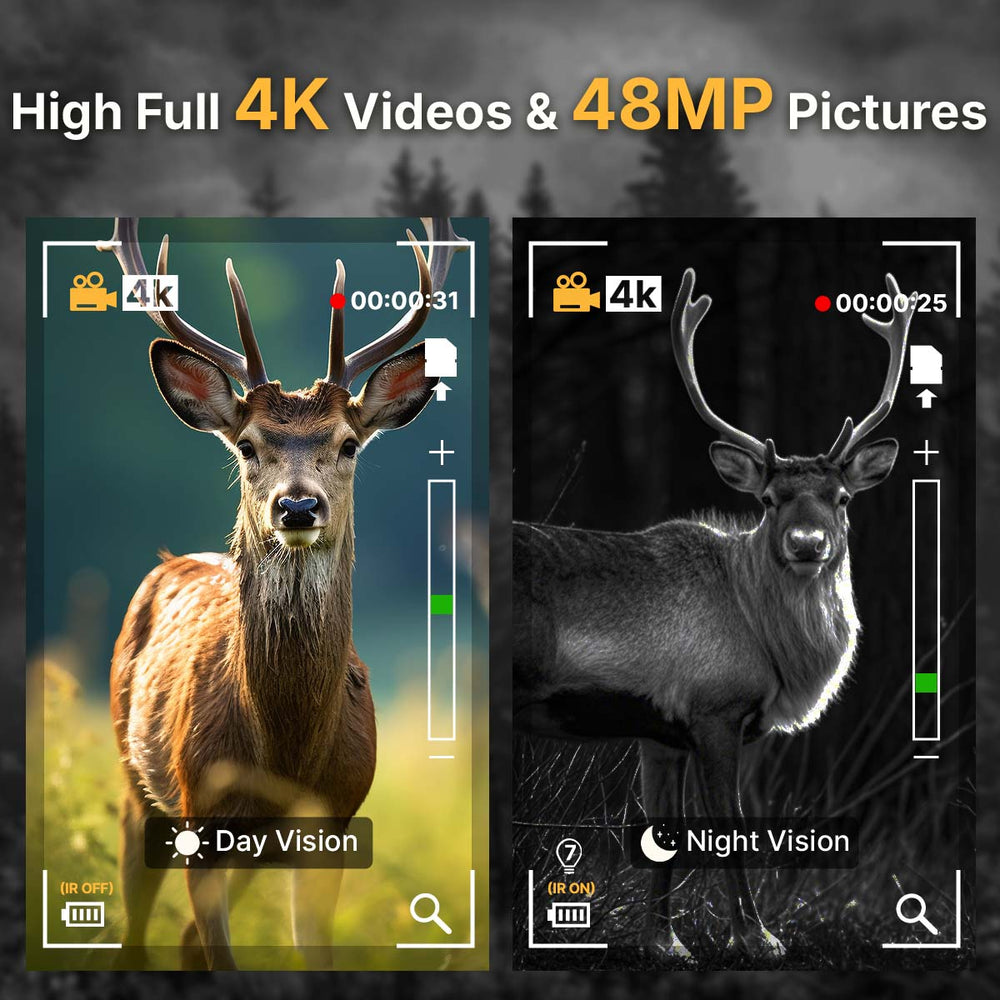
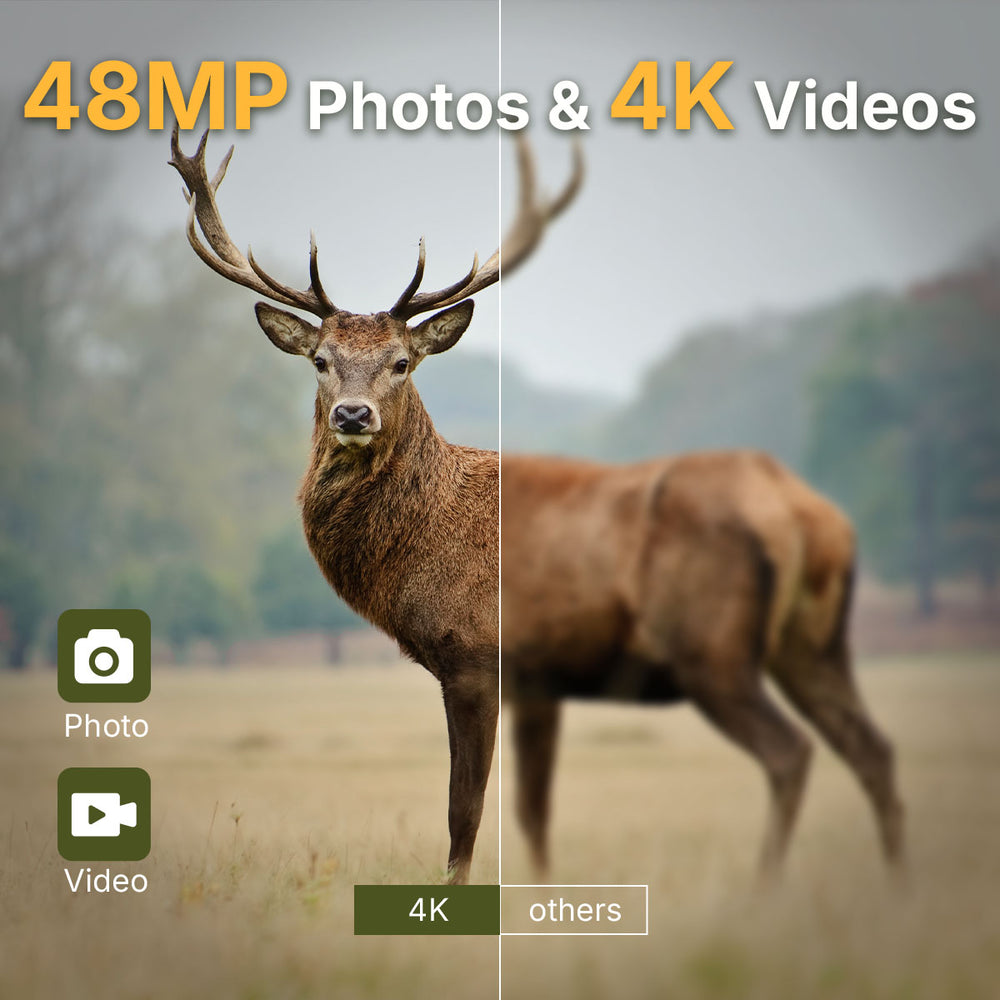
| 4K video | Record nighttime observations |
| 48MP photos | Capture still images |
| 3-inch HD display | Review observations directly |
| 5000mAh rechargeable battery | Support longer field sessions |
| 32GB SD card included | Store photos and video |
*Actual viewing performance depends on conditions such as terrain, weather, target size, and ambient conditions.
The 1–10X optical zoom is particularly relevant for farm use. A farmer checking an area close to a barn may use lower magnification, while a distant pasture or fence line may require more.
Source: WOSPORTS, “NV400 Night Vision Binoculars.”
https://wosports.com/products/nv400-night-vision-binoculars
The goal is not to turn the NV400 into a specialized farming device. Its broader value is that the same night vision binoculars can support several outdoor observation tasks.
Can One Night Vision Product Serve Different Farm Customers?
Yes. A versatile night vision product can potentially serve several rural customer groups without requiring a retailer to stock a separate device for every application.
A retailer could position the same product differently depending on the customer:
| Customer | Primary use |
|---|---|
| Small farm owner | Livestock monitoring |
| Rancher | Pasture observation |
| Horse owner | Animal and property checks |
| Hunter | Wildlife observation |
| Rural property owner | Nighttime property checks |
| Camper | Outdoor observation |
| Wildlife enthusiast | Nocturnal wildlife viewing |
This versatility matters for small wholesalers because carrying highly specialized inventory can be difficult when demand is fragmented.
The USDA reports that 86% of U.S. farms were small family farms in 2024, while small family farms operated 40% of U.S. agricultural land.
Source: USDA Economic Research Service, “Small family farms accounted for 86 percent of U.S. farms and generated 17 percent of the value of production in 2024,” May 28, 2026.
https://ers.usda.gov/data-products/charts-of-note/114161
From a B2B perspective, this suggests a useful positioning strategy: sell one versatile night vision product across several rural and outdoor customer groups rather than creating a separate product story for every niche.
What Should Farmers Look for in Night Vision Binoculars?
Farmers should prioritize practical nighttime performance, viewing distance, optical zoom, battery life, and ease of operation. The right specifications depend on how the device will actually be used on the property.
A practical buying checklist includes:
Night vision performance
The device should provide a usable image in low light and complete darkness with infrared illumination.
Optical zoom
Optical zoom can help users inspect distant animals without depending entirely on digital enlargement.
Viewing distance
Choose a useful range that matches the property's actual layout rather than simply selecting the largest advertised number.
Battery capacity
Nighttime livestock checks can take longer than expected, especially when several areas need to be inspected.
Display
A built-in display makes it easier to review what is being observed without connecting another device.
Recording
Photo and video functions can help farmers document unusual observations or review activity later.
For small wholesalers, these same features make the product easier to explain. Instead of presenting a long specification list, retailers can connect each feature to a specific farm task.
Is Night Vision Better Than a Flashlight for Livestock Monitoring?
Night vision and flashlights serve different purposes. A flashlight is useful when a farmer needs to illuminate an area nearby, while night vision can help with observation before approaching.
| Task | Flashlight | Night vision binoculars |
|---|---|---|
| Check something nearby | Strong | Useful |
| Scan a distant pasture | Limited | Better suited |
| Observe animals before approaching | Limited | Better suited |
| Illuminate a work area | Strong | Not its main purpose |
| Record nighttime observations | Usually requires another device | Available on NV400 |
| Mobile observation | Yes | Yes |
The practical approach is often to use both.
A farmer can use night vision to scan a pasture from a distance and then take a flashlight when a closer inspection is actually necessary.
This is also a useful way for retailers to explain the category: night vision is an observation tool, not simply a more expensive flashlight.
What Does Cattle Behavior Tell Us About Nighttime Observation?
Cattle behavior is one reason distance-based observation can be useful. Oklahoma State University Extension explains that cattle respond to changes in their flight zone and may move when a person enters that space.
The flight zone varies significantly. Oklahoma State University notes that it can range from roughly 5 feet to more than 25 feet for feedlot cattle and up to 300 feet for range cattle.
Source: Oklahoma State University Extension, “Cattle Handling Safety in Working Facilities.”
https://extension.okstate.edu/fact-sheets/cattle-handling-safety-in-working-facilities.html
This does not mean farmers should use night vision instead of physically checking livestock. Instead, it highlights why a farmer may sometimes benefit from observing an animal before approaching it.
For B2B product positioning, this is a stronger argument than simply saying that a night vision device has “long range.” The benefit is connected to an actual farm behavior: observe first, approach when necessary.
What Does a Real NV400 Use Example Tell Us?
A publicly documented NV400 use example shows how the device can be used for nighttime observation on private property. Outdoor creator Moe Sargi used the NV400 while exploring his property at night and recorded a wolf encounter.
This example demonstrates a practical use of portable night vision: observing nighttime activity without relying on normal eyesight.
However, it should be described accurately. This was sponsored creator content, not an independent agricultural study or a verified small-farm customer case.
For B2B buyers, the example is still useful because it shows how a portable night vision device can be used in a real outdoor environment where nighttime visibility is limited.
Source: WOSPORTS, NV400 product content and published NV400 video featuring Moe Sargi.
The broader lesson is that the product does not need to be limited to one agricultural task. Livestock observation, wildlife viewing, property checks, hunting, and outdoor recreation can all use the same basic nighttime visibility capability.
Why Is the Small-Farm Market Interesting for Outdoor Retailers?
The small-farm segment is interesting because it combines a large number of individual operations with diverse outdoor equipment needs. Night vision can sit at the intersection of agriculture, rural property management, wildlife observation, and outdoor recreation.
The USDA reports that small family farms represented 86% of U.S. farms in 2024, while operating 40% of agricultural land.
Source: USDA Economic Research Service, “Small family farms accounted for 86 percent of U.S. farms and generated 17 percent of the value of production in 2024,” May 28, 2026.
https://ers.usda.gov/data-products/charts-of-note/114161
The broader outdoor market is also substantial. The U.S. Bureau of Economic Analysis reported that the outdoor recreation economy generated $563.7 billion in value added in 2022, equal to 2.2% of U.S. GDP. Retail trade was the largest industry group, contributing $153.6 billion in value added.
Source: U.S. Bureau of Economic Analysis, “Outdoor Recreation Satellite Account, U.S. and States, 2022,” November 17, 2023.
https://www.bea.gov/news/2023/outdoor-recreation-satellite-account-us-and-states-2022
For small wholesalers, the takeaway is not that every farm needs night vision. It is that a versatile outdoor product can potentially reach multiple overlapping customer groups.
How Should Small Wholesalers Position Night Vision for Farm Customers?
Small wholesalers should sell the use case before the specification. Farmers are more likely to understand “check livestock across the pasture after dark” than a long list of infrared and zoom specifications.
Useful positioning angles include:
- Livestock monitoring after dark
- Pasture observation
- Nighttime farm checks
- Distant animal observation
- Fence-line checks
- Wildlife observation around the farm
- Rural property monitoring
The WOSPORTS NV400 fits these use cases with optical zoom, adjustable IR, long-distance viewing, recording capability, and a rechargeable battery.
For retailers, another advantage is inventory flexibility. The same product can be introduced to farm customers and later marketed to hunting, wildlife, camping, or outdoor customers.
That can be valuable for small wholesale buyers that prefer products with several clearly understandable applications instead of highly specialized equipment.
Do Small Farms Really Need Night Vision Binoculars?
Not every small farm needs night vision binoculars, but they can be a practical addition when livestock or property must be checked regularly after dark. The strongest use cases are farms with outdoor livestock, larger pastures, remote barns, difficult-to-access areas, or frequent nighttime observation needs.
A simple decision checklist is:
| Farm situation | Could night vision help? |
|---|---|
| Regular nighttime livestock checks | Yes |
| Livestock spread across pasture | Often useful |
| Large or remote property | Often useful |
| Frequent fence-line checks | Potentially useful |
| Mostly indoor livestock | Less necessary |
| Very small property with good lighting | May be unnecessary |
The key question is not whether the farm is technically “small.” It is whether nighttime visibility is creating a recurring operational problem.
For B2B retailers and small wholesalers, that distinction also makes the category easier to sell. Night vision binoculars are not only hunting products. They can be practical tools for rural customers who need to see, observe, and document activity after dark.
FAQ: Night Vision Binoculars for Small Farms
Can night vision binoculars be used for livestock monitoring?
Yes. Night vision binoculars can help farmers observe livestock in pastures, barns, and other outdoor areas after dark. They work best as an observation aid alongside normal livestock management practices.
Can night vision help with cattle at night?
Yes. It can help farmers observe cattle from a distance before approaching. This can be useful when cattle are spread across pastures or when nighttime visibility is poor.
Are night vision binoculars useful for small farms?
They can be useful when farmers regularly perform nighttime livestock or property checks. Farms with outdoor animals, larger fields, remote barns, or frequent nighttime activity may get more practical value from them.
How far can the WOSPORTS NV400 see?
WOSPORTS lists the NV400's viewing distance at up to 1315 feet under favorable conditions. Actual viewing and identification distance can vary depending on terrain, weather, target size, and other environmental conditions.
Does the NV400 work in complete darkness?
Yes. The NV400 uses adjustable 850nm infrared illumination to support viewing in low light and complete darkness.
Can the NV400 record livestock at night?
Yes. The NV400 can capture 4K video and 48MP photos, allowing users to save nighttime observations for later review.
Is night vision a replacement for livestock cameras?
Not necessarily. A fixed camera can continuously monitor one location, while handheld night vision binoculars allow a farmer to move between different areas of the property. The two tools serve different purposes.
Final Takeaway
For small farms, the case for night vision binoculars is not about owning more technology. It is about making nighttime observation easier.
When livestock are spread across a pasture, a barn sits away from the house, or a farmer needs to check an unfamiliar noise after dark, being able to see from a distance can make a routine check more practical.
The WOSPORTS NV400 combines 1–10X optical zoom, adjustable infrared illumination, long-distance viewing, 4K video, 48MP photos, and a rechargeable 5000mAh battery in one portable device.
For small wholesalers, the bigger opportunity is versatility. One night vision product can potentially serve small farms, ranches, rural property owners, hunters, wildlife observers, and other outdoor customers.
The question for a farm is therefore not simply, “Do I need night vision?”
A better question is:
“How often do I need to know what is happening on my property after the sun goes down?”
Search
Popular Posts
Recent Posts


Nov 28, 2024
Troubleshooting Common Trail Camera Issues
Jan 10, 2025
Why Does My Trail Camera Stop Working at Night?