How Many Trail Cameras Do I Need to Monitor a 100-Acre Property?
Monitoring a large property requires a structured trail camera deployment strategy. For landowners, farms, wildlife researchers, and outdoor security managers, understanding how many cameras are needed for large area monitoring can significantly affect both coverage quality and equipment costs.
In most cases, monitoring a 100-acre property effectively requires 8–15 trail cameras, depending on terrain, monitoring objectives, and wildlife or security activity patterns. This guide explains how to design an efficient wildlife camera setup, how camera placement affects coverage, and how bulk buyers can select the right equipment for large-scale deployments.
Why Trail Camera Deployment Matters for Large Area Monitoring
Large outdoor areas present unique surveillance challenges. Unlike small properties, a single camera cannot provide adequate coverage across wide landscapes such as farms, forests, or conservation land.
Trail cameras are widely used for large area monitoring because they operate independently and capture images only when motion is detected.
According to the U.S. Geological Survey (USGS), motion-activated wildlife cameras have become a core technology for monitoring animal movement and land activity in remote environments.
Source
U.S. Geological Survey
https://www.usgs.gov
Key advantages of trail cameras for large area monitoring include:
-
Wireless deployment in remote locations
-
Motion-triggered image capture
-
Long battery life
-
Weather-resistant operation
Because these cameras are easy to install and maintain, land managers frequently deploy multiple units across strategic locations to monitor activity across large landscapes.
How Much Area Can One Trail Camera Cover?
Understanding the typical coverage of a single camera is the first step in calculating how many devices are needed for a 100-acre property.
A trail camera’s effective monitoring area depends on three main factors:
-
Detection range
-
Field of view
-
Terrain and obstacles
Typical specifications for modern trail cameras are shown below.
| Camera Feature | Typical Performance |
|---|---|
| Detection range | 65–100 ft |
| Field of view | 90°–120° |
| Monitoring distance | Up to 30 meters |
Based on field research from North Carolina State University, wildlife monitoring cameras often cover small observation zones rather than large continuous areas, which is why multiple cameras are needed for large properties.
Source
NC State University Extension
https://extension.ncsu.edu
In practical terms, each camera monitors specific activity points rather than entire land sections. This makes strategic placement more important than simply increasing the number of cameras.
Recommended Trail Camera Deployment for a 100-Acre Property
For most outdoor monitoring projects, experts recommend distributing cameras across key access points and wildlife travel paths rather than attempting uniform coverage.
A typical wildlife camera setup for a 100-acre property may include:
| Monitoring Area | Recommended Cameras |
|---|---|
| Main entrances and roads | 2–3 cameras |
| Water sources or ponds | 1–2 cameras |
| Game trails or wildlife corridors | 3–5 cameras |
| Equipment or building areas | 2–3 cameras |
| Remote boundary zones | 1–2 cameras |
Total recommended cameras: 8–15 units
This distributed approach allows landowners to monitor movement patterns rather than static locations, which improves the effectiveness of both wildlife observation and outdoor security.
Terrain and Activity Patterns Affect Camera Requirements
The exact number of cameras required for a 100-acre property varies depending on environmental conditions and monitoring objectives.
Several factors influence camera deployment density:
Terrain complexity
-
Forests and hills may require more cameras due to visual obstruction
-
Open farmland may need fewer cameras because of wider visibility
Monitoring purpose
-
Wildlife research often requires more cameras to track animal movement
-
Security monitoring focuses on entrances and equipment areas
Activity hotspots
-
Water sources
-
Feeding areas
-
Trail intersections
According to research from Penn State Extension, wildlife frequently follows predictable travel corridors such as ridgelines, fence gaps, and water access routes.
Source
Penn State Extension
https://extension.psu.edu
Strategically placing cameras along these routes improves monitoring efficiency while reducing the number of devices needed.

Example Camera for Large Area Monitoring
For projects involving multiple cameras across large properties, choosing reliable equipment is essential.
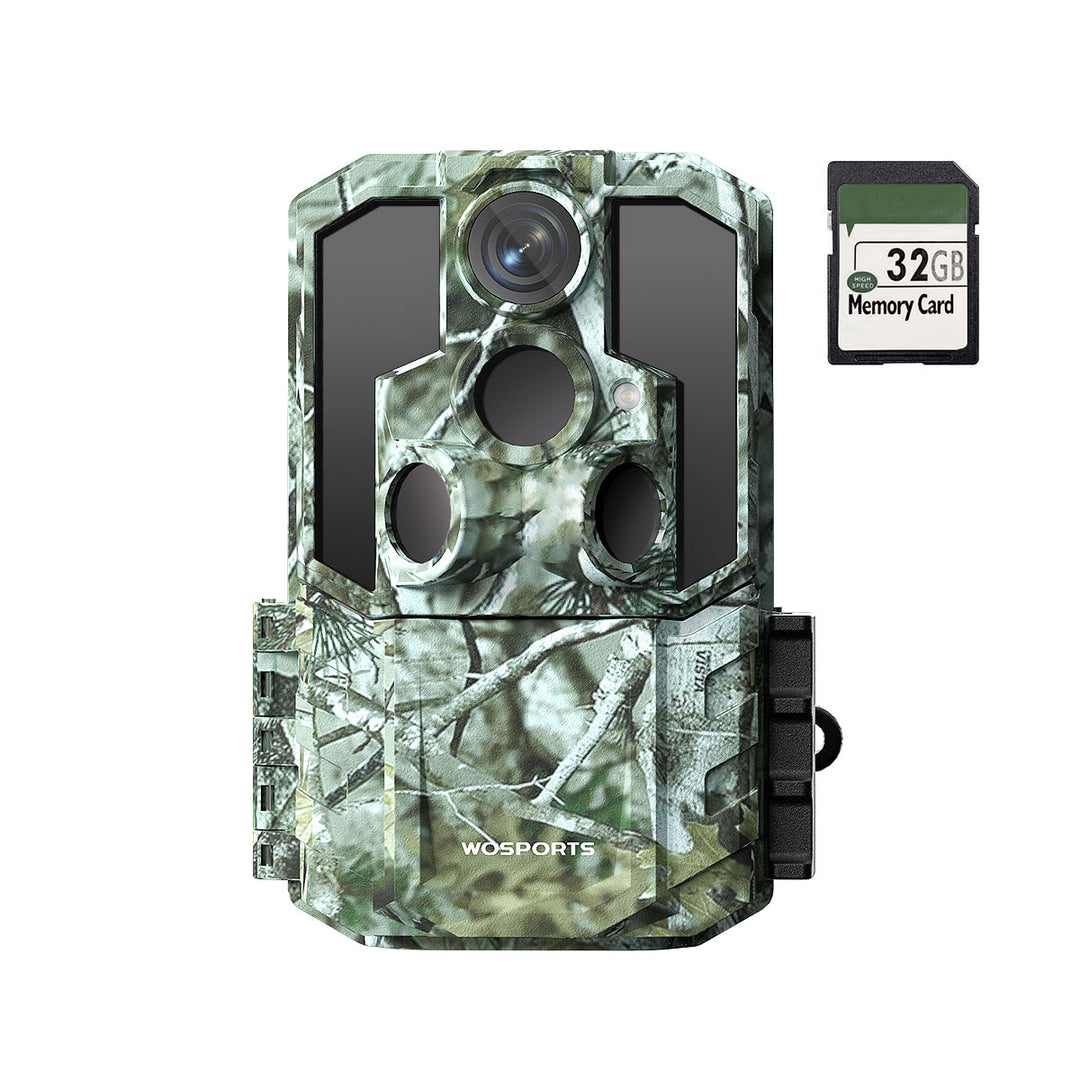
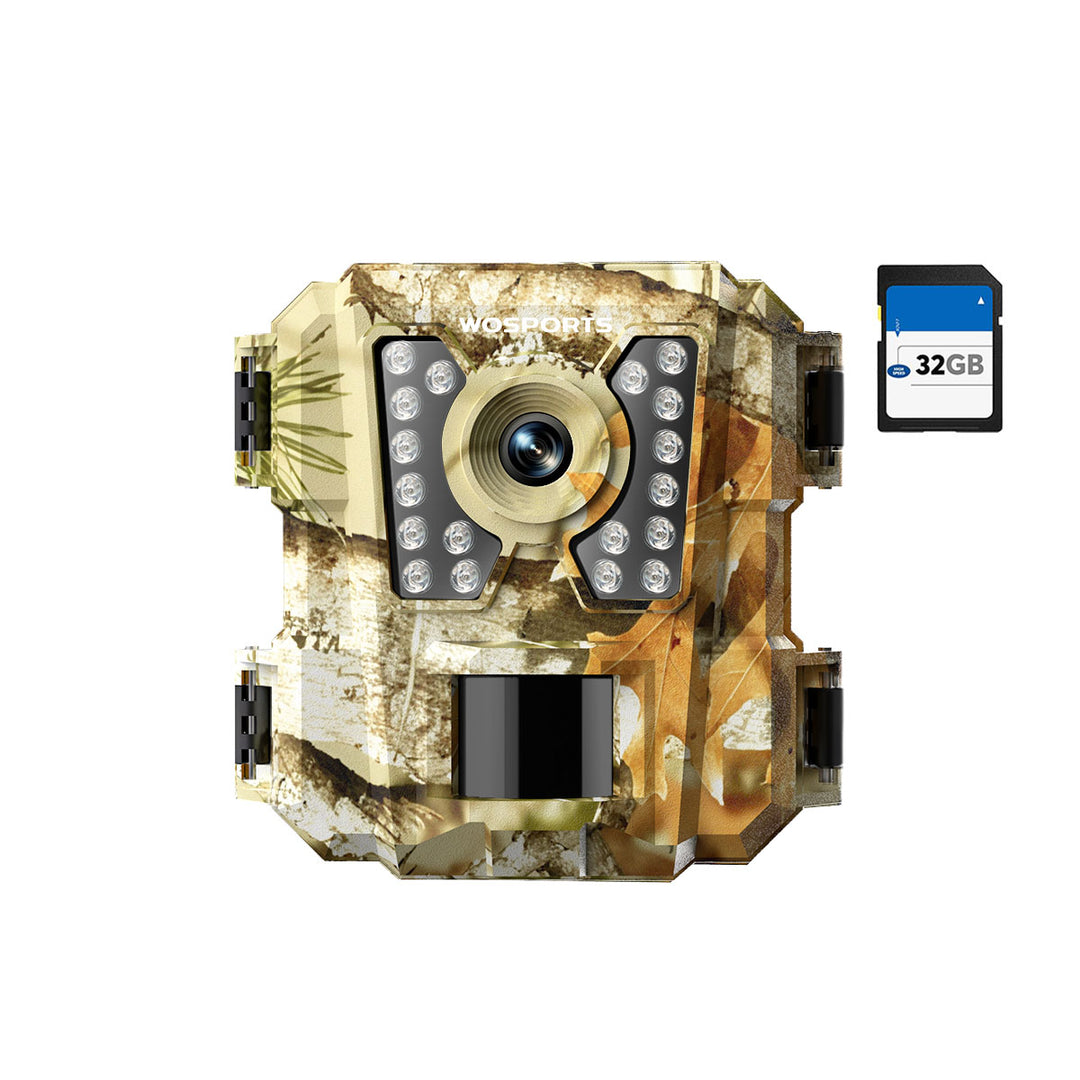
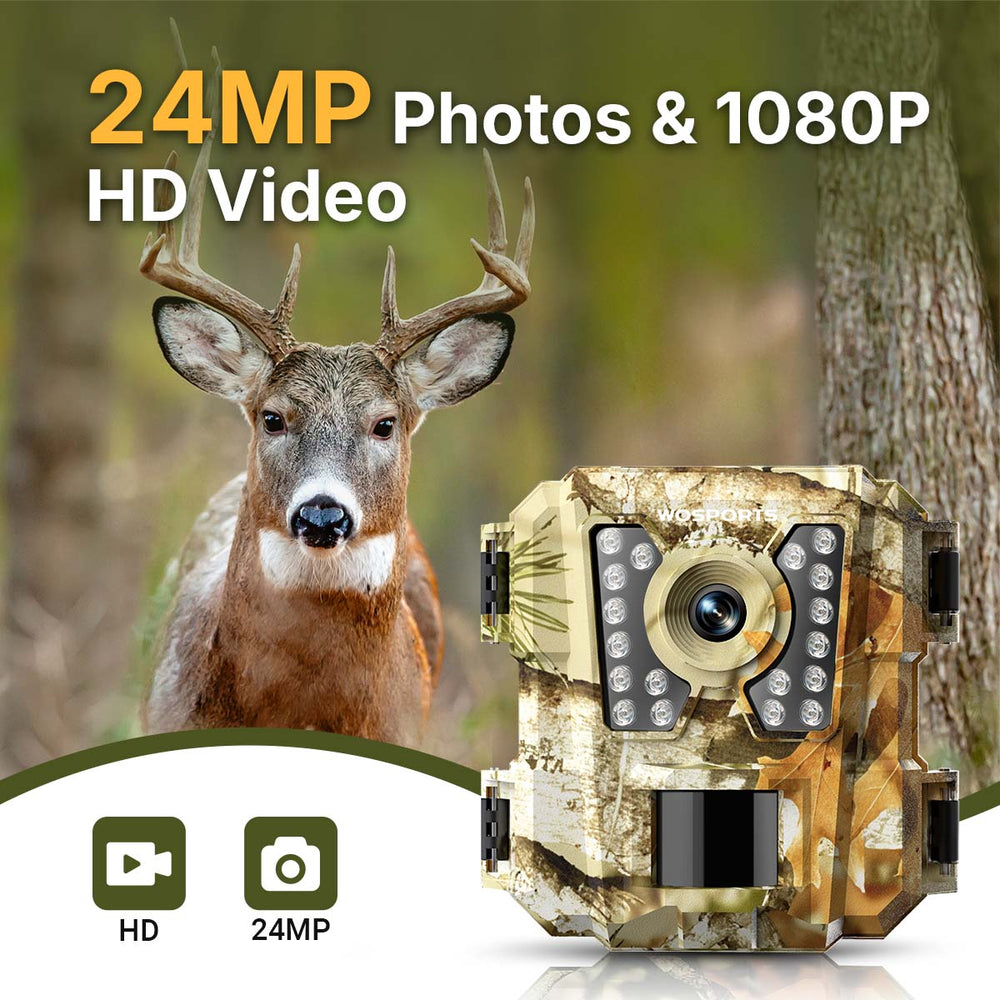
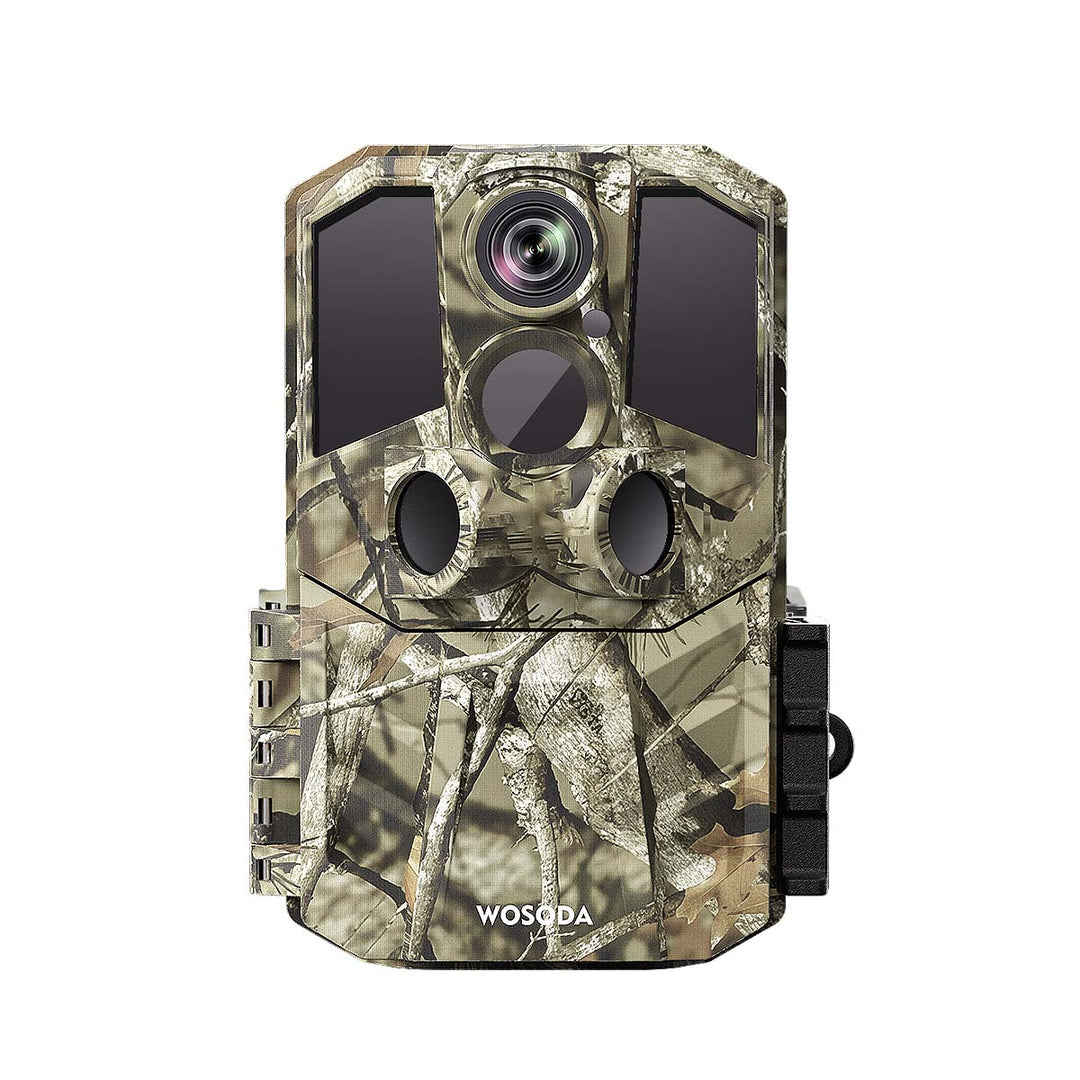
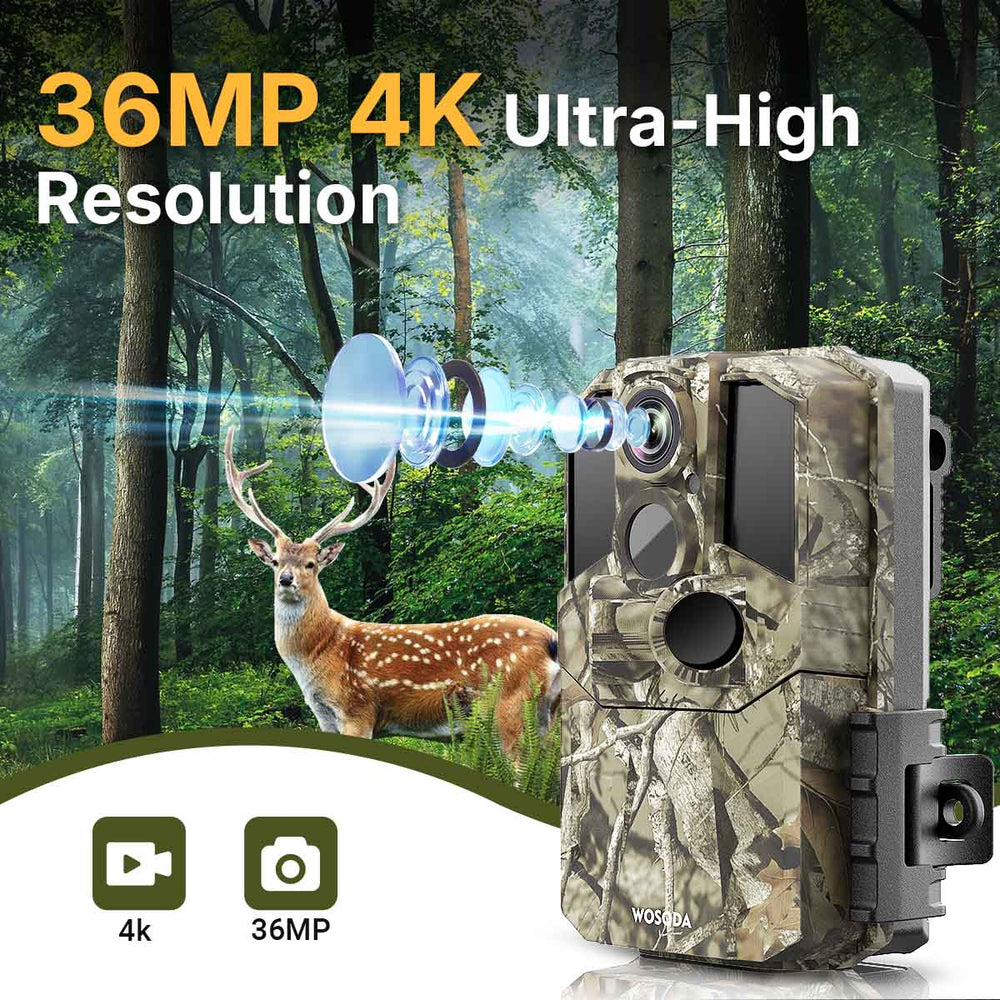
The WOSPORTS G100 Trail Camera is designed for outdoor monitoring applications such as wildlife observation, farm security, and property surveillance.
Key specifications include:
-
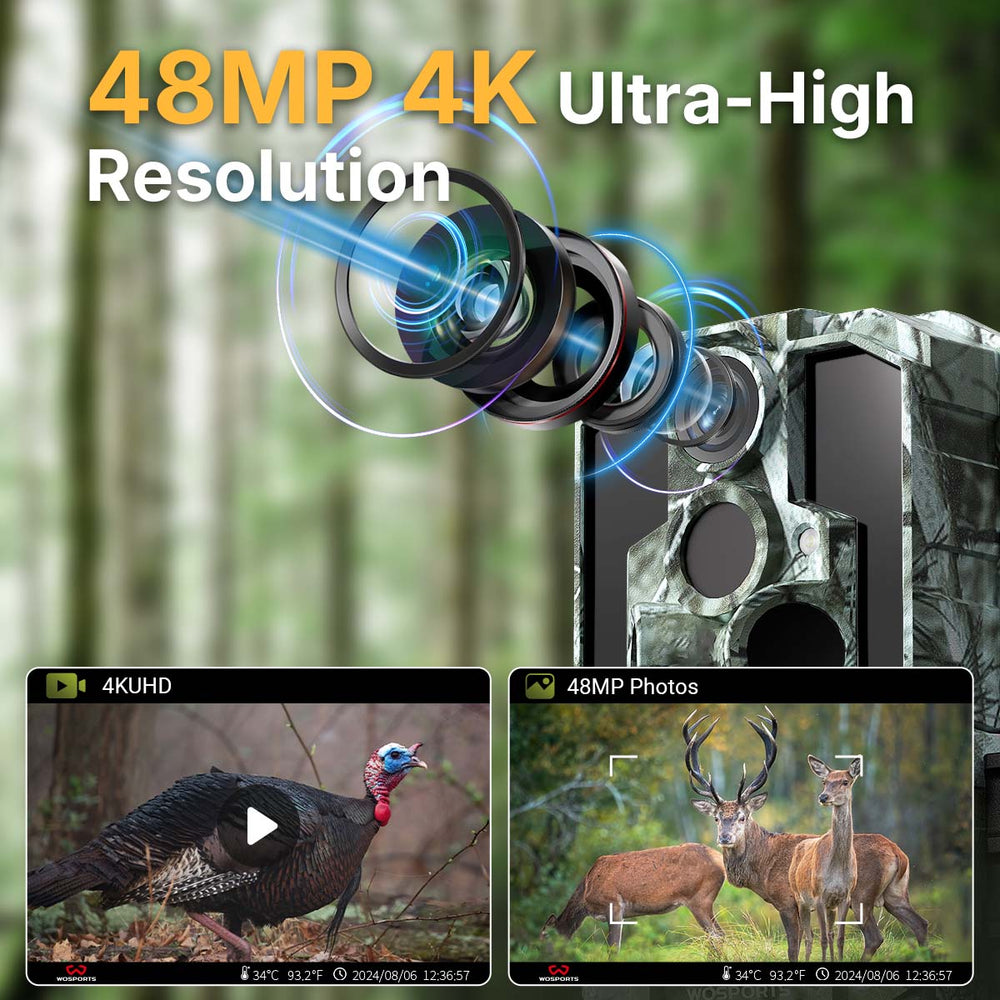
High-resolution photo capture for wildlife documentation
-
Fast trigger speed for capturing fast-moving animals
-
Infrared night vision for nighttime monitoring
-
Weather-resistant construction for outdoor use
-
Low power consumption for long deployment periods
These features make the G100 suitable for large-scale trail camera deployment projects, especially when multiple units are installed across large areas.
For buyers purchasing multiple units, reliability and consistent performance across all devices becomes especially important.
Case Study: Wildlife Camera Setup on a 100-Acre Ranch
A wildlife conservation group in Montana recently implemented a large area monitoring project across a 100-acre ranch.
Their trail camera deployment strategy included:
-
Cameras installed along game trails
-
Monitoring near two water sources
-
Additional units covering entry roads
Deployment summary:
-
Total cameras installed: 12 units
-
Monitoring duration: 6 months
Results observed:
-
Identification of deer, elk, and fox movement patterns
-
Detection of nighttime predator activity
-
Improved understanding of seasonal wildlife migration
The distributed camera network allowed researchers to gather continuous wildlife activity data without disturbing natural habitats.
Expert Insight: Why Distributed Monitoring Works Best
Wildlife monitoring experts emphasize that multiple observation points provide better results than relying on a single camera location.
According to the Smithsonian Conservation Biology Institute, camera traps have become one of the most effective non-invasive tools for studying wildlife populations.
Source
Smithsonian Conservation Biology Institute
https://nationalzoo.si.edu
As one wildlife research specialist explains:
“Camera traps allow researchers to monitor large landscapes with minimal disturbance. Deploying several cameras across activity corridors significantly improves detection rates.”
This principle applies equally to large area security monitoring and wildlife observation.
Best Practices for Trail Camera Deployment
To maximize coverage when monitoring a 100-acre property, follow these recommended setup strategies.
Optimal placement
-
Mount cameras 6–8 feet above ground
-
Aim cameras along trails instead of across them
-
Avoid direct sunlight exposure
Coverage strategy
-
Focus on activity zones rather than open fields
-
Use natural funnels such as trails and fences
-
Cover property entrances and water sources
Maintenance schedule
-
Check batteries every 3–6 months
-
Review captured images periodically
-
Adjust camera angles based on activity patterns
Following these guidelines ensures efficient monitoring while minimizing equipment maintenance.
FAQ: Trail Camera Setup for Large Properties
Can one trail camera monitor an entire 100-acre property?
No. A single camera can only monitor a small observation zone. Multiple cameras are required for effective large area monitoring.
What is the ideal number of cameras for 100 acres?
Most monitoring projects use 8–15 cameras, depending on terrain and monitoring objectives.
Is it better to buy cameras individually or in bulk?
For large deployments, bulk purchasing reduces cost and ensures consistent camera performance across the network.
Final Thoughts: Designing an Effective Wildlife Camera Setup
Monitoring a large property requires a thoughtful approach to trail camera deployment and placement strategy. Rather than attempting to cover the entire landscape with a single device, distributed monitoring across key activity points provides better results.
For a 100-acre property, most monitoring setups require between 8 and 15 trail cameras placed strategically across entrances, wildlife corridors, and water sources.
By combining reliable equipment such as the WOSPORTS G100 Trail Camera with smart placement strategies, landowners and researchers can create an effective large area monitoring system capable of capturing valuable data on wildlife movement and property activity.
Search
Popular Posts
Recent Posts


Nov 28, 2024
Troubleshooting Common Trail Camera Issues
Jan 10, 2025
Why Does My Trail Camera Stop Working at Night?