How Should Retailers Price Night Vision Binoculars for Different Customer Segments?
Retailers should price night vision binoculars according to customer needs rather than using a single markup across every model. A practical approach is to create clear entry-level, mid-range, and premium price positions, then match each tier with specific features and use cases.
For small B2B buyers, this makes the product easier to merchandise, compare, and promote while reducing the risk of stocking several products that appear almost identical.
The market opportunity is broader than hunting alone. The U.S. Fish & Wildlife Service reported that 148.3 million Americans participated in wildlife watching in 2022, with wildlife watchers spending $24.6 billion on wildlife-watching equipment, including binoculars, cameras, and related gear.
Why Should Retailers Use Customer Segments for Night Vision Binoculars?
Customer segmentation helps retailers avoid competing only on price. A beginner usually values affordability and simplicity, while an experienced outdoor user may pay more for better imaging, recording, battery life, or optical performance.
A useful segmentation model is:
| Customer Segment | Typical Priority | Recommended Position |
|---|---|---|
| Beginners | Affordable, easy to use | Entry |
| Casual outdoor users | Value + useful features | Mid-range |
| Hunters & wildlife observers | Night performance + imaging | Performance |
| Enthusiasts | More features and versatility | Premium |
| Professional/advanced users | Specialized performance | Premium/Professional |
This approach also gives wholesalers a simple framework for building a night vision binoculars assortment.
What Should an Entry-Level Night Vision Product Offer?
Entry-level night vision binoculars should focus on the features customers actually need rather than maximizing every specification.
For beginners, retailers can prioritize:
- Straightforward controls
- Infrared illumination
- Basic night viewing
- Adequate image resolution
- Reasonable battery life
- Lightweight construction
- Affordable retail pricing
The key is to make the product easy to understand.
Instead of selling it as “the cheapest night vision binocular,” position it as:
An accessible way to start exploring nighttime wildlife and outdoor observation.
That gives retailers a value proposition beyond simply offering a low price.
What Should a Mid-Range Night Vision Binocular Include?
The mid-range tier should offer the best balance between price and functionality. This is often the most commercially useful position for small retailers because customers can see a meaningful upgrade without entering premium pricing.
Important features can include:
- Higher-resolution imaging
- Improved infrared illumination
- Better viewing range
- Video recording
- Photo capture
- Larger storage capacity
- Longer operating time
- More robust construction
For B2B buyers, this tier can become the volume-driving product because it appeals to customers who want more than basic functionality but are still price-conscious.
Where Does the WOSPORTS NV400 Fit?
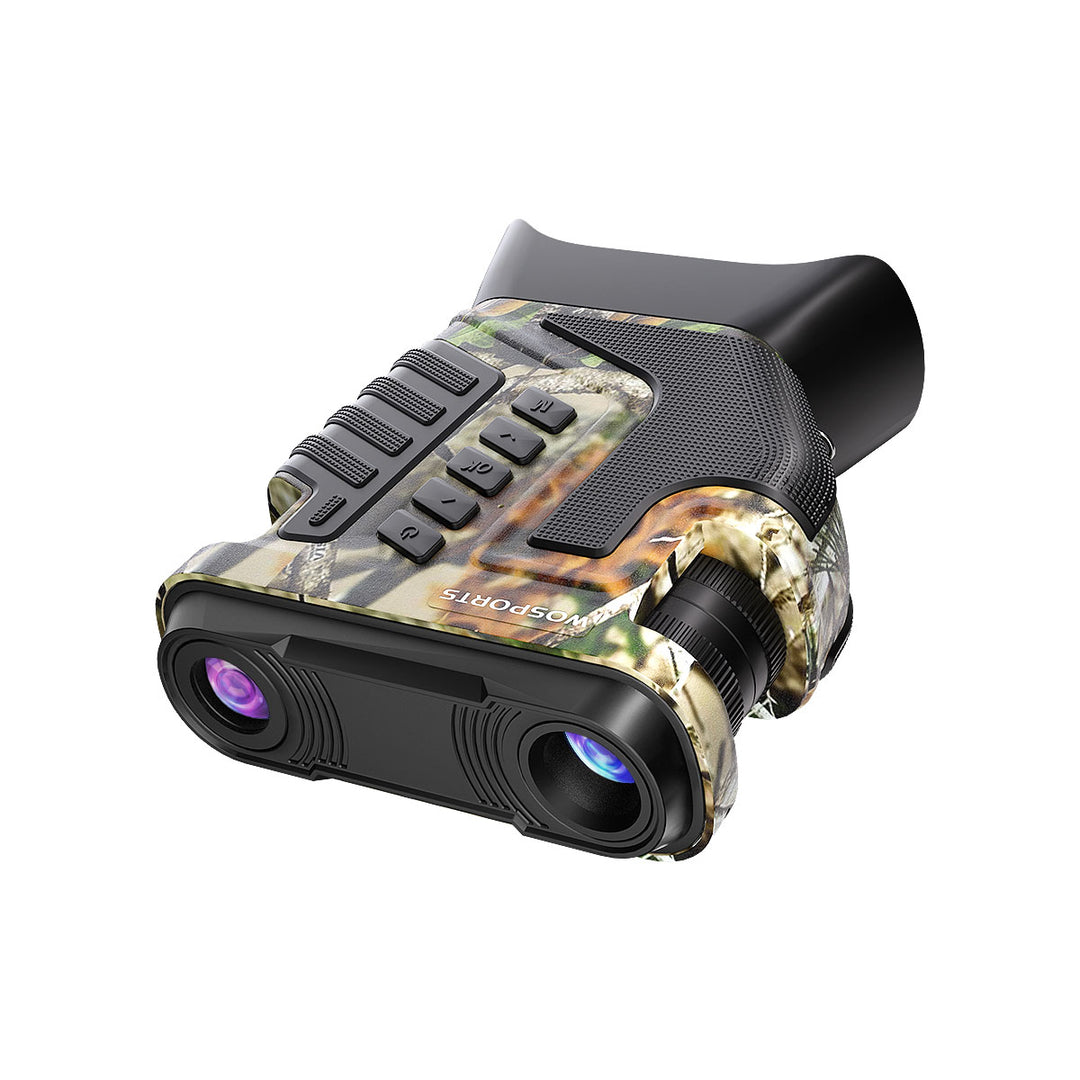
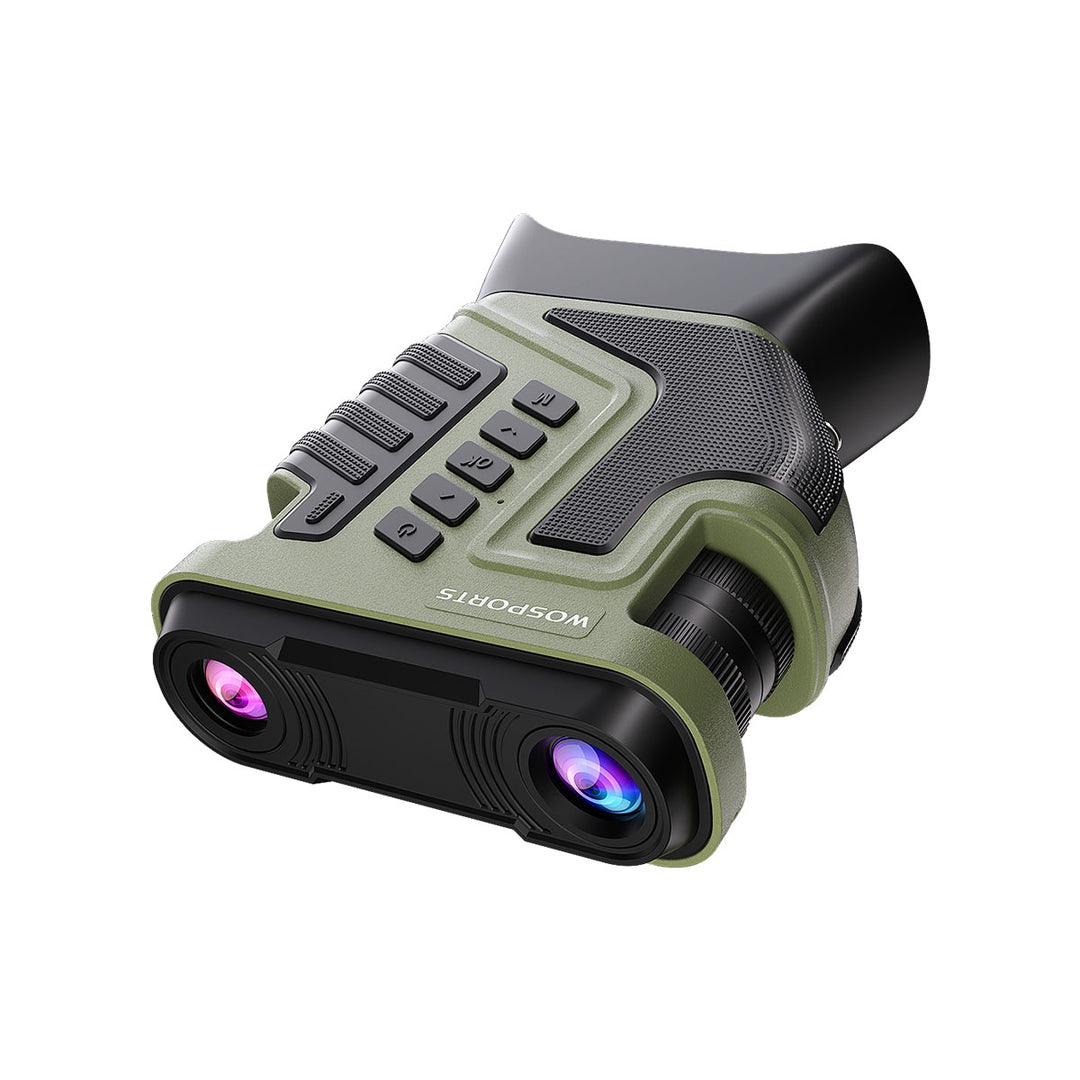
The WOSPORTS NV400 can be positioned as a feature-rich performance option for customers who want more than basic nighttime viewing.
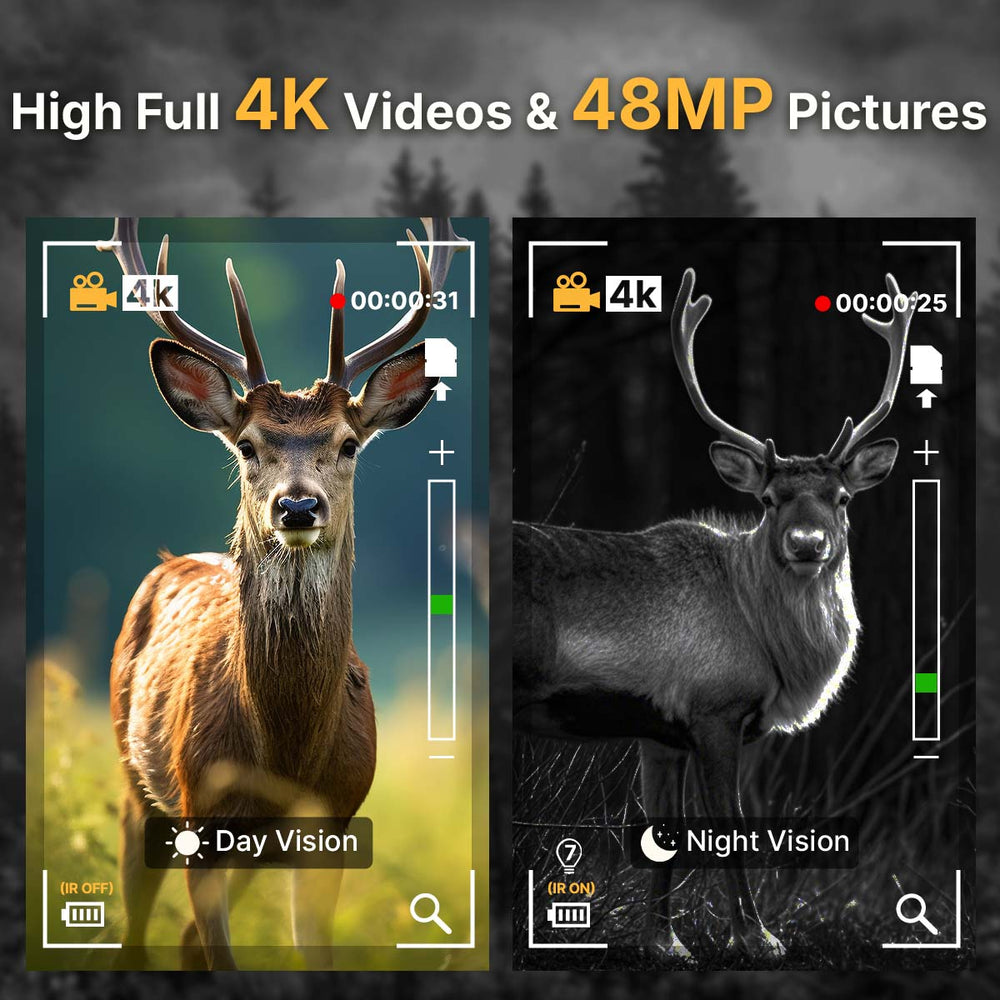
The NV400 combines 4K video, 36MP photos, true 1–10X optical zoom, 8X digital zoom, a 5,000mAh battery, and support for up to 256GB storage.
For retailers, the important point is not simply listing those numbers. Each specification can be translated into a customer benefit:
| NV400 Feature | Retail Positioning |
|---|---|
| 4K video | Detailed nighttime recording |
| 36MP photos | High-resolution image capture |
| 1–10X optical zoom | Flexible viewing without relying only on digital zoom |
| 8X digital zoom | Additional magnification when needed |
| 5,000mAh battery | Longer outdoor sessions |
| Up to 256GB storage | More room for photos and video |
This makes the NV400 a natural candidate for the performance/value segment of a retail assortment.
How Much Should Retailers Mark Up Night Vision Binoculars?
There is no universal retail markup that works for every market; pricing should be based on landed cost, channel fees, customer expectations, and the value of the product's features.
For a small B2B buyer, a simple pricing model is:
Retail Price = Landed Cost + Operating Costs + Desired Gross Margin
Landed cost should include more than the supplier's unit price:
- Product cost
- International freight
- Duties or import costs
- Domestic shipping
- Packaging
- Marketplace fees
- Payment processing
- Returns allowance
- Warranty/service costs
A product that looks inexpensive at the factory level can become much less attractive after these costs are included.
Should Every Night Vision Binocular Have the Same Margin?
No. Retailers can use different margin targets across customer segments and price tiers.
For example, a retailer might structure its lineup conceptually like this:
| Tier | Pricing Strategy | Business Objective |
|---|---|---|
| Entry | Competitive | Attract new customers |
| Mid-range | Balanced | Drive volume |
| Performance | Value-based | Increase average order value |
| Premium | Feature-based | Capture higher-margin demand |
This creates a price ladder rather than forcing every product into the same pricing formula.
The exact margin should depend on the retailer's channel and costs rather than an arbitrary industry percentage.
Why Is the Mid-Range Segment Important?
The mid-range product often has the strongest opportunity to combine perceived value with manageable retail pricing.
Customers in this segment are less likely to ask only, “What is the cheapest option?” Instead, they may ask:
- Does it record video?
- How clear are the photos?
- How far can I see?
- How long does the battery last?
- Can I zoom without losing too much detail?
- How much storage does it support?
This is where products such as the NV400 can be positioned effectively: not as the cheapest option, but as a product that gives customers several meaningful upgrades for the additional spend.
What Does Outdoor Recreation Spending Tell Retailers?
The broader outdoor market supports a value-based approach to pricing because customers already spend significant amounts on equipment related to wildlife observation and recreation.
According to the U.S. Fish & Wildlife Service, wildlife watchers spent $118.6 billion on equipment in 2022, including $2.8 billion on binoculars and spotting scopes.
The same report found that total wildlife-watching expenditures reached $250.2 billion.
For retailers, this suggests that night vision products should not necessarily be positioned as disposable low-cost electronics. They can instead be presented as specialized outdoor equipment with a clear use-case value.
Expert Insight: Features Should Follow the Use Case
Wildlife equipment should be selected according to the intended use rather than relying on one headline specification.
Oregon State University Extension's Lauren Grand, Forestry & Natural Resources Associate Professor of Practice, explains that equipment choices for wildlife cameras should be guided by the intended purpose, and specifically cautions against allowing a single specification to drive the purchasing decision.
That principle also works for night vision binoculars.
A hunter, wildlife observer, security-conscious property owner, and casual outdoor user may all want night vision—but they do not necessarily need the same product.
For retailers, this means:
Price the customer use case, not just the hardware specification.
How Can Retailers Position the NV400 Without Competing Only on Price?
The NV400 should be positioned around its combination of imaging, optical zoom, recording, and battery capacity rather than a single specification.
For example:
Instead of:
“36MP night vision binoculars.”
Use:
“High-resolution night vision binoculars designed for customers who want detailed photos, 4K video, and flexible optical zoom during extended outdoor observation.”
This approach makes the product easier for sales teams and online shoppers to understand.
How Should Small Wholesalers Build Their Initial Assortment?
Small wholesalers should avoid putting all their inventory into one price point. A compact three-tier lineup can provide enough choice without creating excessive SKU complexity.
A practical assortment could be:
Tier 1 — Entry
For beginners who primarily want basic nighttime viewing.
Tier 2 — Performance
For customers who want better imaging, recording, and battery performance.
Tier 3 — Premium
For enthusiasts who are willing to pay more for advanced specifications and specialized features.
The NV400 can sit naturally in the Performance tier, helping create a clear upgrade path between basic night vision and more expensive specialized equipment.
What About Online Retail Pricing?
Online retailers should make the price difference between models easy to understand because shoppers can compare multiple products within seconds.
A product page should answer three questions immediately:
- What does this night vision binocular do?
- Who is it designed for?
- Why is it worth paying more than the lower-priced model?
For the NV400, the answer could emphasize:
- 4K video
- 36MP photos
- 1–10X optical zoom
- 8X digital zoom
- 5,000mAh battery
- Large storage support
This makes the price difference easier for customers to justify.
A Simple Pricing Framework for B2B Buyers
A good wholesale pricing strategy should leave enough room for the retailer to cover selling costs while still presenting a competitive consumer price.
Before setting the final retail price, wholesalers should calculate:
| Cost / Factor | Why It Matters |
|---|---|
| Factory price | Determines basic product cost |
| Freight | Changes landed cost |
| Duties/import costs | Can materially affect margin |
| Marketplace fees | Important for Amazon/e-commerce |
| Advertising | Often necessary for online sales |
| Returns | Should be included in the cost model |
| Warranty | Protects long-term profitability |
| Retail margin | Determines final selling price |
This calculation is especially important for smaller retailers, where unexpected costs can quickly eliminate the apparent margin.
FAQ: Pricing Night Vision Binoculars
What is the best price segment for night vision binoculars?
There is no single best segment. A three-tier assortment—entry, performance, and premium—allows retailers to serve different customer segments without relying on one price point.
Should retailers compete on the lowest price?
Usually, no. Competing purely on price makes differentiation difficult. A stronger strategy is to connect product features with specific customer needs.
What customers are most likely to buy performance night vision binoculars?
Hunters, wildlife observers, outdoor enthusiasts, and customers who want both nighttime viewing and recording capabilities are natural candidates for performance-oriented models.
Is the NV400 suitable for a mid-range or performance position?
Yes. Its combination of 4K video, 36MP photos, 1–10X optical zoom, 8X digital zoom, 5,000mAh battery capacity, and large storage support gives retailers several tangible features to use when positioning it above basic models.
Should wholesale buyers focus on unit cost or retail margin?
Both matter, but landed cost and expected retail margin provide a more realistic picture than factory price alone.
Final Takeaway
The most effective night vision binoculars pricing strategy is not simply “cost + markup.” Retailers should build a clear relationship between customer segments, product features, and price levels.
A practical structure is:
Entry → Affordable and simple
Performance → Best balance of features and price
Premium → Advanced functionality and specialized use
For a small B2B retailer, the WOSPORTS NV400 can serve as a strong performance-tier product because its combination of 4K video, 36MP imaging, optical zoom, digital zoom, battery capacity, and storage support gives retailers multiple ways to communicate value.
And the broader market provides room for specialized outdoor equipment: U.S. wildlife watchers alone spent $2.8 billion on binoculars and spotting scopes in 2022.
The key takeaway for wholesalers is simple: don't price a night vision binocular only by its cost. Price it according to the customer it serves and the problem its features solve.
Search
Popular Posts
Recent Posts


Nov 28, 2024
Troubleshooting Common Trail Camera Issues
Jan 10, 2025
Why Does My Trail Camera Stop Working at Night?