What Should Wholesale Buyers Check When Testing Night Vision Binoculars Before Resale?
For wholesale buyers, testing night vision binoculars before resale is less about checking whether the device “works” and more about verifying whether its real-world performance matches the product specifications, customer expectations, and retail positioning. A practical test should cover image quality, infrared performance, recording, battery life, controls, durability, and consistency across multiple units.
For retailers and small distributors, this process can reduce returns, negative reviews, and supplier-related quality risks before a larger purchase is placed.
1. Start With the Specifications, Not the Packaging
The first step in wholesale quality testing is to compare the physical product against the supplier's stated specifications. Product claims should be treated as testable requirements rather than marketing language.
For a night vision binocular, wholesale buyers should verify:
| Specification | What to check | Why it matters |
|---|---|---|
| Night vision generation/type | Digital infrared night vision | Determines how the device performs in darkness |
| Optical zoom | Actual optical magnification | More useful for detailed long-distance viewing |
| Digital zoom | Usable digital magnification | Excessive digital zoom can reduce image detail |
| Image resolution | Photo and video output | Important for wildlife and outdoor users |
| IR illuminator | Range and brightness | Directly affects nighttime visibility |
| Detection/viewing distance | Real-world performance | Helps retailers set realistic expectations |
| Battery capacity | Runtime under actual use | Important for outdoor customers |
| Storage | Supported microSD capacity | Affects recording convenience |
| Weather resistance | Housing and seals | Important for outdoor use |
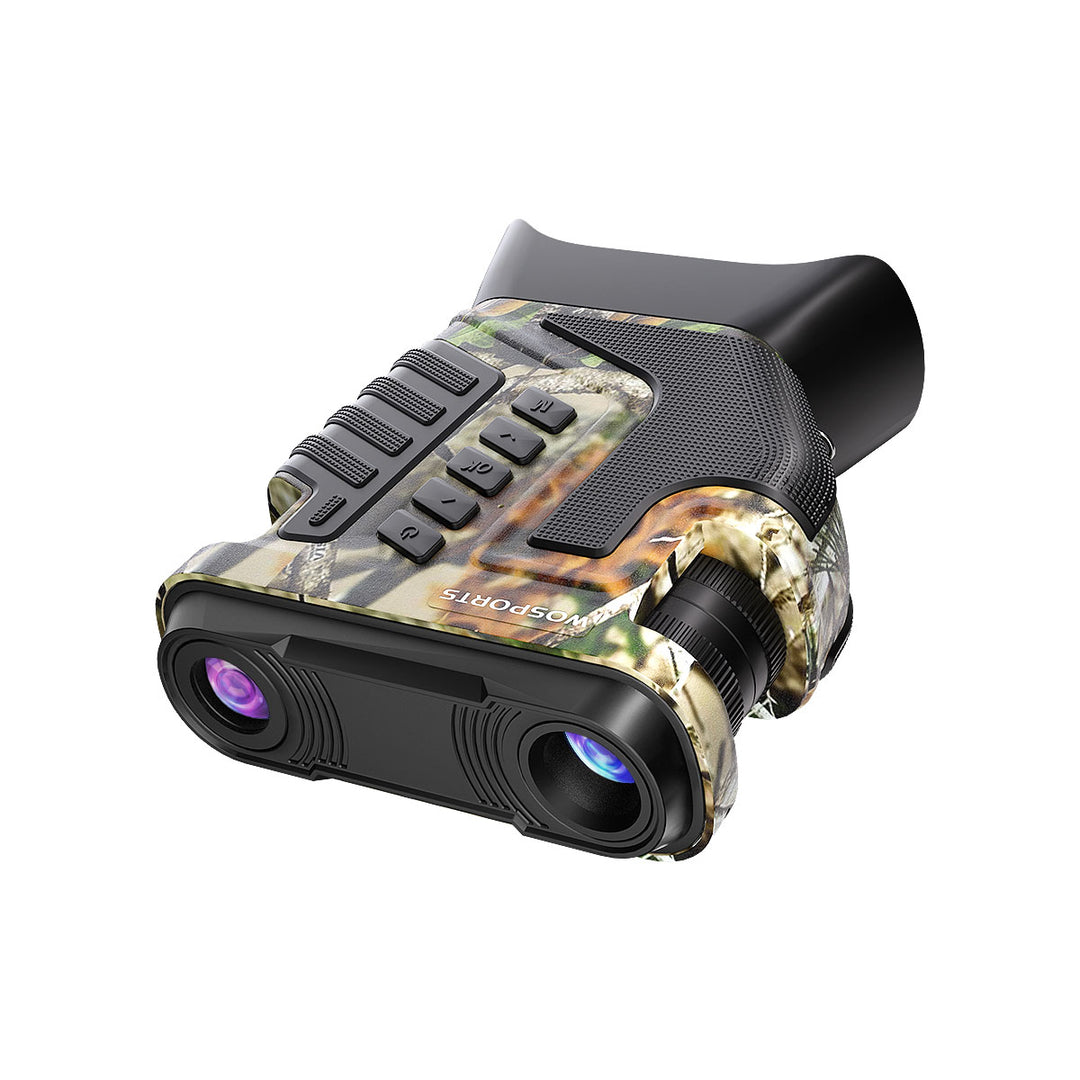
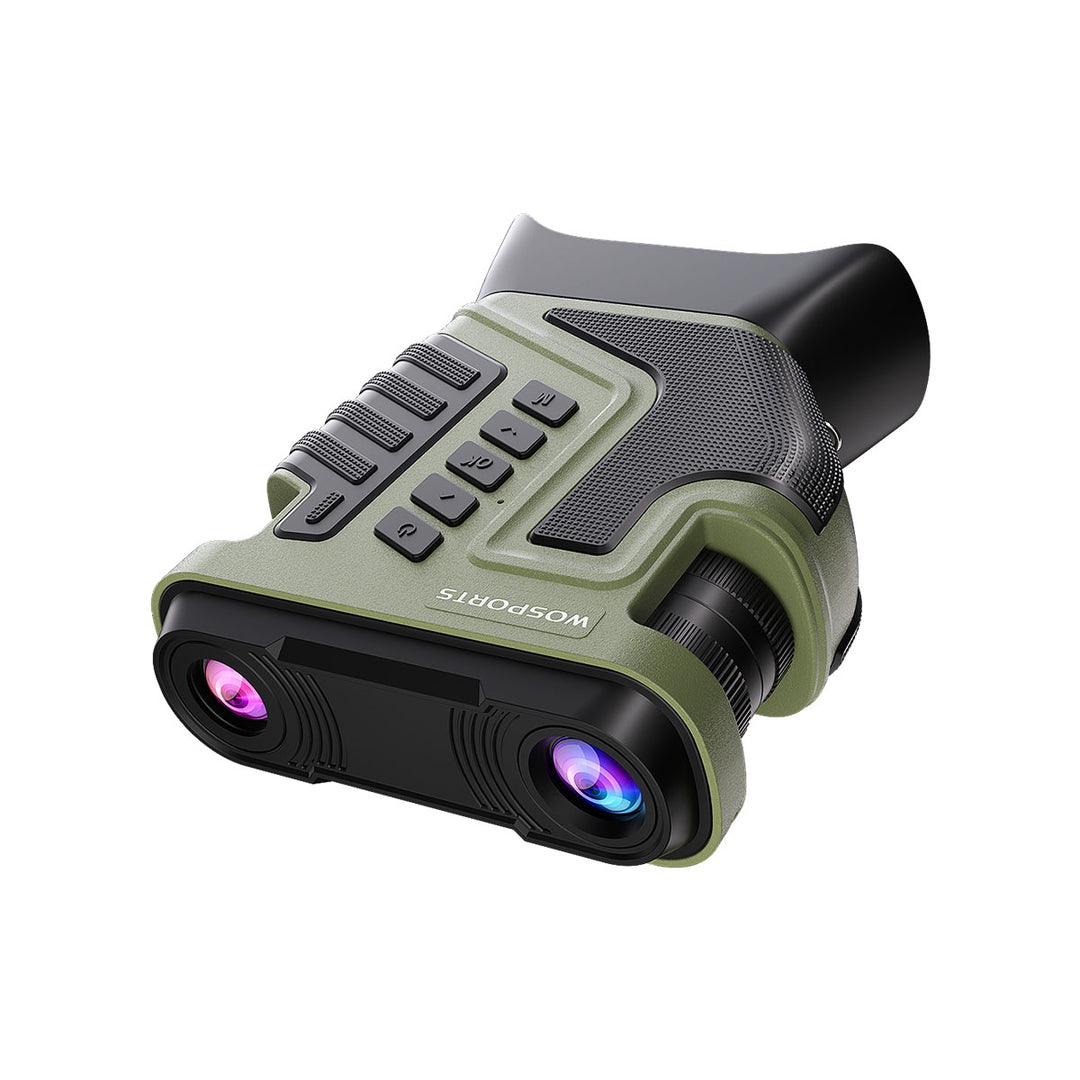
For example, the WOSPORTS NV400 combines 4K video, 36MP photo capability, 1–10× optical zoom, 8× digital zoom, a 5,000mAh battery, and support for storage cards up to 256GB. These specifications provide a useful checklist for evaluating whether a production unit performs as expected.
2. Test Image Quality in Real Darkness
A night vision binocular should be tested outdoors at night, not only indoors under artificial lighting. Low-light performance can look impressive in a showroom but behave very differently when there is little or no ambient light.
Wholesale buyers should test:
- Image sharpness at different distances
- Detail around moving subjects
- Contrast between the subject and background
- Image noise and grain
- Exposure consistency
- Performance when the subject moves
- Clarity at different zoom levels
A simple test can use fixed targets at 30, 60, 100, and 150 feet. Record the same scene at each distance and compare whether important details remain identifiable.
This approach is particularly useful for retailers because a product may technically provide a high-resolution recording while still producing poor usable detail at night.
3. Check Infrared Performance Separately
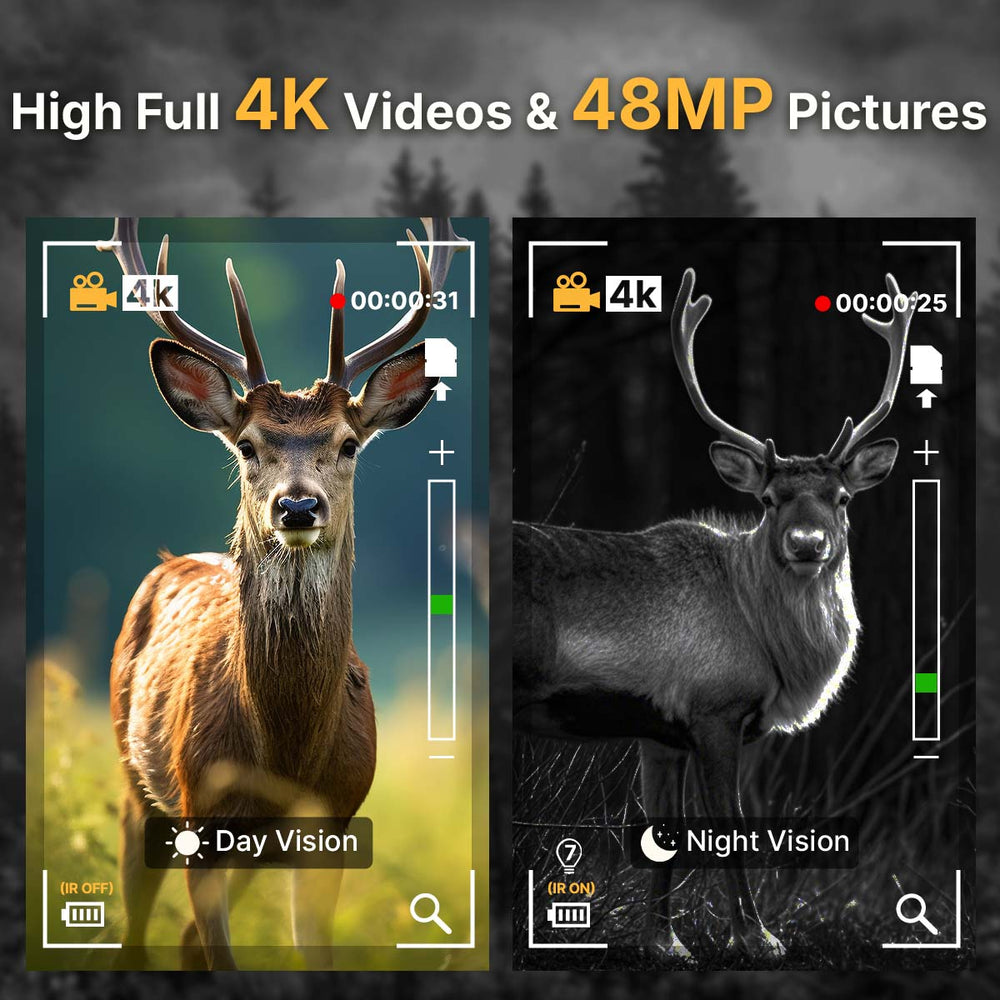
Infrared performance is one of the most important factors in digital night vision because the IR illuminator effectively determines how much usable information the sensor receives in darkness.
During testing, buyers should evaluate:
- Visibility with IR turned off.
- Visibility with IR turned on.
- Illumination uniformity across the frame.
- Detail at increasing distances.
- Whether nearby objects become overexposed.
- Whether the image becomes noisy at longer distances.
The U.S. Geological Survey has documented the use of infrared-based camera systems in wildlife monitoring, demonstrating why infrared imaging can be valuable when conventional visible-light observation is insufficient.
Wholesale testing insight: Don't evaluate an infrared illuminator only by its advertised distance. Test whether a subject remains recognizable at that distance.
4. Test Zoom in Three Stages
A good wholesale test separates optical zoom from digital zoom because the two affect image quality differently.
For a device such as the NV400, buyers can test:
- 1×: Establish baseline image quality.
- 5×: Check detail retention at moderate magnification.
- 10× optical: Evaluate long-range viewing performance.
- Higher digital zoom: Determine when image quality becomes unacceptable.
This matters because customers often interpret a large total magnification number as equivalent to useful visual detail.
For retailers, a better product description is therefore not simply “high magnification.” It should explain what type of magnification the customer is actually receiving.
5. Don't Test Just One Sample
The biggest mistake in wholesale quality control is approving an entire order based on a single sample. A supplier sample can demonstrate what the product is capable of, but it does not automatically demonstrate production consistency.
For a small wholesale order, buyers can consider testing several randomly selected units from the production batch.
Check whether the units have consistent:
- Image quality
- IR brightness
- Focus behavior
- Button response
- Recording function
- Battery performance
- Screen quality
- Housing and accessories
This principle is consistent with NIST's broader guidance on measurement: a measurement result needs to account for factors that can influence the result, rather than treating one observation as automatically representative.
6. Test Photos and Videos, Not Just Live Viewing
A night vision binocular can look good through its display but produce disappointing recorded files, so wholesale buyers should always inspect both live viewing and saved media.
Test:
- Photo resolution
- Video resolution
- Frame stability
- Audio, if included
- File format
- File transfer
- Playback on a computer or phone
- Recording duration
- File integrity after extended recording
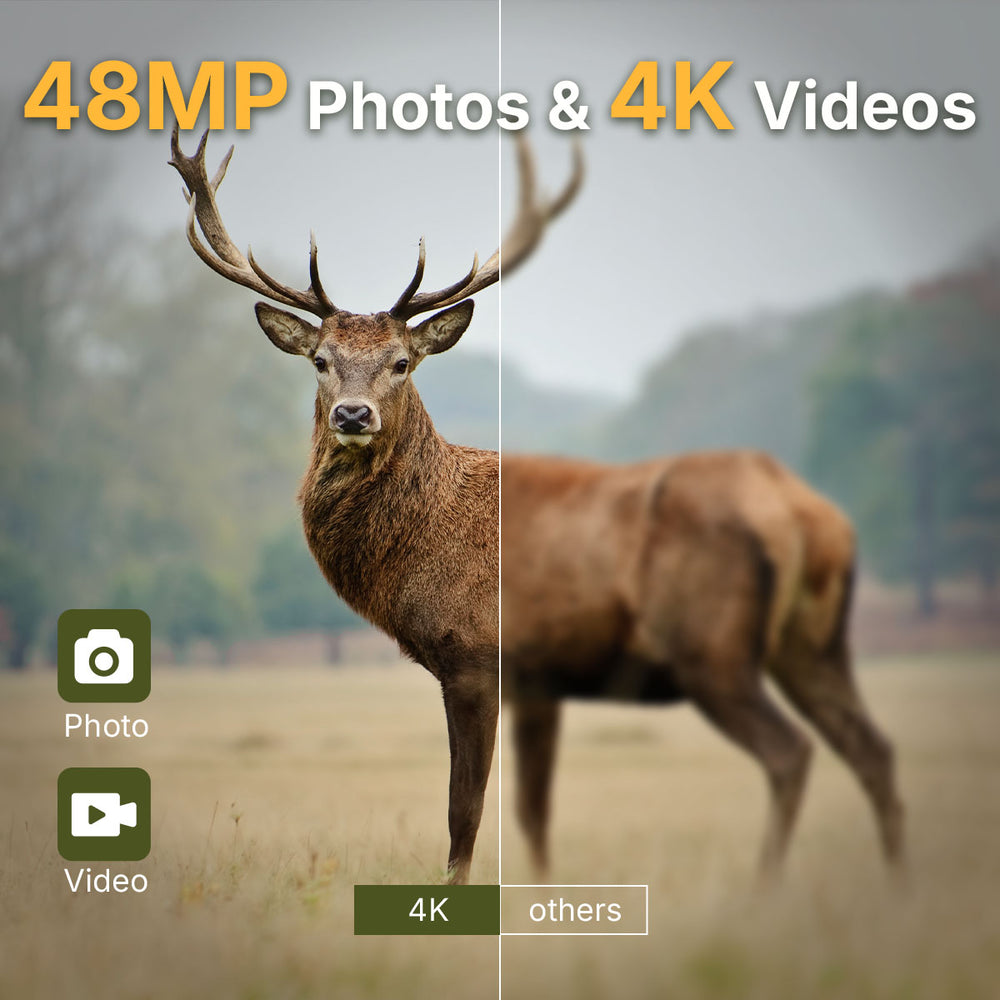
For the NV400, buyers can specifically verify the advertised 4K video and 36MP photo capabilities by recording real nighttime scenes and reviewing the original files rather than relying on the device's preview screen.
This is especially important for customers who use night vision binoculars for wildlife observation, outdoor exploration, property monitoring, or documentation.
7. Battery Testing Should Simulate Customer Use
Battery specifications should be evaluated under realistic conditions because screen brightness, infrared illumination, recording, temperature, and zoom usage can all influence runtime.
A simple wholesale battery test can include:
| Test condition | Purpose |
|---|---|
| Daytime viewing | Establish baseline consumption |
| Night viewing | Test normal IR operation |
| Continuous IR + display | Stress test |
| Continuous video recording | Test recording workload |
| Standby mode | Evaluate idle consumption |
The NV400 uses a 5,000mAh battery, with an advertised runtime of up to 18 hours under specified conditions. For resale preparation, buyers should record the actual test conditions alongside the runtime rather than presenting one runtime number as universal.
8. Don't Forget Weather and Outdoor Handling
Outdoor night vision binoculars should be tested for practical outdoor handling, not just optical performance.
Wholesale buyers should inspect:
- Housing construction
- Port covers
- Battery compartment sealing
- Strap attachment points
- Button operation with gloves
- Screen visibility outdoors
- Lens protection
- Resistance to light rain or moisture according to the product's rated protection
USGS research on remote wildlife-monitoring equipment has also shown that environmental conditions can affect field equipment performance, reinforcing the importance of testing equipment under realistic field conditions.
For this reason, a retailer should avoid making stronger weather-resistance claims than the supplier's documented specifications support.
9. Use a Simple Wholesale Quality Scorecard
A standardized scorecard makes it easier to compare suppliers and decide whether a product is ready for resale.
A practical scoring model could be:
| Category | Suggested Weight |
|---|---|
| Night image quality | 25% |
| Infrared performance | 20% |
| Zoom and viewing distance | 15% |
| Recording/photo quality | 15% |
| Battery performance | 10% |
| Physical quality | 10% |
| Accessories and usability | 5% |
A product that scores highly in specifications but poorly in actual night testing should not automatically be treated as a high-quality wholesale product.
NIST also emphasizes that testing and measurement should consider repeatability and measurement uncertainty when evaluating whether a result meets a requirement.
10. How the NV400 Fits a Wholesale Testing Program
The WOSPORTS NV400 can be evaluated as a multi-purpose digital night vision binocular for retailers serving outdoor and wildlife-oriented customers.
Its main wholesale testing points include:
- 4K video recording
- 36MP photos
- 1–10× optical zoom
- 8× digital zoom
- Infrared night vision
- 5,000mAh battery
- Up to 18 hours of stated operating time
- Up to 256GB storage support
- IPX-rated water resistance
Instead of testing only whether the NV400 turns on, a buyer can use these specifications as a pre-shipment verification checklist.
The goal is simple: confirm that the physical product, recorded files, nighttime image quality, battery performance, and accessories consistently match the specifications promised by the supplier.
A Practical Pre-Resale Checklist
Before approving a wholesale night vision binocular for resale, buyers should be able to answer “yes” to the following questions:
- Does the nighttime image remain clear at several distances?
- Does the IR illuminator provide usable illumination?
- Does optical zoom retain meaningful detail?
- Do photos and videos match the advertised resolution?
- Does the battery provide reasonable runtime under realistic use?
- Do multiple samples perform consistently?
- Does the housing appear suitable for outdoor use?
- Are buttons and controls easy to operate?
- Can customers easily save and transfer recorded files?
- Do the actual results support the supplier's product claims?
Final Takeaway
For wholesale buyers, the best night vision binocular is not necessarily the one with the longest specification sheet. It is the one whose important specifications can be verified through repeatable real-world testing.
For small retailers and distributors, testing 3–5 units before a larger purchase can provide a much clearer picture of production consistency than testing a single sample. A structured evaluation of image quality, infrared performance, zoom, recording, battery life, and outdoor usability can also give sales teams more reliable information when positioning the product to customers.
Source note: The technical testing approach above draws on NIST guidance concerning measurement uncertainty and optical measurement, as well as USGS research on infrared and remote camera systems.
NIST — Measurement Uncertainty
USGS — A Hidden View of Wildlife Conservation: How Camera Traps Aid Science, Research and Management
Search
Popular Posts
Recent Posts


Nov 28, 2024
Troubleshooting Common Trail Camera Issues
Jan 10, 2025
Why Does My Trail Camera Stop Working at Night?