4K vs. 1080p Trail Cameras: Is 4K Worth It?
When shopping for a trail camera, one of the first specifications you may notice is video resolution.
You may see cameras advertised with 1080p, 2K, 4K, or even higher-resolution photos. But does a 4K trail camera actually make a difference? Is 4K worth paying more for? And is higher resolution always better for wildlife scouting?
The short answer is:
4K can provide more detail and a clearer view of wildlife, but the value depends on how you use your trail camera.
If you're trying to identify animals, observe behavior, review footage on a larger screen, or capture moments worth saving, higher-resolution video can be especially useful.
Let's look at the differences between 4K and 1080p trail cameras and what you should consider before choosing one.
What Is the Difference Between 4K and 1080p?
The biggest difference is the number of pixels used to create the video.
1080p
1080p video has a resolution of:
1920 × 1080 pixels
That's approximately 2.1 million pixels per frame.
1080p has been widely used for years and can still provide good-quality footage for general wildlife monitoring.
4K
4K UHD video typically has a resolution of:
3840 × 2160 pixels
That's approximately 8.3 million pixels per frame.
That means 4K contains roughly four times as many pixels as 1080p.
More pixels can provide more visible detail—especially when you're viewing footage on a larger screen or examining a particular part of the scene.
Does 4K Look Better Than 1080p?
Generally, yes.
A 4K video can preserve significantly more detail than 1080p when the camera, lighting, and recording conditions are good.
For wildlife footage, that additional detail can help you see:
- Antler characteristics
- Body markings
- Fur patterns
- Animal movement
- Multiple animals in the same scene
- Details in the surrounding environment
However, resolution is only one part of image quality.
A 4K camera placed in poor lighting or positioned incorrectly won't automatically produce better footage than a well-positioned 1080p camera.
Other factors include:
- Sensor quality
- Lens quality
- Infrared illumination
- Exposure
- Camera placement
- Compression
- Lighting conditions
- Subject distance
So don't judge a trail camera by the resolution number alone.
Is 4K Worth It for a Trail Camera?
For many wildlife enthusiasts and hunters, 4K is worth considering if video detail matters to you.
It's especially useful if you want to:
- Review wildlife behavior
- Identify animals
- Capture detailed hunting footage
- Share wildlife videos online
- Watch footage on a large display
- Keep higher-quality recordings for later
- Examine footage frame by frame
If your only goal is to know whether an animal passed through an area, 1080p may be sufficient.
But if you want to see what the animal was doing, additional video detail can become much more valuable.
4K vs. 1080p Trail Camera Comparison
| Feature | 1080p | 4K |
|---|---|---|
| Resolution | 1920 × 1080 | 3840 × 2160 |
| Detail | Good | Higher |
| File size | Generally smaller | Generally larger |
| Storage requirements | Lower | Higher |
| Processing requirements | Lower | Higher |
| Large-screen viewing | Good | Better |
| Wildlife detail | Good | Better |
| Online sharing | Good | Excellent |
| Long-term footage quality | Good | Better |
The right choice depends on your priorities.
Why Does Resolution Matter for Wildlife Scouting?
Wildlife doesn't always appear close to the camera.
A deer may walk across the far side of a trail. A raccoon may move along the edge of a food plot. A coyote may appear only briefly in the background.
When the animal occupies a relatively small portion of the frame, having more image information can make the footage more useful.
For example, imagine a deer appears near the edge of a wide-angle frame.
With lower-resolution footage, small details may become difficult to see.
With higher-resolution footage, you may have more usable information to work with.
This doesn't mean you can magically turn a distant animal into a close-up image. But starting with more pixels can give you more detail to examine.
Can You Zoom in on 4K Trail Camera Footage?
You can digitally zoom into recorded 4K footage during playback or editing, but digital zoom does not create new detail that wasn't captured.
The advantage of 4K is that the original footage contains substantially more pixels.
For example, if you crop part of a 4K frame, you can retain more detail than you would from an equivalent crop of 1080p footage.
This can be useful when reviewing wildlife footage after the camera has been retrieved.
However, remember:
4K doesn't replace good camera placement.
If an animal is extremely far away or partially blocked by vegetation, higher resolution cannot completely solve the problem.
Does 4K Matter at Night?
This is where things get more complicated.
Daytime conditions often provide the best opportunity to see the difference between 4K and 1080p.
At night, image quality also depends heavily on the camera's infrared system, sensor performance, exposure, and available illumination.
A trail camera can record at a high resolution but still produce limited night detail if lighting conditions are challenging.
That's why you should evaluate resolution and night vision together.
For nighttime wildlife monitoring, consider:
- Infrared illumination
- Night detection range
- Image brightness
- Motion blur
- Animal distance
- IR flash behavior
- Camera placement
Resolution matters, but it isn't the only factor that determines nighttime image quality.
Does 4K Use More Storage?
Yes.
Higher-resolution video generally requires more storage space because there is significantly more visual information to record.
This means a 4K trail camera may fill an SD card faster than a 1080p camera when recording similar-length clips.
How much storage you actually need depends on several factors:
- Video resolution
- Clip length
- Number of triggers
- Number of videos recorded
- Photo/video settings
- Wildlife activity
- SD card capacity
If your camera is positioned on a busy wildlife trail, storage requirements can increase quickly.
That's why storage should be considered when choosing a 4K trail camera.
Does 4K Drain the Battery Faster?
It can.
Recording higher-resolution video requires more processing and data handling than lower-resolution recording. Depending on the camera design and settings, this can contribute to greater power consumption.
However, actual battery life depends on much more than video resolution.
Factors include:
- Number of triggers
- Video length
- Nighttime recording
- IR illumination
- Temperature
- Screen usage
- Standby time
- Battery type
- Camera settings
For this reason, you shouldn't assume that every 4K trail camera will have the same battery performance.
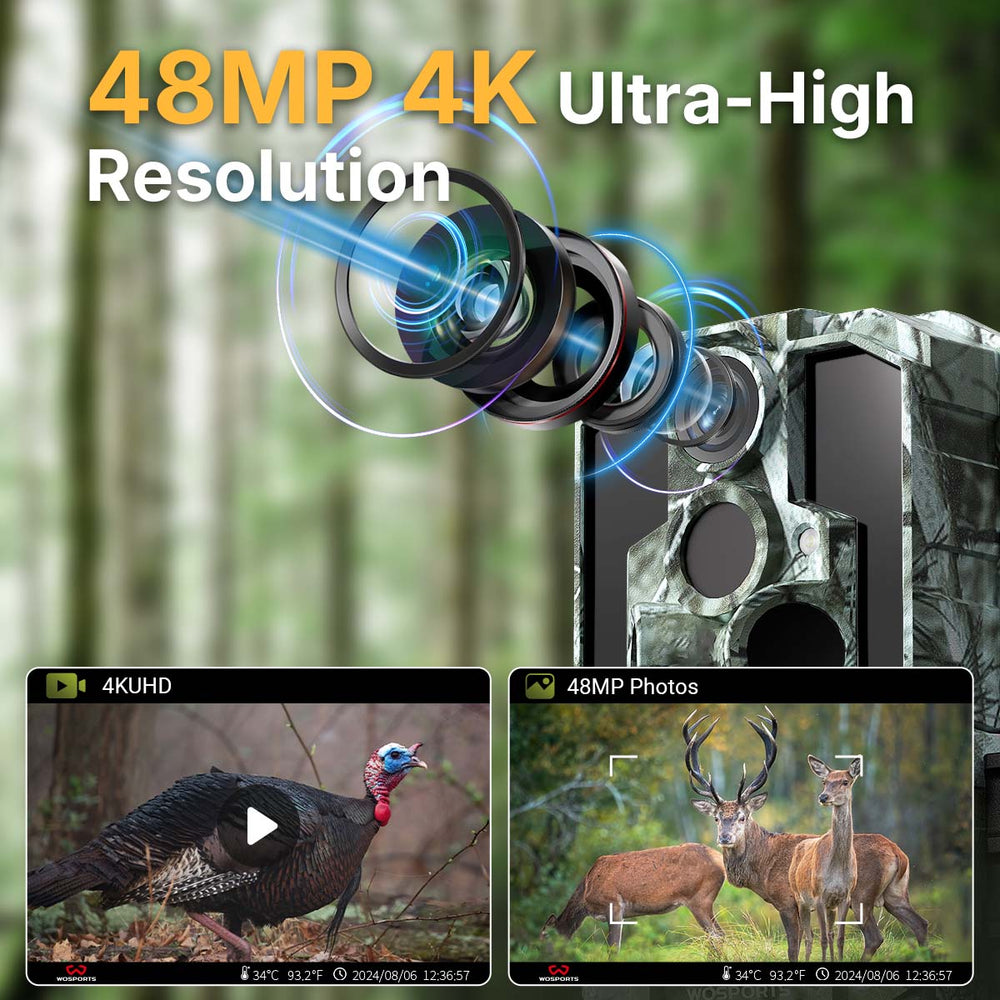
4K Video vs. High-Megapixel Photos
It's important to distinguish between video resolution and photo resolution.
A trail camera might advertise:
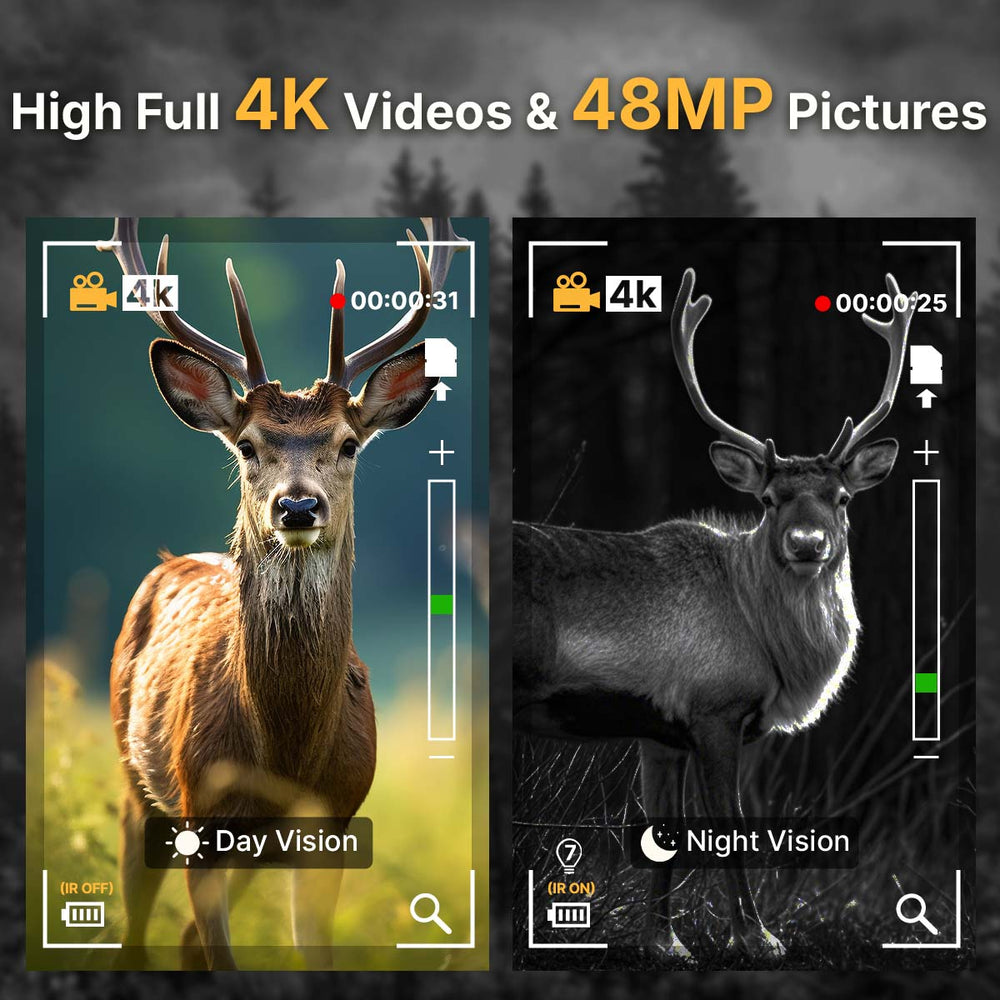
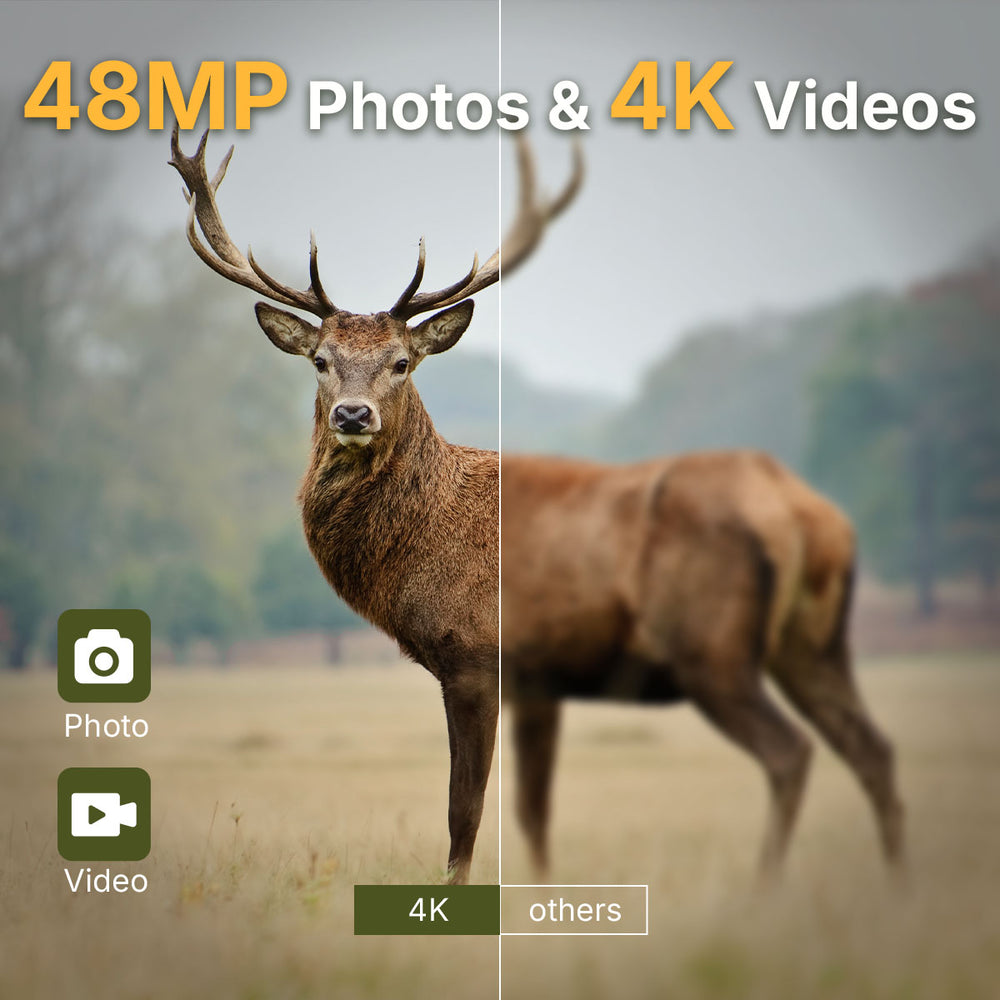
48MP photos + 4K video
These are two different specifications.
High-resolution photos
Higher photo resolution can help capture detailed still images for:
- Deer identification
- Antler observation
- Wildlife documentation
- Property monitoring
- Wildlife photography
4K video
4K video can provide more detailed moving footage and help you understand what happened before, during, and after an event.
For wildlife scouting, both can be useful.
A photo tells you:
"The animal was here."
Video can sometimes tell you:
"Here's what the animal was doing."
Is 1080p Still Good Enough for a Trail Camera?
Absolutely.
1080p isn't obsolete.
For many users, 1080p provides enough quality for:
- Basic wildlife monitoring
- Property surveillance
- Checking whether animals are present
- Routine deer scouting
- Social media clips
- General outdoor observation
If storage space, battery efficiency, or file size is a major concern, 1080p can still be a practical choice.
The question isn't whether 1080p is "bad."
The better question is:
Do you need the additional detail that 4K provides?
When Should You Choose a 4K Trail Camera?
A 4K trail camera makes the most sense when image detail is a priority.
Consider 4K if you:
Want to identify wildlife more clearly
Additional detail can help when reviewing animals captured at a distance.
Want to study animal behavior
Video lets you see movement rather than relying on a single frame.
Create wildlife content
Higher-resolution footage gives you more flexibility when editing and sharing videos.
Use a large display
The difference between 1080p and 4K can be more noticeable on larger screens.
Want to keep high-quality footage
If you plan to archive important wildlife encounters, starting with higher-resolution footage can provide more flexibility later.
When Is 1080p Enough?
You may not need 4K if your main objective is simple monitoring.
1080p may be sufficient when:
- You check the camera frequently
- Wildlife is usually close to the camera
- Storage capacity is limited
- You want smaller video files
- You don't need to edit or crop footage
- Basic monitoring is your primary goal
For a simple "Is anything using this trail?" question, 1080p can often do the job.
What Else Should You Look for in a 4K Trail Camera?
Don't buy a trail camera simply because the box says "4K."
Look at the entire specification sheet.
Trigger Speed
A fast trigger helps the camera respond quickly when an animal enters the detection zone.
Detection Range
Make sure the camera can detect movement across the area you want to monitor.
Field of View
A wider field of view can be useful for trails, food plots, and open areas.
Night Vision
If the camera will operate after dark, examine its infrared capabilities rather than focusing only on daytime resolution.
Storage
4K footage can consume storage quickly, especially when the camera triggers frequently.
Weather Resistance
Outdoor cameras need to withstand changing weather conditions.
Battery Life
Consider how often the camera will trigger and how frequently you're willing to replace or recharge batteries.
Recovery Time
If several animals pass through the area within a short period, recovery time can affect how many events the camera records.
4K Trail Camera Placement Still Matters
Higher resolution doesn't eliminate the importance of placement.
In fact, the better the footage you want, the more carefully you should think about where the camera is installed.
Consider placing the camera where:
- Wildlife naturally travels
- The subject will enter the detection zone
- Vegetation won't block the view
- The camera isn't facing strong direct sunlight
- The animal will remain within a useful part of the frame
A 4K camera pointed at an empty area is still an empty camera.
Resolution can improve what you capture. It can't improve what you fail to capture.
What About 4K at Long Distances?
4K can help preserve more detail when wildlife appears farther away, but there are limits.
The final image depends on:
- Distance
- Lens
- Sensor
- Lighting
- Atmospheric conditions
- Animal size
- Camera angle
- Digital compression
Don't assume that 4K means you can identify every animal at any distance.
Instead, think of 4K as giving the camera more visual information to work with.
Good placement is still essential.
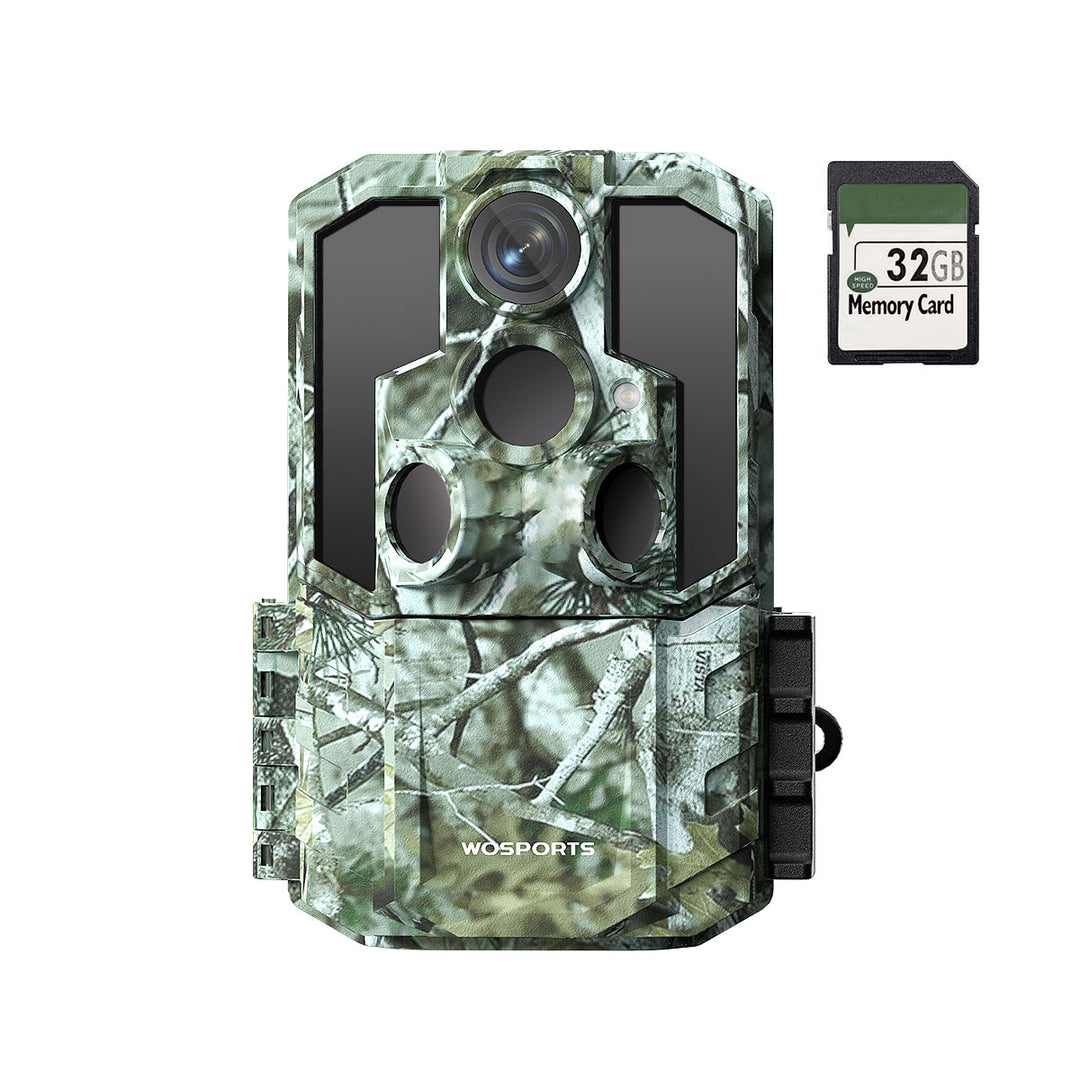
WOSPORTS G600: 4K Video and 48MP Photos
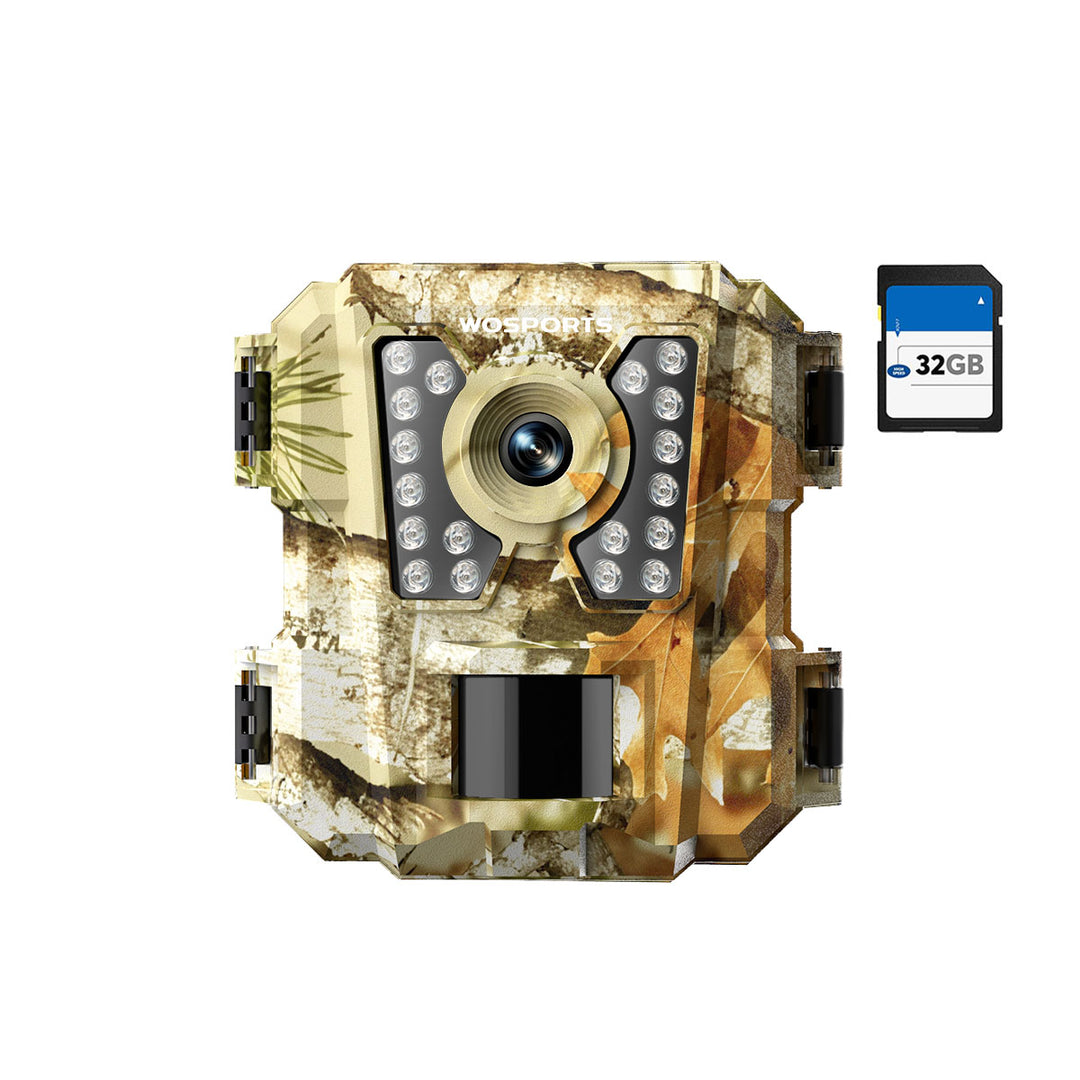
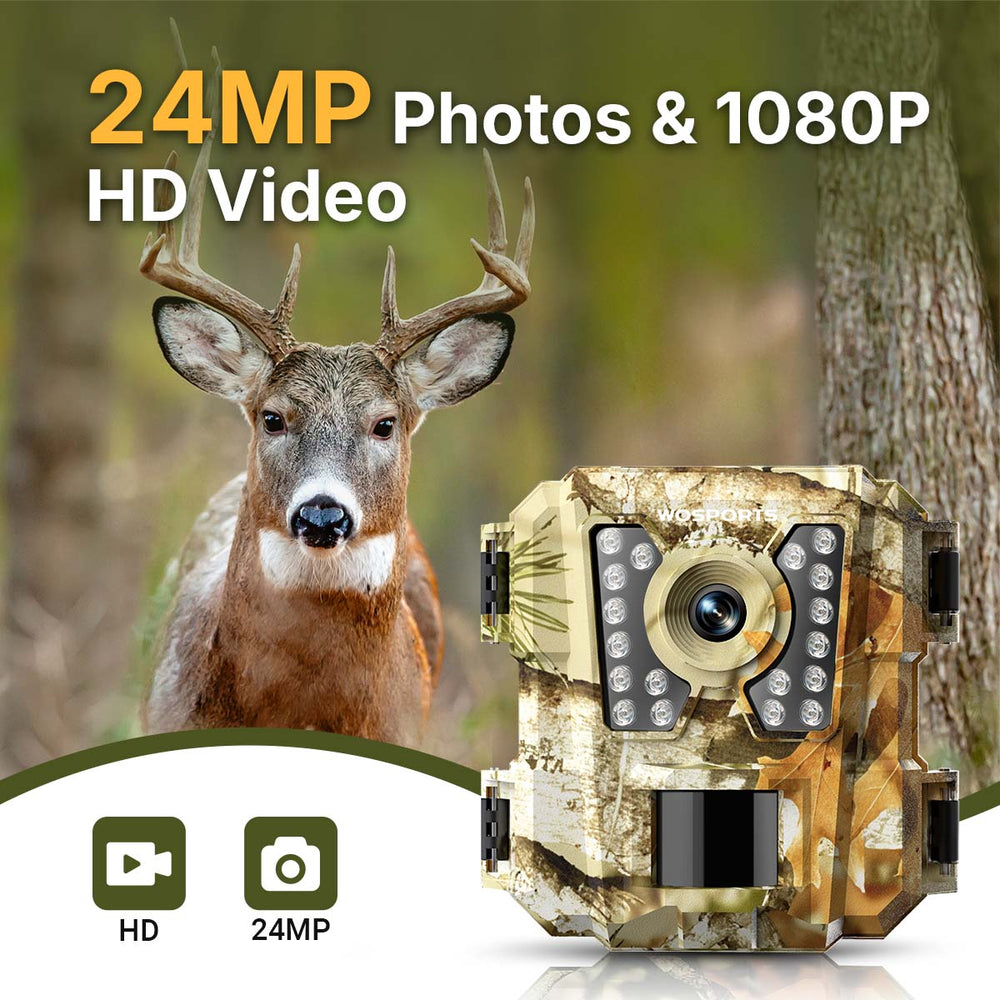
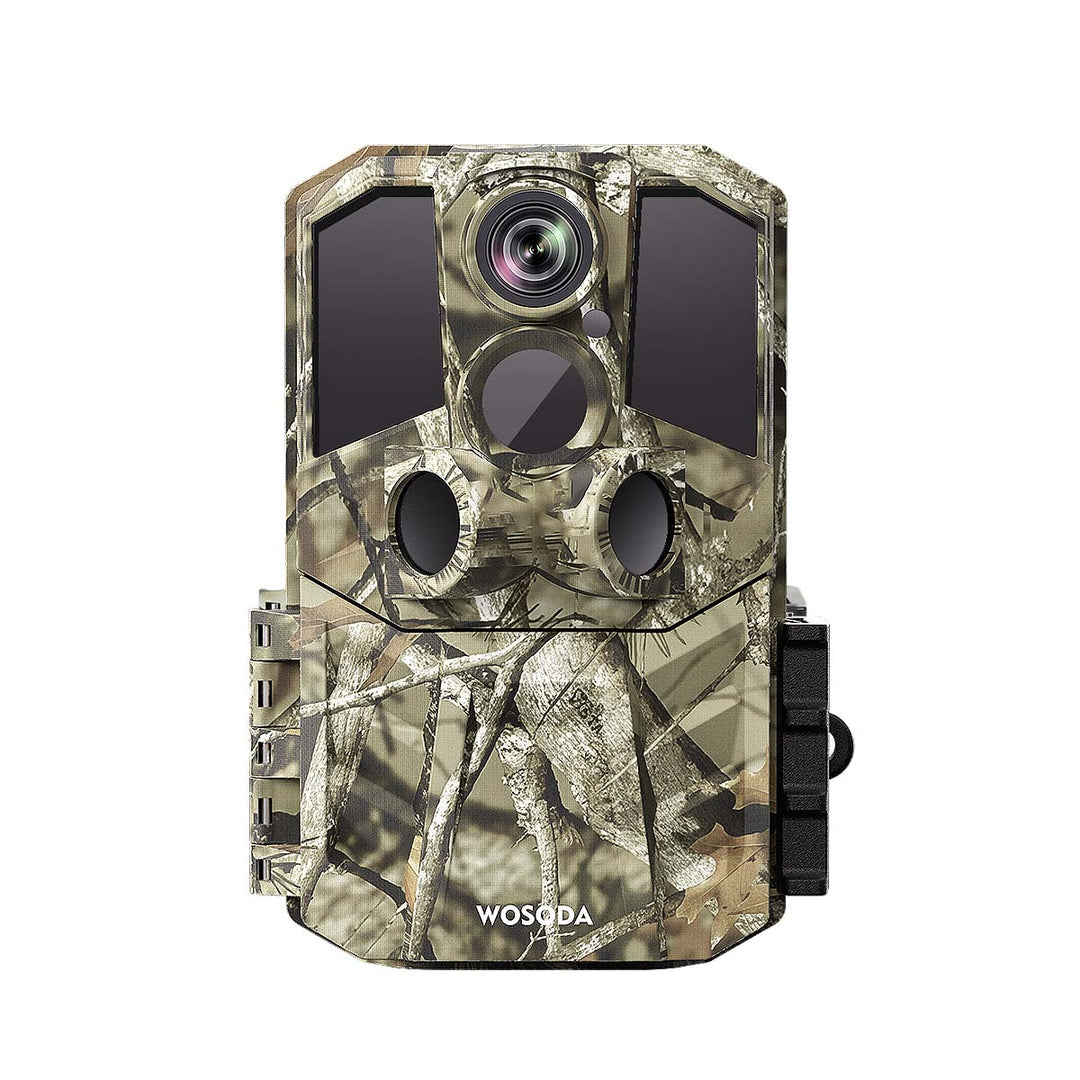
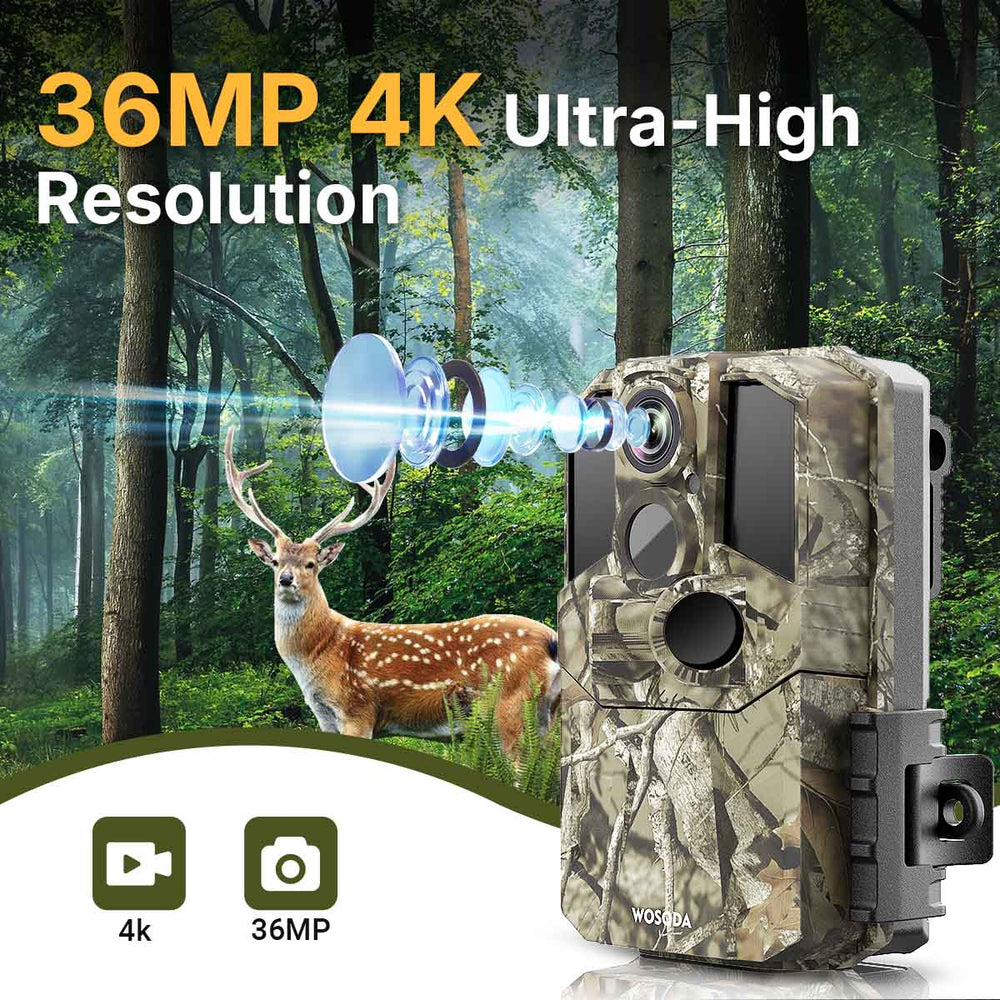
The WOSPORTS G600 combines 4K video recording with up to 48MP photos, giving wildlife scouts both high-resolution video and detailed still images.
Its 0.2-second trigger speed, 120° wide-angle view, up to 70 ft PIR detection, automatic day/night monitoring, and night vision are designed to support a variety of outdoor scouting situations.
That combination can be useful when you want more than a simple record of an animal passing through.
With photos, you can examine details in a single moment.
With video, you can observe movement and behavior.
And with proper placement, the camera can help turn those individual recordings into useful information about wildlife activity.
Final Verdict: Is 4K Worth It on a Trail Camera?
For many users, yes—but it depends on what you expect from your trail camera.
If you simply want to know whether deer or other wildlife are using an area, 1080p may be perfectly adequate.
If you care about detail, wildlife identification, behavior, content creation, or keeping high-quality footage, 4K offers a meaningful advantage.
But don't make your decision based on resolution alone.
A good trail camera should combine:
Resolution + trigger speed + detection range + field of view + night vision + storage + battery life + reliable placement.
The best camera is the one that gives you the information you actually need.
And when you want more detail from every wildlife encounter, 4K can make the footage worth looking at again.
Frequently Asked Questions
Is 4K better than 1080p for trail cameras?
Generally, yes. 4K provides approximately four times as many pixels as 1080p, which can preserve more detail in recorded footage.
Is 4K worth it on a trail camera?
4K is worth considering if you care about wildlife detail, animal identification, behavior, content creation, or viewing footage on larger screens. For basic monitoring, 1080p may be sufficient.
Does 4K use more storage on a trail camera?
Yes. 4K footage generally requires more storage than 1080p footage, so users with frequent camera triggers may need more SD card capacity.
Does 4K drain trail camera batteries faster?
Higher-resolution recording can require additional processing and may contribute to greater power consumption, but actual battery life depends on many factors, including trigger frequency, recording length, night vision, temperature, and settings.
Is 1080p good enough for deer scouting?
Yes. 1080p can be sufficient for routine deer scouting, especially when the main goal is simply monitoring animal presence and movement.
Does 4K help with nighttime trail camera footage?
4K can provide more resolution, but nighttime image quality also depends heavily on infrared illumination, sensor performance, exposure, distance, and camera placement.
Are 48MP photos better than 4K video?
They serve different purposes. High-resolution photos can provide detailed still images, while 4K video captures movement and behavior. A trail camera offering both can provide more flexibility.
What matters more: 4K or trigger speed?
Neither is universally more important. Trigger speed affects how quickly the camera captures an event, while 4K affects the amount of detail in the recorded video. Ideally, a wildlife camera should provide both good responsiveness and useful image quality.
Search
Popular Posts
Recent Posts


Nov 28, 2024
Troubleshooting Common Trail Camera Issues
Jan 10, 2025
Why Does My Trail Camera Stop Working at Night?