4K vs. 2K Trail Cameras: Does 4K Video Really Matter for Wildlife Scouting?
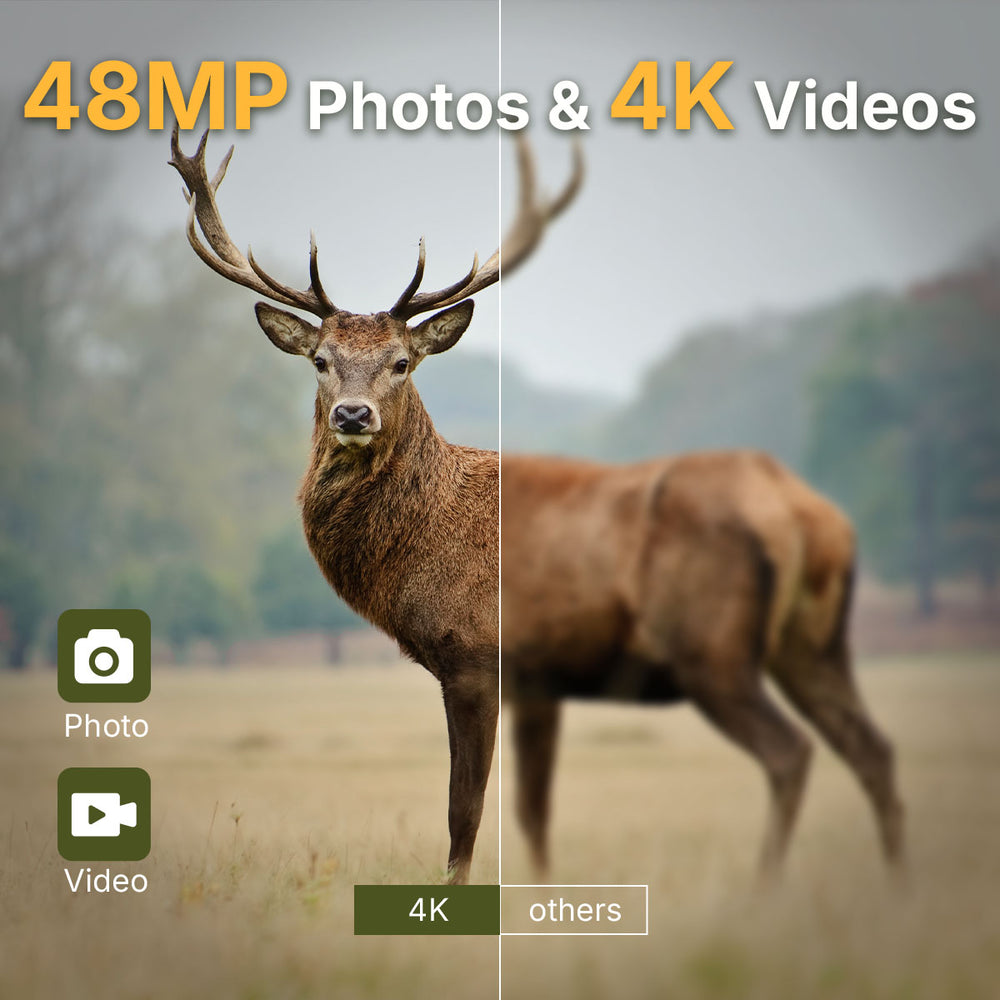
Yes, 4K video can be useful for wildlife scouting when you want more detail and more context than a still photo or lower-resolution video can provide.
A 2K trail camera can already produce useful footage for monitoring deer, wildlife, and property activity. However, 4K provides a higher-resolution video image, which can be especially helpful when you want to examine animal behavior, identify details, or review footage on a larger screen.
For wildlife scouting, the value of 4K depends on how you use your trail camera.
If you mainly want to know whether an animal passed by, 2K may be enough.
If you want to study movement, observe behavior, identify animals, and preserve more visual detail, 4K can provide a meaningful advantage.
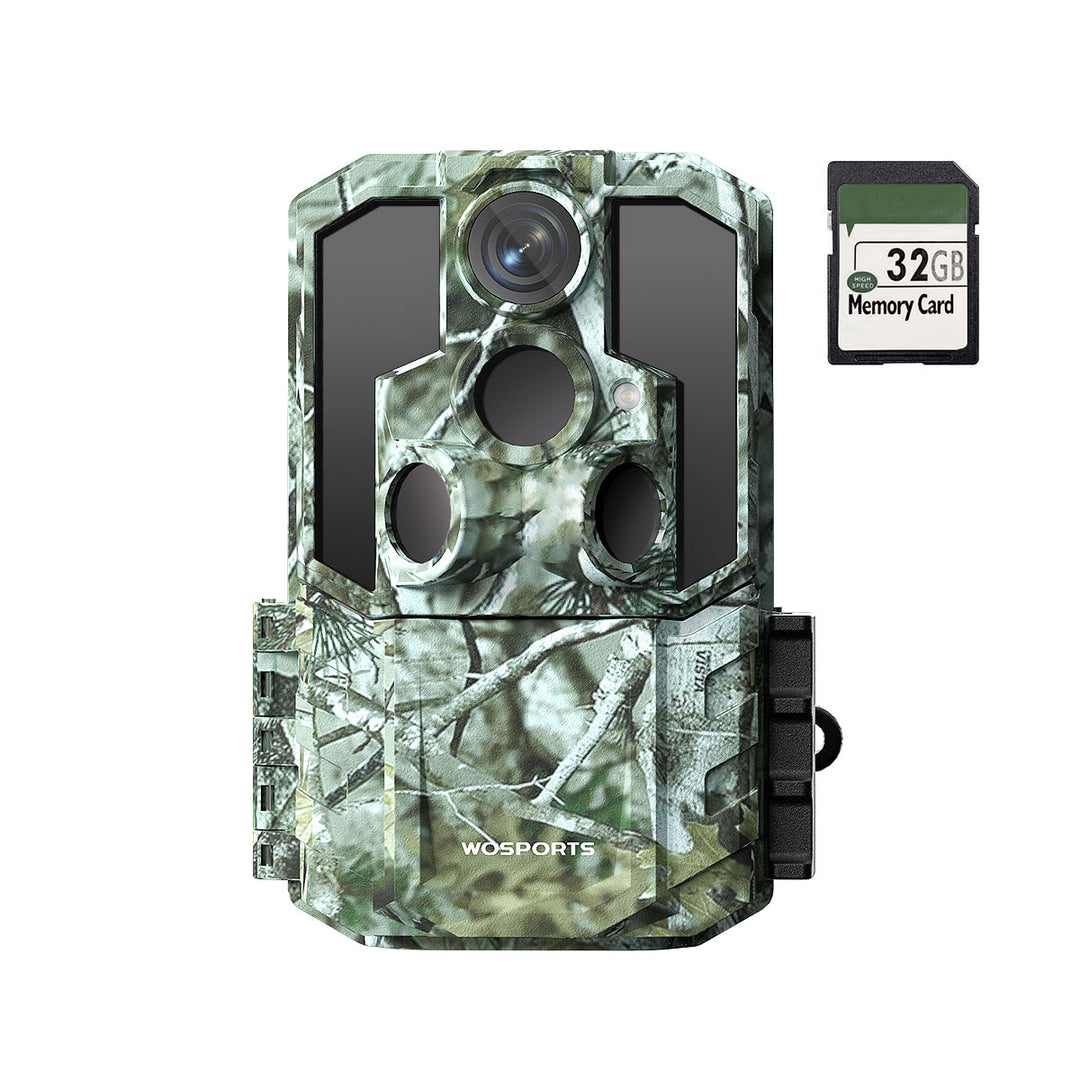
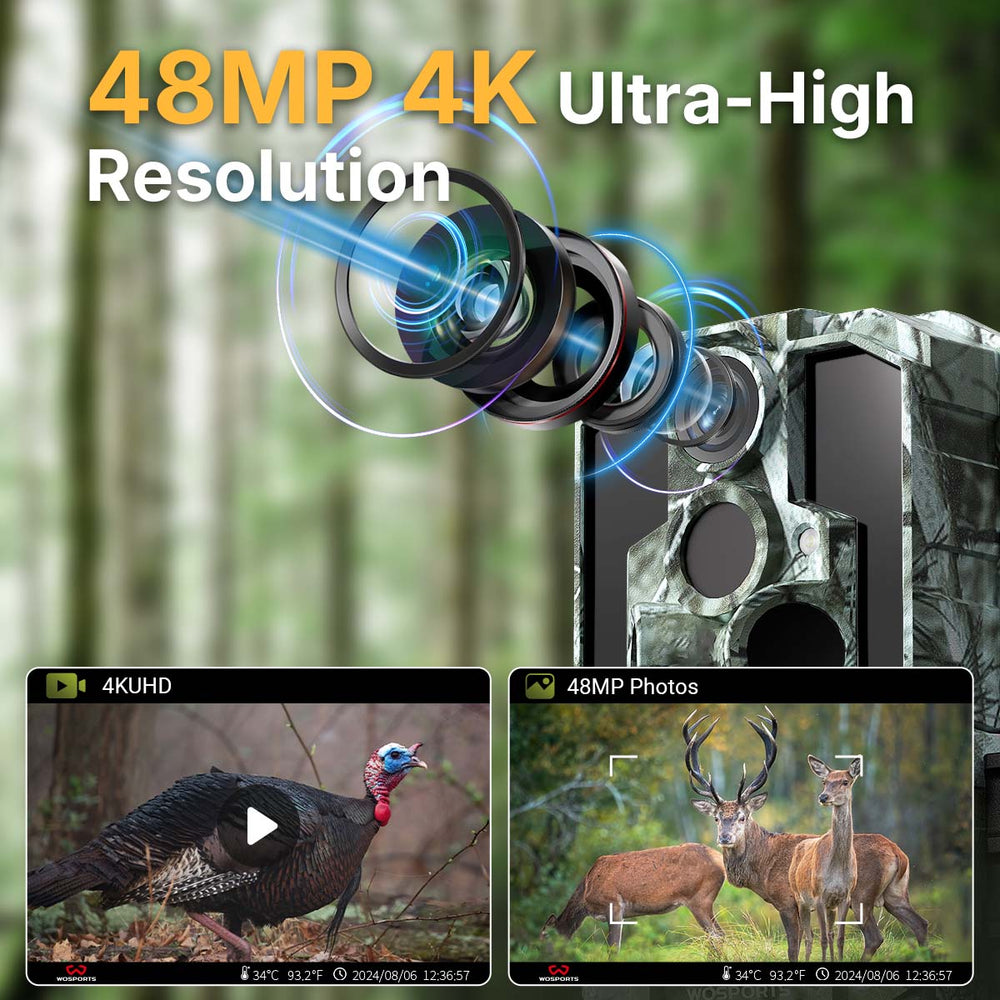
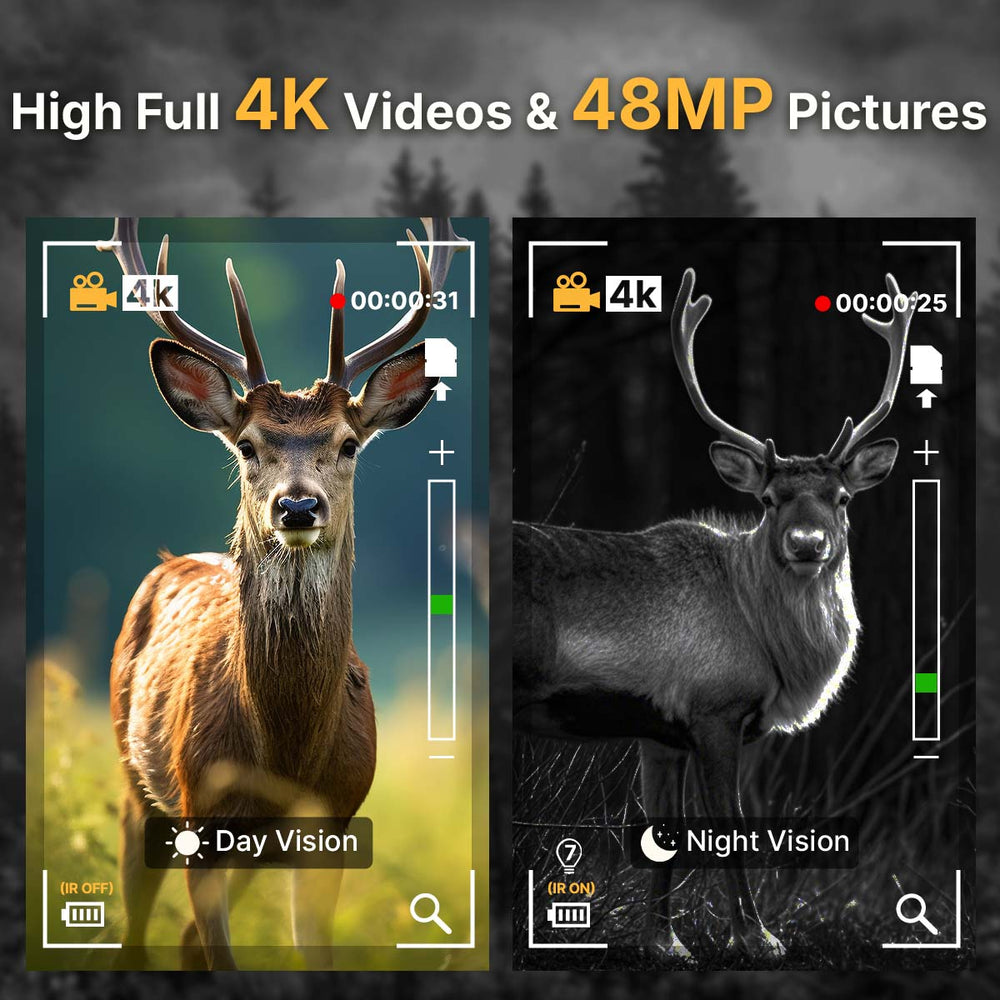
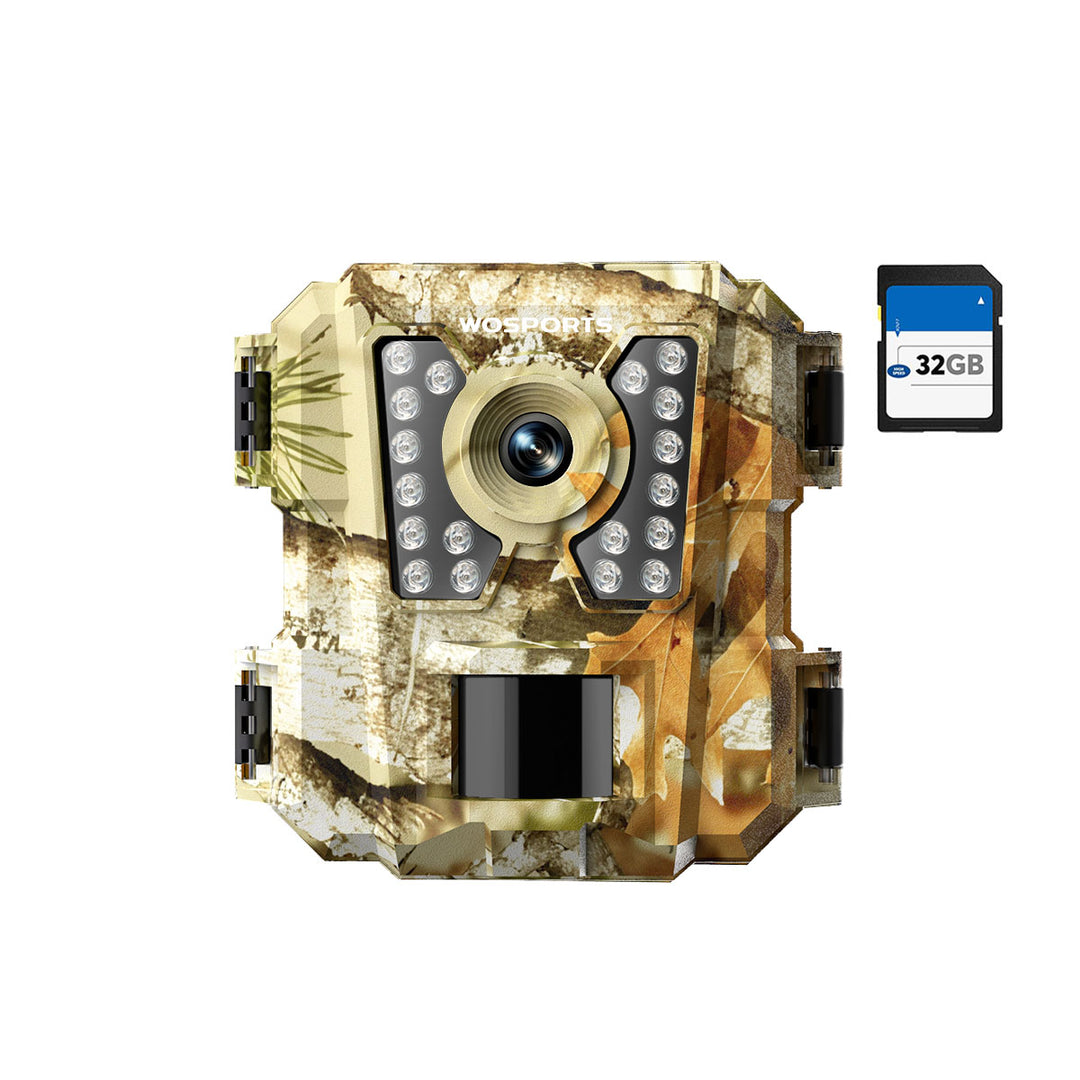
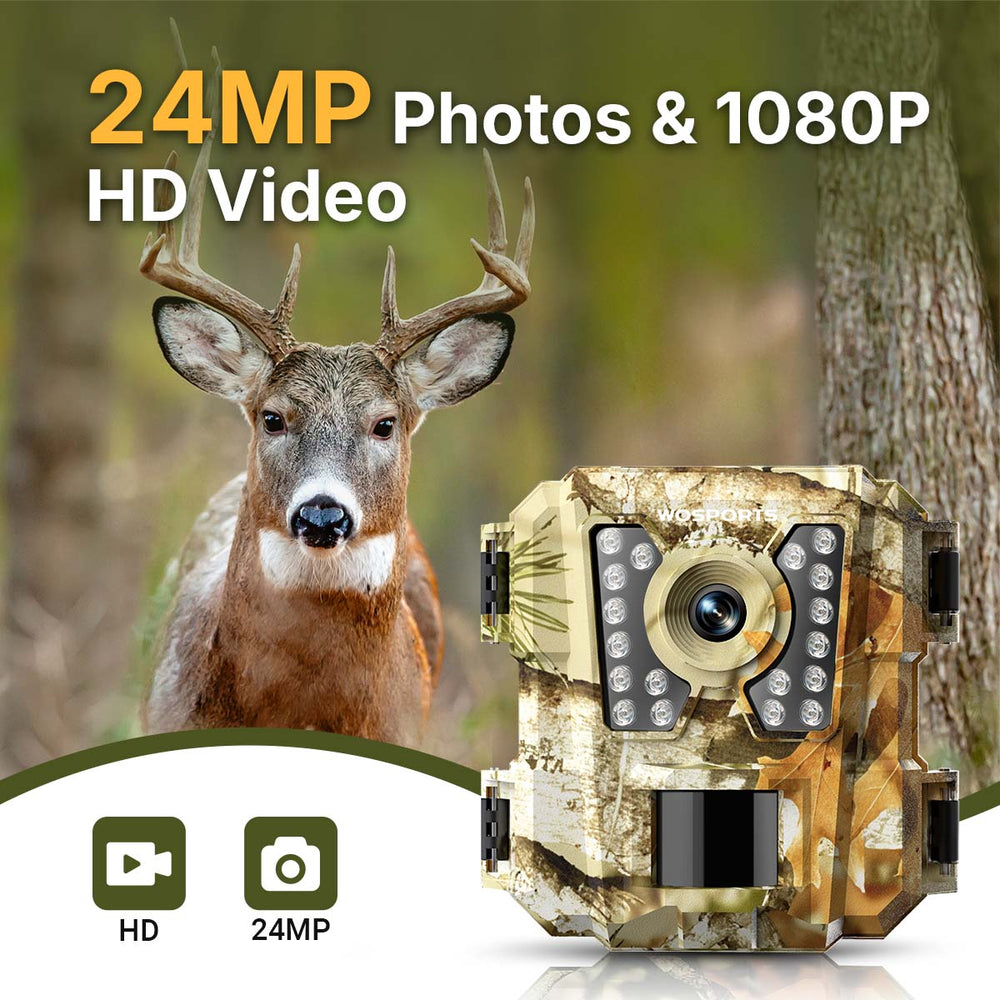
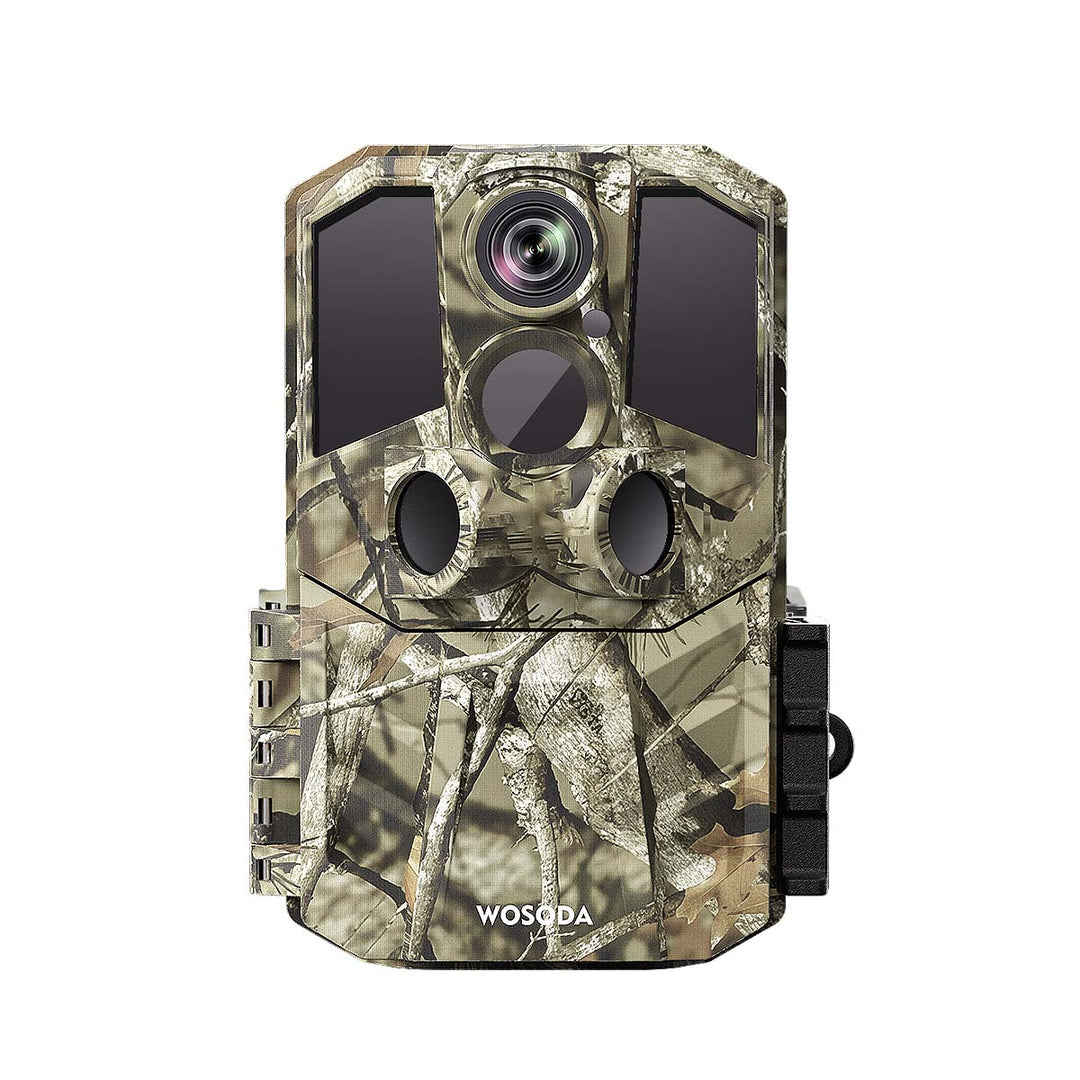
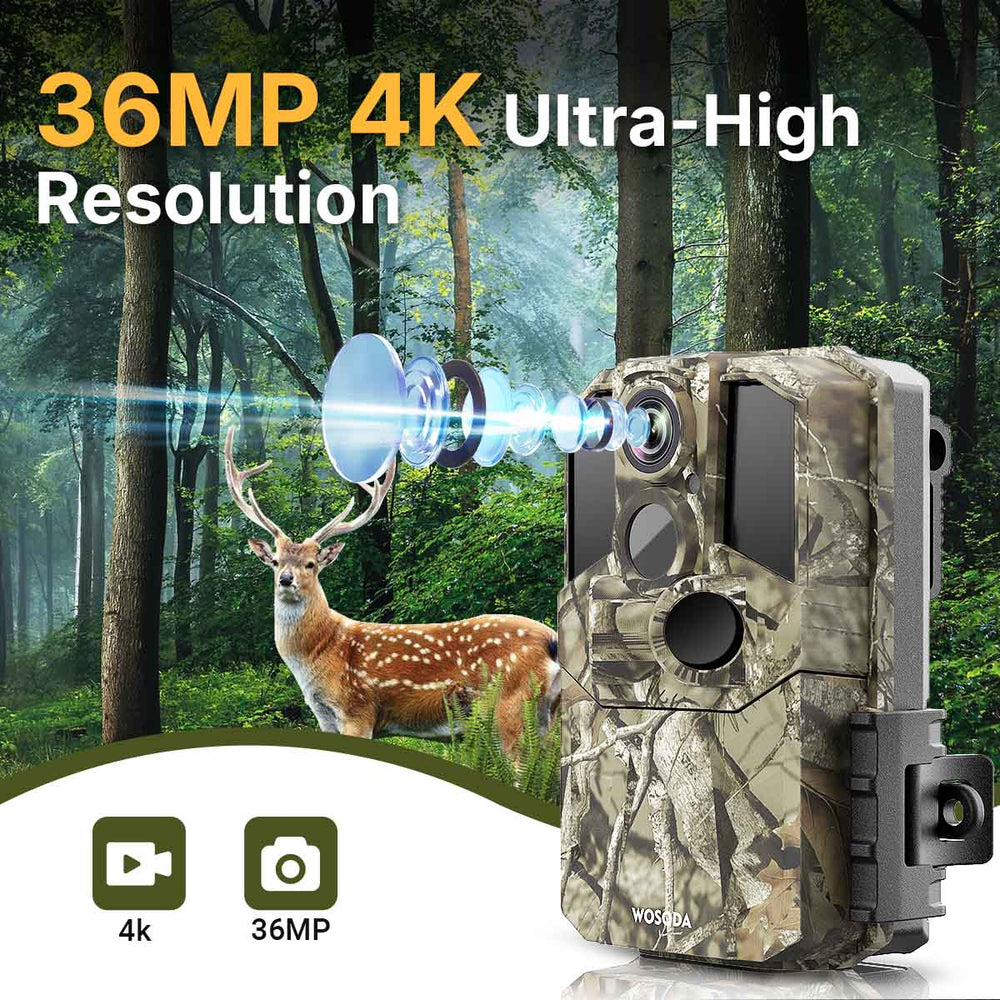
The WOSPORTS G600 supports 4K video recording, along with up to 48MP photos, approximately 0.2-second trigger speed, 120° wide-angle coverage, up to 70 feet of PIR detection, night monitoring, and IP66 weather protection.
But is 4K really worth paying for?
Let's break it down.
Quick Answer: 4K vs. 2K Trail Cameras
| Feature | 2K Video | 4K Video |
|---|---|---|
| Resolution | Lower | Higher |
| Fine Detail | Good | Better |
| Animal Behavior | Good | More detail |
| Cropping Footage | More limited | More flexibility |
| Storage Requirements | Lower | Higher |
| File Size | Smaller | Larger |
| Best For | Basic monitoring | Detailed scouting |
| Overall Detail | Good | Excellent |
For basic wildlife detection, 2K can be sufficient. For detailed wildlife scouting, 4K provides more visual information and flexibility.
The right choice depends on what you want to learn from your footage.
What Is the Difference Between 4K and 2K Video?
The biggest difference is resolution.
Resolution refers to the number of pixels used to create a video image.
More pixels can provide more visual detail.
A simplified comparison looks like this:
2K → fewer pixels → less detail
4K → more pixels → more detail
This difference becomes more noticeable when you:
- View footage on a larger screen
- Pause video
- Examine an animal
- Review movement
- Crop footage
- Compare different animals
- Look at details in the background
However, resolution is not the only factor that determines video quality.
Lens quality, lighting, image processing, exposure, sensor performance, and camera placement all influence the final result.
Why Does 4K Matter for Wildlife Scouting?
4K can make wildlife footage more useful when the goal is to understand what an animal is doing rather than simply confirm that it was there.
Consider two different scouting goals.
Goal 1: Confirm Animal Presence
You want to know:
"Are deer using this trail?"
For this purpose, 2K video may be more than sufficient.
Goal 2: Study Animal Behavior
You want to know:
"Which deer are using this trail, when are they arriving, and how are they moving through the area?"
Higher-resolution footage can provide more detail to work with.
This is where 4K becomes more valuable.
Can 4K Help You Identify Deer?
Higher-resolution video can make it easier to examine visible details, but it does not guarantee that every animal can be identified.
For example, footage may provide useful information about:
- Body size
- Antler shape
- Coat patterns
- Movement
- Number of animals
- Direction of travel
- Interaction between animals
However, several factors still matter:
- Distance from the camera
- Lighting
- Camera angle
- Animal movement
- Vegetation
- Image quality
- Focus
A 4K camera cannot turn a distant or poorly framed animal into a perfectly detailed subject.
This is why camera placement and resolution should be considered together.
Does 4K Matter More During the Day or at Night?
4K can provide more resolution in both daytime and nighttime footage, but nighttime image quality depends heavily on the camera's night-vision system and environmental conditions.
This is an important distinction.
A camera may advertise 4K video, but that does not automatically mean its nighttime footage will be equally detailed.
At night, factors such as:
- Infrared illumination
- Sensor sensitivity
- Distance
- Ambient light
- Weather
- Animal movement
- Camera placement
can all affect the final image.
For wildlife scouting, you should therefore evaluate:
4K + night vision
rather than looking at 4K alone.
The WOSPORTS G600 combines 4K video recording with automatic day/night monitoring and night vision, allowing the camera to continue monitoring wildlife after daylight ends.
Is 4K Trail Camera Video Better for Deer Hunting?
4K can be particularly useful for hunters who use trail cameras to study deer movement and behavior before hunting.
A trail camera can provide more than simple proof that deer are present.
Over time, your footage may help you understand:
- When deer arrive
- Where deer are traveling
- How long they stay
- Which direction they move
- Whether multiple deer use the same area
- How activity changes between day and night
For example, a single photo may show a buck standing near a trail.
A video can show the buck:
approaching → stopping → looking around → continuing down the trail
That additional context can make video more useful for scouting.
Why Is 4K Useful When Reviewing Wildlife Footage?
One advantage of higher-resolution video is that you have more information to work with after recording.
You may want to:
Pause the Video
A still frame can sometimes reveal details that are easy to miss while watching the footage normally.
Review Movement
You can observe how an animal enters and exits the detection zone.
Examine the Background
Other animals may appear in the background of the frame.
Compare Multiple Recordings
Higher-resolution footage can make it easier to compare animals and movement patterns.
Crop a Section of the Video
When the original footage contains more detail, you have greater flexibility when focusing on a particular part of the frame.
This is one reason 4K can be valuable even when you do not immediately notice a dramatic difference while watching the entire video.
Does 4K Use More Storage?
Yes. Higher-resolution video generally requires more storage space than lower-resolution video.
This is one of the trade-offs of 4K.
More detail means:
More information → larger video files → more storage required
If your trail camera records frequently, this difference can become important.
For example, a camera positioned near a highly active trail may record many clips in a single day.
Before choosing 4K, consider:
- How frequently the camera triggers
- Video length
- Storage capacity
- How often you check the camera
- How many cameras you operate
If you only need occasional monitoring, storage may not be a major concern.
If you are monitoring a high-activity location continuously, storage management becomes more important.
Is 4K Always Better Than 2K?
No. 4K is not automatically the best choice for every trail camera user.
This is an important point.
If your main goal is:
"I just want to know whether something walked past."
Then 2K may already provide enough information.
But if your goal is:
"I want to capture detailed wildlife footage and study what happened."
Then 4K becomes more attractive.
Think of it this way:
Choose 2K if you prioritize:
- Basic wildlife monitoring
- Smaller video files
- Lower storage requirements
- Simple observation
Choose 4K if you prioritize:
- Higher detail
- Wildlife behavior
- Detailed scouting
- Larger-screen viewing
- More flexibility when reviewing footage
- Higher-quality outdoor video
The best resolution is the one that matches your scouting objective.
What Else Matters Besides 4K?
This is one of the most important questions to ask.
A trail camera with 4K video can still perform poorly if other important features are weak.
When comparing trail cameras, look at the entire system.
1. Trigger Speed
A camera needs to react quickly enough to capture moving animals.
The G600 has an approximately 0.2-second trigger speed.
2. Night Monitoring
Wildlife does not stop moving when the sun goes down.
Reliable night monitoring is important for getting a complete picture of activity.
3. Detection Range
The camera needs to detect movement far enough away to be useful for the location where you install it.
The G600 provides up to 70 feet of PIR detection.
4. Field of View
A wider field of view can help cover larger monitoring areas.
The G600 provides a 120° wide-angle view.
5. Photo Resolution
Video is only one part of wildlife scouting.
The G600 can capture still photos at up to 48MP.
6. Weather Protection
Trail cameras stay outdoors, often for weeks or months.
The G600 features IP66 weather protection for outdoor monitoring.
7. Battery Performance
A camera that records excellent footage but requires constant battery changes can be inconvenient for long-term scouting.
Battery life depends on trigger frequency, recording settings, temperature, and other environmental factors.
4K Video vs. 48MP Photos: What's the Difference?
The G600 offers both 4K video and up to 48MP still photos, but these two features serve different purposes.
48MP Photos
Best for:
- Examining individual images
- Looking at animal details
- Comparing animals
- Identifying visible characteristics
- Capturing a specific moment
4K Video
Best for:
- Understanding movement
- Observing behavior
- Seeing what happens before and after the trigger
- Reviewing interactions
- Capturing a sequence of events
This is why a good trail camera does not necessarily need to choose between high-resolution photos and video.
Photos answer "what was there?"
Video can help answer "what happened?"
When Should You Choose a 4K Trail Camera?
A 4K trail camera may be worth considering if you frequently use trail-camera footage for:
Deer Scouting
You want to observe deer movement and behavior.
Wildlife Observation
You want more than simple still images.
Property Monitoring
You want detailed footage of activity around outdoor areas.
Wildlife Research
You want to review behavior and movement patterns.
Outdoor Content Creation
You want higher-resolution footage that can be edited or shared.
Long-Term Scouting
You want to preserve detailed footage that you can review later.
When Is 2K Enough?
A 2K trail camera may be sufficient if:
- You mainly need basic monitoring.
- Storage space is limited.
- You do not frequently review detailed footage.
- You mostly care about detecting animal presence.
- You are monitoring a small area.
- You prefer smaller video files.
There is no need to pay for features you will never use.
The key is to choose the resolution based on the job.
Why the WOSPORTS G600 Uses 4K Video
The G600 is designed for users who want more information from their wildlife footage.
Its 4K video capability works together with other scouting-focused features:
| Feature | WOSPORTS G600 |
| Video Resolution | 4K |
| Photo Resolution | Up to 48MP |
| Trigger Speed | Approx. 0.2 sec |
| Field of View | 120° |
| PIR Detection | Up to 70 ft |
| Night Monitoring | Yes |
| Weather Protection | IP66 |
| Power | 8 × AA batteries |
The important point is that 4K is not the only reason to choose the G600.
The value comes from combining multiple features into one wildlife scouting system.
For example:
Fast trigger + 4K video
helps capture fast-moving animals with more detail.
120° field of view + 4K video
can provide broader context when monitoring open areas.
Night monitoring + 4K video
allows you to continue collecting video after dark.
48MP photos + 4K video
gives you both detailed still images and higher-resolution moving footage.
How to Get Better 4K Trail Camera Footage
Buying a 4K camera is only the first step.
You also need to give the camera the right environment.
Place the Camera Carefully
Avoid positioning the camera where the subject will be extremely far away.
Keep the Detection Zone Clear
Remove branches and vegetation that can trigger unnecessary recordings.
Avoid Direct Sunlight
Strong sunlight can cause glare and exposure problems.
Monitor Both Day and Night
Do not judge the camera based only on daytime performance.
Use the Right Camera Angle
Try to position the camera so animals move across the useful image area.
Review Your Footage
Do not only look at individual clips.
Look for patterns over time.
Common Questions About 4K Trail Cameras
Is 4K worth it on a trail camera?
4K can be worth it if you want higher-resolution wildlife footage, more detail, and additional flexibility when reviewing or cropping recordings. If you only need basic animal detection, 2K may be sufficient.
Does 4K make trail camera pictures better?
4K specifically refers to video resolution, not still-photo resolution. A trail camera can offer high-resolution photos and 4K video as separate capabilities.
Is 4K useful for deer hunting?
Yes. 4K video can provide more detail and context when monitoring deer movement and behavior.
Does 4K use more battery?
Recording higher-resolution video can affect power consumption, but actual battery life depends on recording frequency, clip length, temperature, night operation, and camera settings.
Does 4K use more storage?
Yes. Higher-resolution video generally produces larger files, so frequent 4K recording can require more storage capacity.
Is 4K better at night?
4K provides higher video resolution, but nighttime image quality also depends on the camera's infrared system, sensor, lighting conditions, distance, and movement. Resolution alone does not determine night performance.
Do I need 4K if I only want to see deer?
Not necessarily. If you only want to confirm deer presence, a lower-resolution camera may be sufficient. If you want to study movement and behavior, 4K can provide additional detail.
What is more important, 4K or trigger speed?
They serve different purposes. Trigger speed affects how quickly the camera responds to movement, while 4K affects video resolution. For moving wildlife, both can be valuable.
Does the WOSPORTS G600 record in 4K?
Yes. The WOSPORTS G600 supports 4K video recording.
Does the G600 also take high-resolution photos?
Yes. The G600 supports photos up to 48MP.
Final Verdict: Is 4K Worth It for Wildlife Scouting?
If your goal is simply to detect wildlife, you may not need 4K. If your goal is to study wildlife in greater detail, 4K can be a valuable upgrade.
The biggest benefit of 4K is not simply that the image contains more pixels.
It is that higher-resolution footage can give you more information to work with.
You can observe movement.
You can review behavior.
You can examine details.
You can pause footage.
You can compare animals.
You can better understand what happened after the camera was triggered.
But remember:
A great resolution cannot fix poor camera placement.
The best wildlife scouting results come from combining:
Good location + fast trigger + reliable detection + quality imaging + effective night monitoring + appropriate resolution.
The WOSPORTS G600 brings these elements together with 4K video, up to 48MP photos, approximately 0.2-second trigger speed, 120° wide-angle coverage, up to 70 feet of PIR detection, night monitoring, and IP66 weather protection.
If you want your trail camera to do more than simply tell you that an animal was there, 4K can be a useful tool for seeing what happened next.
Ready to capture more of the action?
Search
Popular Posts
Recent Posts


Nov 28, 2024
Troubleshooting Common Trail Camera Issues
Jan 10, 2025
Why Does My Trail Camera Stop Working at Night?