How Fast Should a Trail Camera Trigger? Does 0.2 Seconds Really Matter?
How Fast Should a Trail Camera Trigger?
For wildlife scouting, a trail camera with a trigger speed of 0.3 seconds or faster is a strong starting point, especially when monitoring animals that move quickly across a trail.
Trigger speed is the amount of time between the moment a camera detects movement and the moment it captures a photo or begins recording.
A faster trigger can give the camera a better chance of capturing an animal while it is still inside the useful image area.
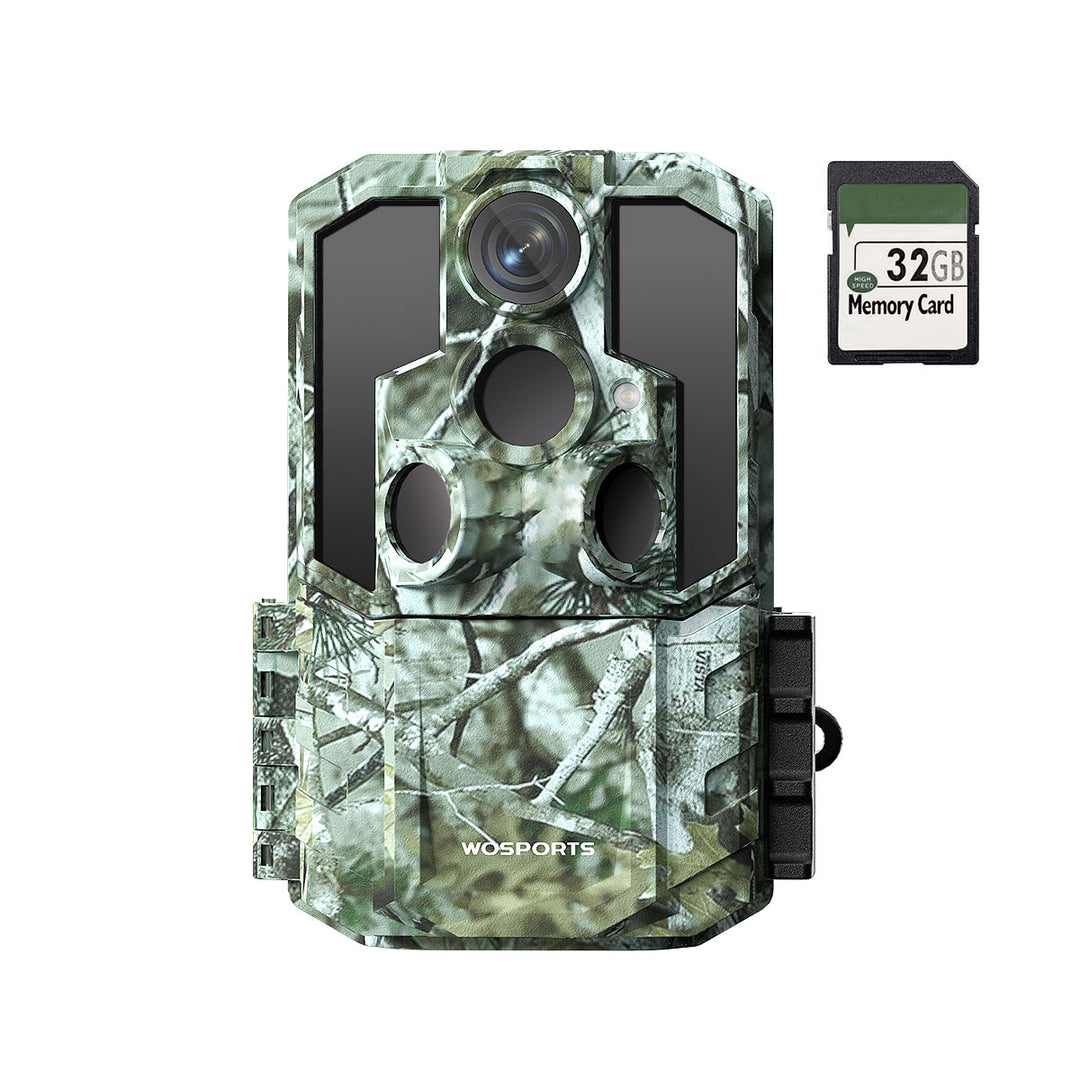
The WOSPORTS G600 has an approximately 0.2-second trigger speed, allowing it to respond quickly when motion is detected.
But does a difference of a few tenths of a second really matter?
Sometimes, yes.
The importance of trigger speed depends on the animal, its movement, the camera's placement, the detection zone, and how quickly the subject moves through the frame.
Quick Answer: What Is a Good Trail Camera Trigger Speed?
As a general guideline:
| Trigger Speed | General Use |
|---|---|
| 1.0+ seconds | Basic monitoring; slower for fast-moving wildlife |
| 0.5–1.0 seconds | Suitable for many general applications |
| 0.3–0.5 seconds | Good for wildlife and hunting applications |
| 0.2–0.3 seconds | Very responsive for moving wildlife |
| Around 0.2 seconds | Useful when fast movement is a priority |
These are practical guidelines rather than universal performance standards.
A faster trigger does not automatically make a trail camera better.
Camera placement, detection range, field of view, image quality, and environmental conditions all affect the final result.
What Does Trail Camera Trigger Speed Actually Mean?
Trigger speed is often misunderstood.
It does not mean how quickly the camera takes every picture.
Instead, it refers to the camera's response after motion is detected.
The basic sequence is:
Animal moves → Motion is detected → Camera triggers → Photo/video begins
A faster trigger reduces the time between detection and capture.
For example, consider two cameras monitoring the same deer trail.
Camera A
Trigger speed: 1 second
Camera B
Trigger speed: 0.2 seconds
If a deer moves quickly through the detection area, Camera B may have a better opportunity to capture the animal while it is still in the desired part of the frame.
That is the practical reason trigger speed matters.
Why Does Trigger Speed Matter for Deer?
Deer can move quickly through a trail camera's detection zone, particularly when traveling along narrow trails or moving between cover and feeding areas.
Imagine a deer crossing the trail from left to right.
The camera detects movement.
If the camera takes a relatively long time to respond, the deer may have already moved several feet by the time the image is captured.
With a faster trigger, the camera can respond sooner.
This can improve the chance of capturing:
-
A full-body image
-
A side profile
-
Antler details
-
Multiple animals
-
The direction of travel
-
The moment an animal enters the frame
This is particularly useful when the camera is positioned close to an active trail.
Does 0.2 Seconds Really Make a Difference?
It can, especially when an animal is moving quickly across a relatively narrow detection zone.
A difference of 0.8 seconds may not sound significant in everyday life.
For a moving animal, however, it can be meaningful.
Consider a deer traveling quickly across a camera's field of view.
During the time between detection and image capture, the deer continues moving.
The faster the camera responds, the less the animal can move before the camera captures the moment.
That does not mean a 0.2-second camera will always produce a better image than a 0.5-second camera.
But when everything else is equal, faster response can reduce the chance of missing the ideal moment.
When Is Fast Trigger Speed Most Important?
Trigger speed becomes particularly important in certain situations.
1. Narrow Deer Trails
When a deer trail is narrow, animals may cross the camera's detection area quickly.
A fast trigger can help capture the animal before it moves out of the ideal frame.
2. Wildlife Travel Corridors
Animals moving through a natural funnel may not remain in front of the camera for long.
Fast response can be useful when movement is concentrated in a narrow area.
3. Fast-Moving Animals
Some wildlife species move much faster than others.
A fast trigger can be particularly useful for:
-
Deer
-
Coyotes
-
Foxes
-
Smaller mammals
-
Animals running or trotting through the detection zone
4. Cameras Positioned Close to Trails
The closer an animal is to the camera, the more quickly it can move through the useful field of view.
A responsive trigger becomes more valuable in these situations.
5. Multiple Animals
When several animals move through the frame, fast response can help capture the beginning of the activity before the group has moved farther away.
When Does Trigger Speed Matter Less?
A fast trigger is not equally important in every scenario.
If your camera is monitoring a large open area where animals move slowly and remain within the detection zone for an extended period, a difference of a few tenths of a second may be less noticeable.
For example:
Large Feeding Area
A deer may remain in the camera's field of view for several minutes.
Water Source
Animals may stop and drink rather than quickly pass through.
Static Property Monitoring
You may only need to know whether something entered the area.
In these situations, other specifications may be equally or more important.
For example:
-
Image quality
-
Night vision
-
Battery life
-
Detection range
-
Field of view
-
Weather resistance
This is why trigger speed should never be evaluated in isolation.
What Is the Difference Between Trigger Speed and Recovery Time?
These two specifications are sometimes confused.
Trigger Speed
How quickly the camera responds to detected movement.
Recovery Time
How quickly the camera becomes ready to capture another image after taking a photo or recording a video.
They affect different parts of the scouting process.
Imagine three deer crossing the camera's detection zone.
A fast trigger helps capture the first deer quickly.
But if the camera takes too long to become ready for another trigger, the second or third deer may not be captured in the way you expect.
For this reason, if you are comparing trail cameras, look at both:
Trigger Speed + Recovery Time
rather than focusing only on the first number.
Does Trigger Speed Affect Video Recording?
Yes, trigger speed can matter for video because it determines how quickly the camera begins recording after detecting movement.
This can be important when an animal enters the frame quickly.
For example:
A deer approaches.
The camera detects movement.
The camera starts recording.
The deer continues moving.
A faster response can capture more of the animal's movement from the beginning of the event.
This is particularly useful when a camera is being used for behavior observation rather than simply taking still photos.
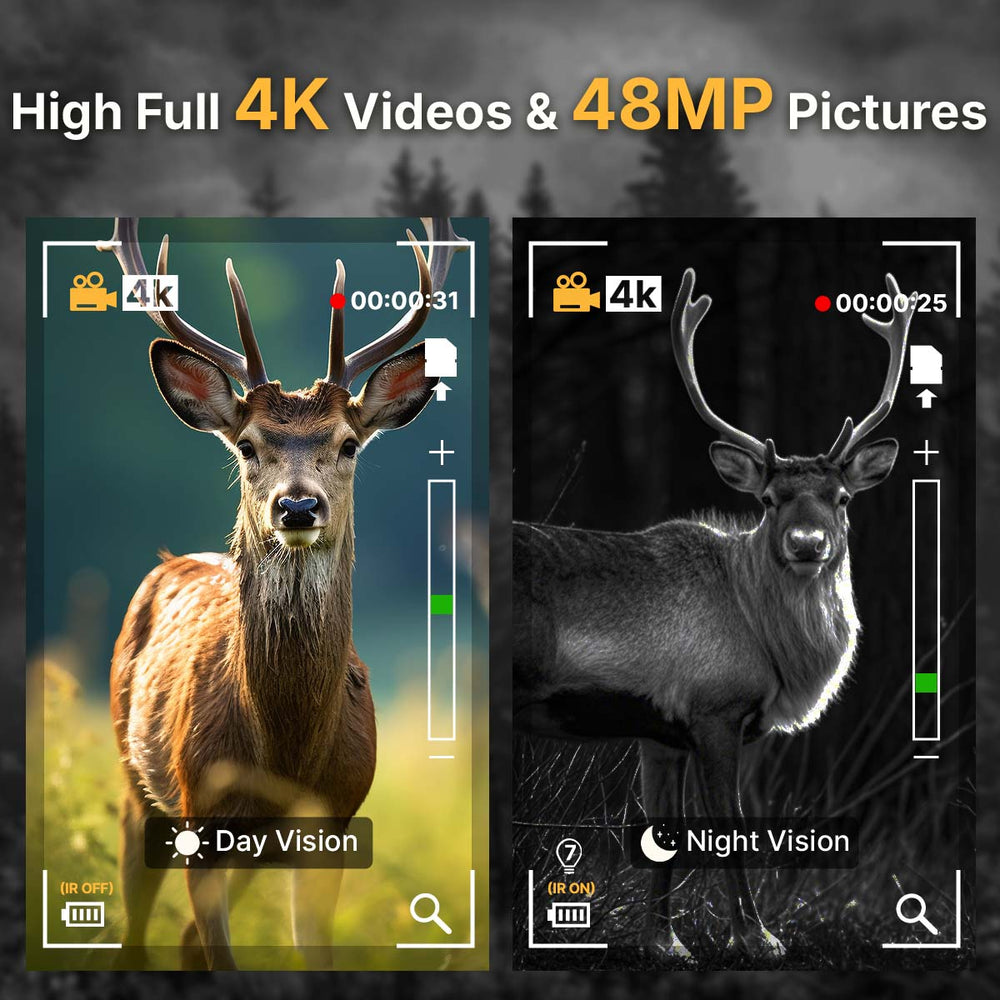
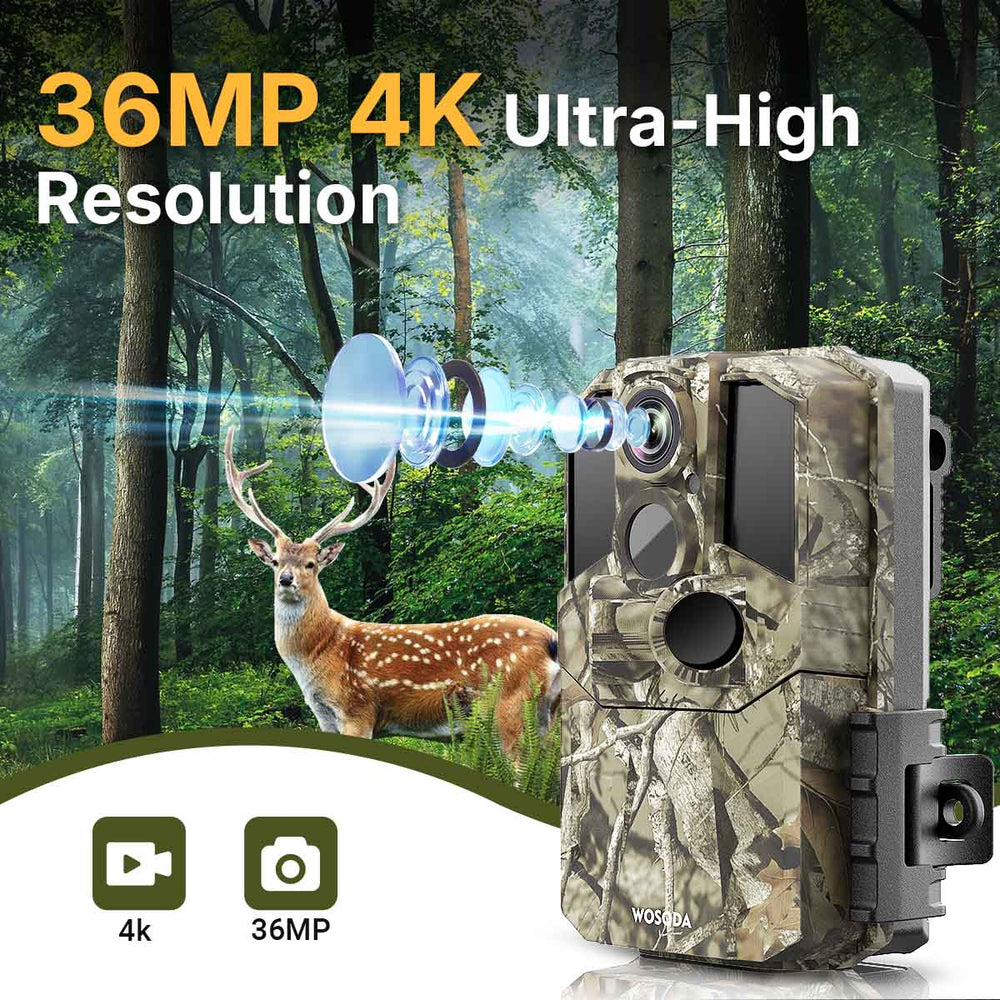
The WOSPORTS G600 combines approximately 0.2-second trigger speed with 4K video recording, giving wildlife observers both quick response and high-resolution video capability.
Is Trigger Speed More Important Than Megapixels?
Not necessarily. They solve different problems.
Trigger speed determines:
Did the camera react quickly enough to capture the moment?
Image resolution determines:
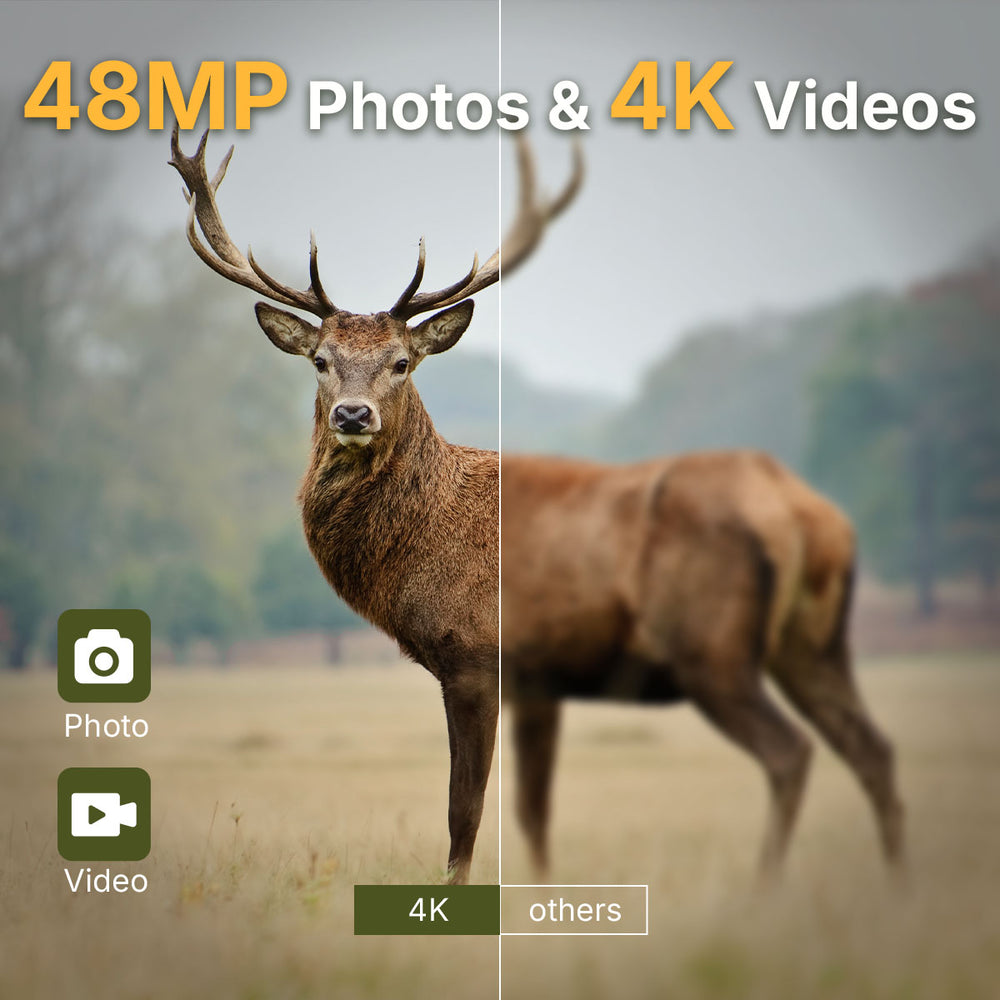
How much visual detail is contained in the captured image?
Consider two cameras.
Camera A
-
48MP
-
1-second trigger
Camera B
-
24MP
-
0.2-second trigger
If a deer is moving quickly through a narrow trail, Camera B may have a better chance of capturing the animal at the right moment.
If both cameras capture the animal perfectly, Camera A may provide more still-image detail.
This is why the ideal trail camera combines fast triggering and good image quality rather than focusing on only one specification.
Does a Faster Trigger Mean Better Night Photos?
Not by itself.
Trigger speed determines how quickly the camera responds.
Night image quality depends on additional factors such as:
-
Infrared illumination
-
Image sensor
-
Lens
-
Exposure
-
Distance
-
Animal movement
-
Camera placement
-
Environmental conditions
A fast-triggering camera with poor night imaging may still produce poor nighttime footage.
For complete wildlife scouting, consider:
Fast trigger + reliable night monitoring + good image quality
The G600 combines approximately 0.2-second trigger speed with automatic day/night monitoring and night vision.
How Does Camera Placement Affect Trigger Speed?
This is one of the most important points.
A fast trigger cannot compensate for poor placement.
Imagine you have a camera with a 0.2-second trigger speed.
But the camera is:
-
Pointed directly down a trail
-
Mounted too high
-
Facing the sun
-
Blocked by vegetation
-
Positioned too far away
You may still get poor images.
Now consider the same camera placed correctly:
-
Animal crosses the field of view
-
Detection zone is clear
-
Camera is properly angled
-
Lighting is controlled
-
Animal passes through the useful image area
The fast trigger can then provide a real advantage.
The formula is simple:
Fast trigger + good placement = better chance of capturing useful moments
How Should You Position a Fast-Trigger Trail Camera?
If you are using a fast-trigger camera for deer scouting, consider positioning it so the animal crosses the camera's field of view.
For example:
Less ideal:
Deer → → → Camera
The animal moves directly toward the camera.
Often more useful:
Deer → → →
Camera
The animal moves across the camera's detection and image area.
This gives the camera a larger opportunity to capture the animal's side profile.
For detailed placement advice, see our guide on [How to Place a Trail Camera for Deer].
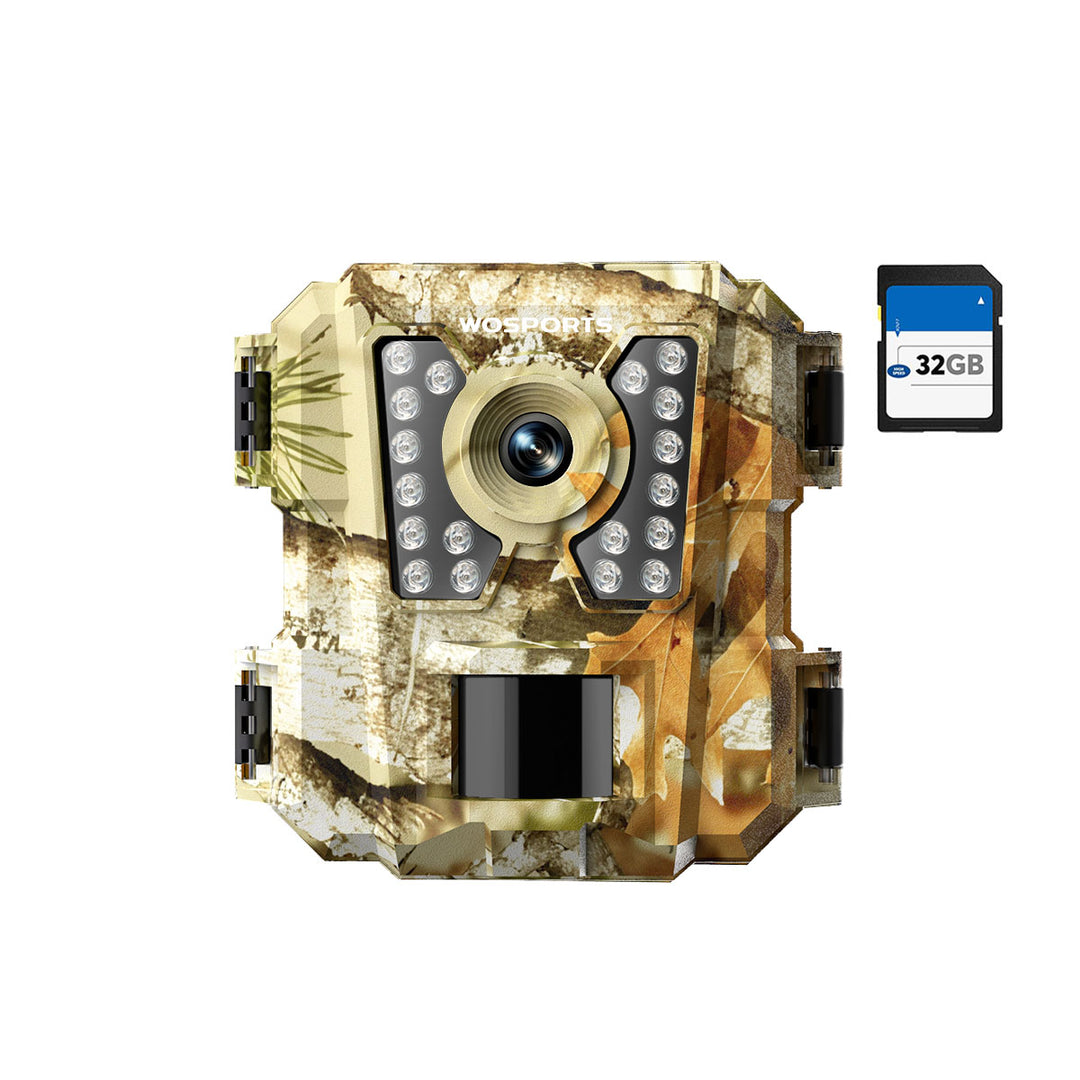
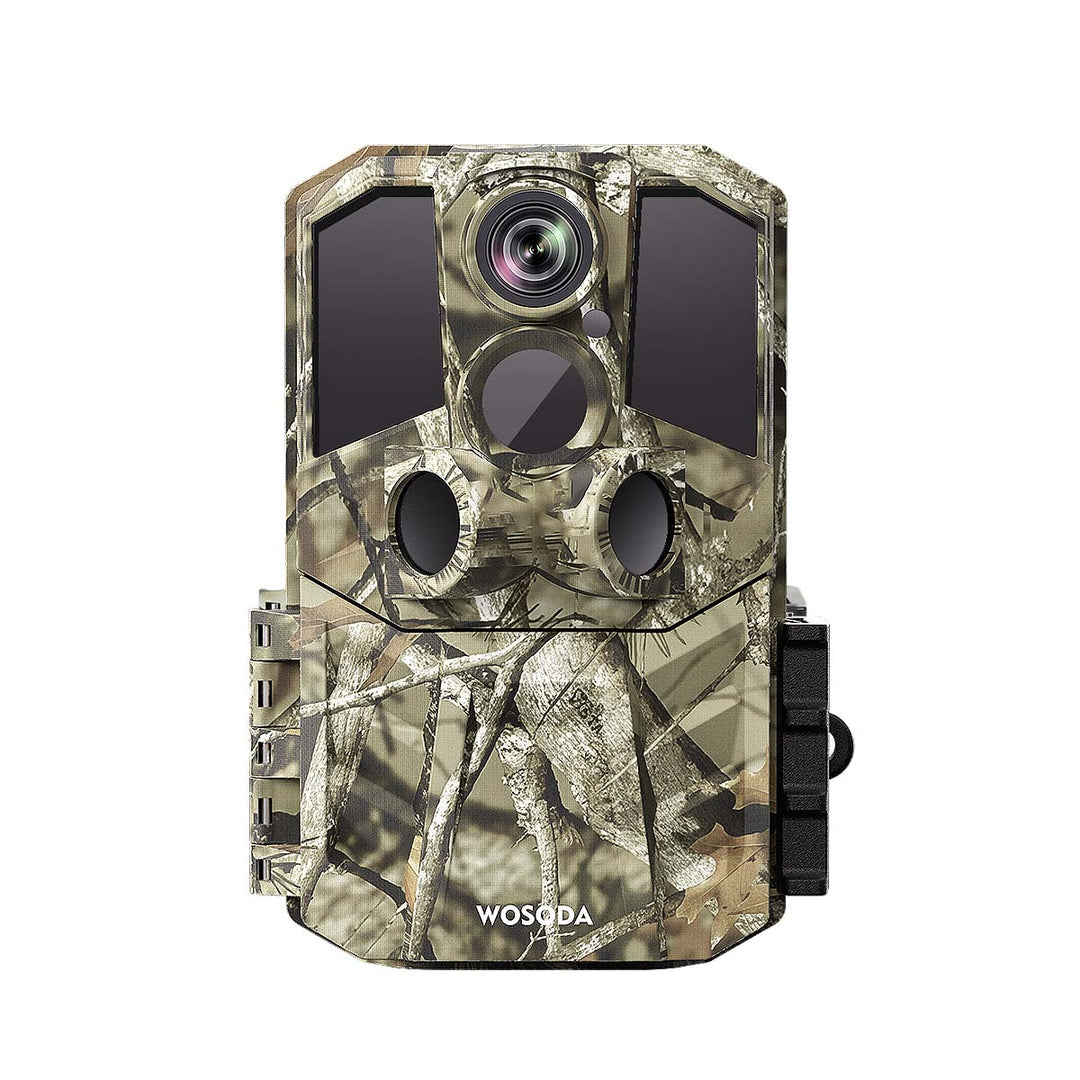
What Is the WOSPORTS G600 Trigger Speed?
The WOSPORTS G600 has an approximately 0.2-second trigger speed.
This makes it well suited to monitoring moving wildlife and hunting areas where animals may pass quickly through the camera's detection zone.
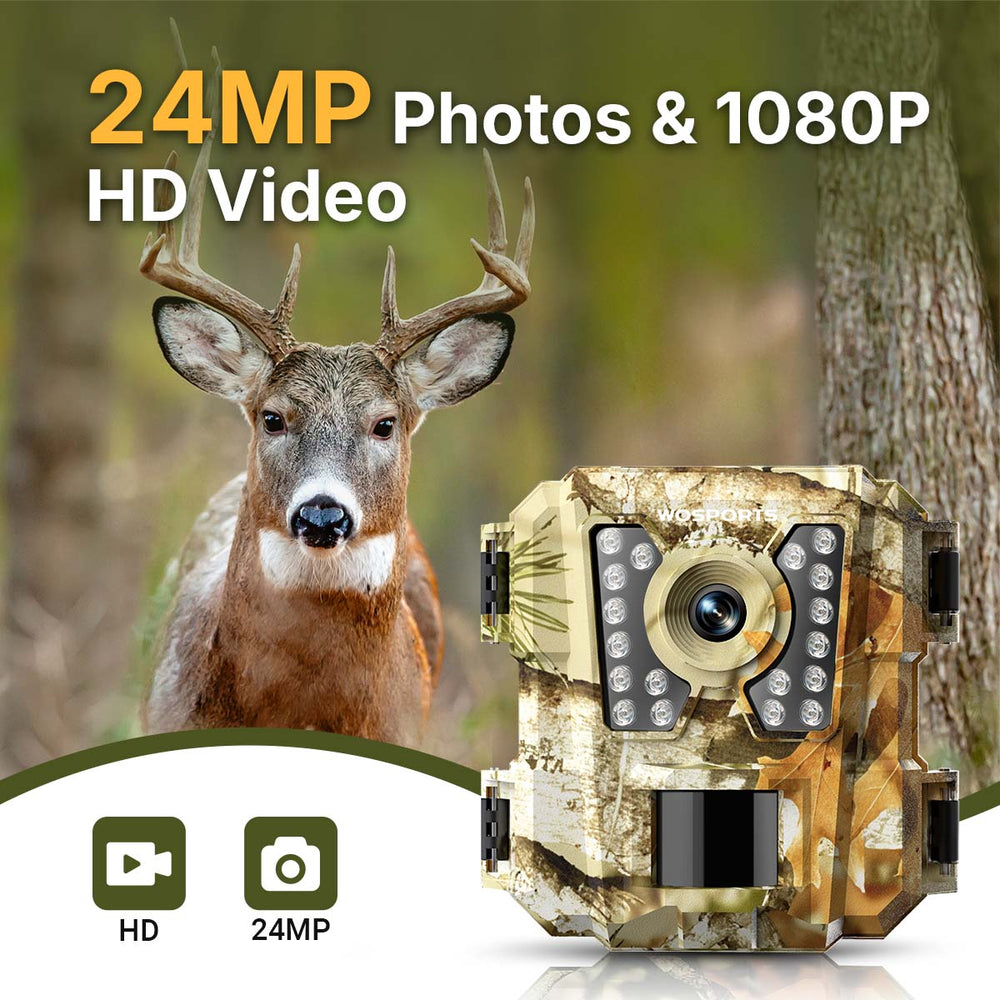
The G600 also combines fast triggering with:
-
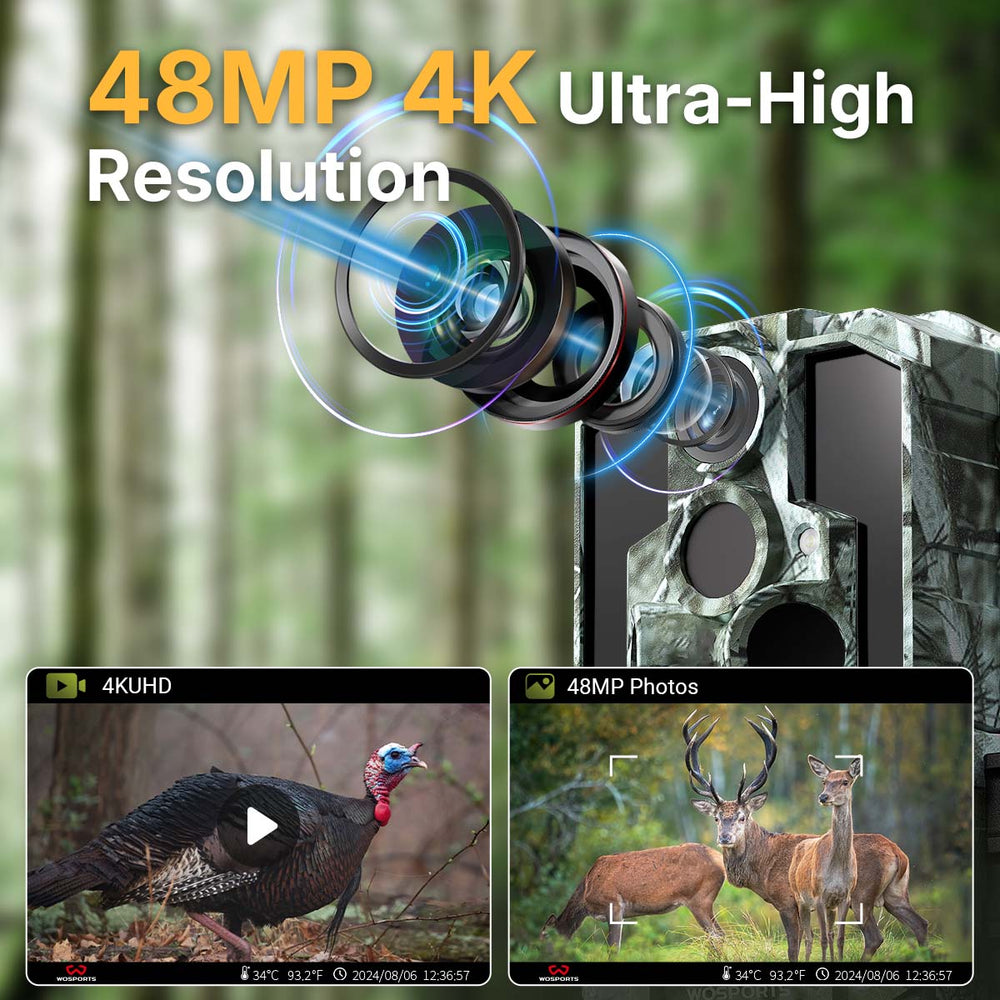
Up to 48MP photos
-
4K video
-
120° wide-angle view
-
Up to 70 feet of PIR detection
-
Automatic day/night monitoring
-
Night vision
-
IP66 weather protection
This combination is important because trigger speed is only one part of a trail camera's overall performance.
Why the G600's 0.2-Second Trigger Speed Matters
The biggest benefit of a fast trigger is not the number itself.
It is what that number can help you accomplish.
Capture Fast Movement
A deer crossing a trail can move through the detection area quickly.
Capture Better Positions
A faster response can increase the chance of capturing an animal before it reaches the edge of the frame.
Record More of the Event
When combined with video, quick triggering can help capture more of the movement surrounding the detection event.
Improve Scouting Information
Better-timed images and video can make it easier to understand animal movement patterns.
What Other Trail Camera Features Should You Consider?
If you are comparing trail cameras, trigger speed should be only one item on your checklist.
Photo Resolution
Higher-resolution photos can provide more detail for wildlife identification and observation.
The G600 supports up to 48MP photos.
Video Resolution
4K video can provide more detail and context than lower-resolution video.
Detection Range
A useful detection range allows the camera to respond to movement across a larger monitoring area.
The G600 offers up to 70 feet of PIR detection.
Field of View
A wide field of view can help cover larger areas.
The G600 offers a 120° view.
Night Monitoring
Wildlife activity does not stop after dark.
A trail camera should be capable of monitoring both day and night if you want a more complete picture.
Weather Protection
Outdoor cameras need to withstand changing environmental conditions.
The G600 has an IP66 weather-protection rating.
Battery Performance
For long-term scouting, battery performance and recording frequency can have a significant effect on how often you need to visit the camera.
Trail Camera Trigger Speed Buying Guide
If you are comparing cameras, here is a simple way to think about trigger speed.
Under 0.2 Seconds
Very responsive and particularly attractive for fast-moving wildlife.
Around 0.2–0.3 Seconds
A strong range for wildlife scouting and hunting applications.
Around 0.3–0.5 Seconds
Still suitable for many wildlife monitoring situations.
Around 0.5–1.0 Seconds
Can work well for slower-moving animals and general monitoring.
Over 1 Second
May be less suitable when animals move quickly through a narrow detection zone.
Again, these are practical guidelines rather than strict industry standards.
The actual usefulness of a trigger speed depends on the complete camera system and installation.
Frequently Asked Questions About Trail Camera Trigger Speed
What is a good trigger speed for a trail camera?
For wildlife scouting, around 0.3 seconds or faster is a useful target. A trigger speed around 0.2 seconds can be particularly useful when monitoring fast-moving animals or narrow trails.
Is a 0.2-second trail camera good?
A 0.2-second trigger speed is fast enough to be useful for many wildlife and hunting applications. However, trigger speed should be evaluated together with image quality, detection range, field of view, night performance, and placement.
Is faster trigger speed always better?
Not necessarily. Faster response can be helpful, but other specifications may matter more depending on how the camera is being used.
Does trigger speed affect trail camera photos?
Yes. Trigger speed affects how quickly the camera responds after detecting movement, which can influence where the animal appears in the captured image.
Does trigger speed affect trail camera video?
Yes. It can affect how quickly video recording begins after movement is detected.
What is more important: trigger speed or megapixels?
Neither is universally more important. Trigger speed affects the timing of capture, while megapixels affect still-image resolution. Both can contribute to useful wildlife scouting footage.
Why is my fast trail camera still missing animals?
Possible causes include poor placement, animals approaching from outside the detection zone, incorrect camera angle, vegetation blocking the sensor, environmental conditions, or the animal moving through the scene too quickly.
How can I get better results from a fast-trigger trail camera?
Position the camera carefully, keep the detection zone clear, avoid direct sunlight, and try to capture animals moving across the field of view.
Does the WOSPORTS G600 have a fast trigger speed?
Yes. The G600 has an approximately 0.2-second trigger speed.
What other features does the G600 have?
The G600 supports up to 48MP photos, 4K video, 120° wide-angle coverage, up to 70 feet of PIR detection, automatic day/night monitoring, night vision, and IP66 weather protection.
Final Verdict: Does 0.2 Seconds Really Matter?
It can.
If you are monitoring a busy deer trail, wildlife corridor, or other location where animals move quickly across the camera's detection zone, a fast trigger can improve the chance of capturing the animal at the right moment.
But the number alone does not determine whether a trail camera is good.
The most useful setup combines:
Fast trigger speed
Good camera placement
Reliable detection
High-quality imaging
Effective day-and-night monitoring
The WOSPORTS G600 brings these elements together with an approximately 0.2-second trigger speed, 48MP photos, 4K video, 120° wide-angle coverage, up to 70 feet of PIR detection, night monitoring, and IP66 weather protection.
So, does 0.2 seconds matter?
When an animal is moving quickly through the frame, those fractions of a second can make the difference between capturing the moment and capturing the empty trail.
Ready to capture wildlife before it moves out of frame?
Search
Popular Posts
Recent Posts


Nov 28, 2024
Troubleshooting Common Trail Camera Issues
Jan 10, 2025
Why Does My Trail Camera Stop Working at Night?