How Do Trail Cameras Work at Night?
Trail cameras use infrared illumination, image sensors, and motion detection technology to capture photos and videos after dark. When an animal enters the detection zone, the camera detects movement and activates its night-vision system to record the event.
For hunters and wildlife enthusiasts, nighttime performance is one of the most important things to consider when choosing a trail camera.
Many animals are most active around:
- Sunset
- Sunrise
- Nighttime
- Early morning
- Low-light conditions
That means a camera that performs well during the day but struggles after dark can miss a significant amount of wildlife activity.
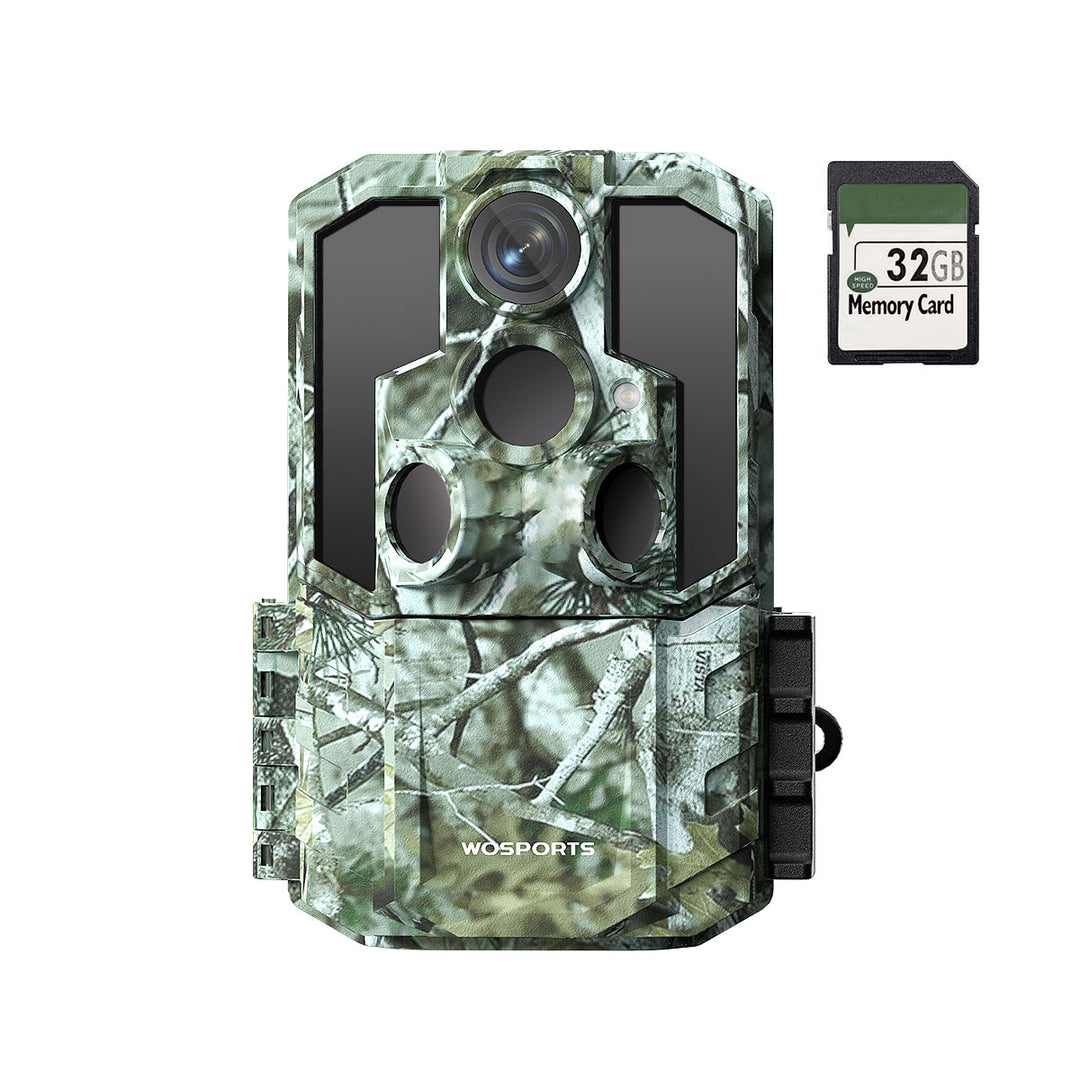
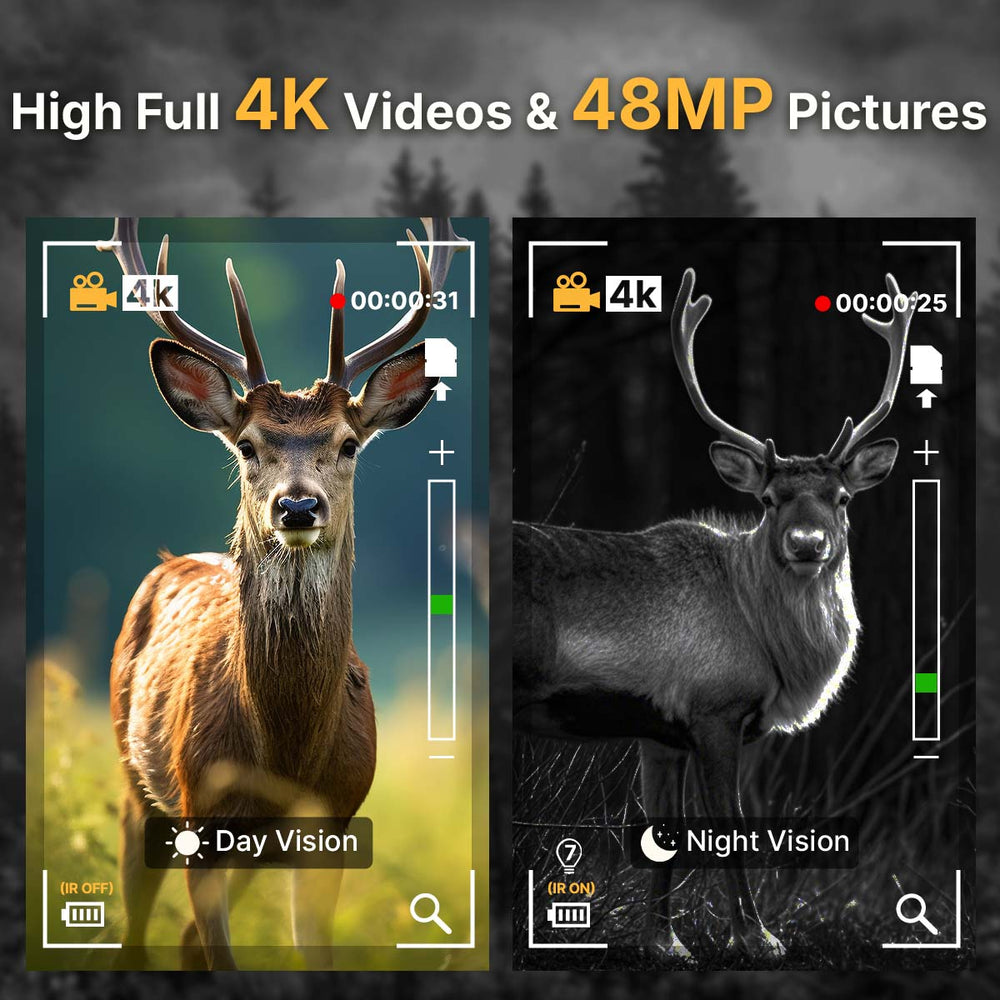
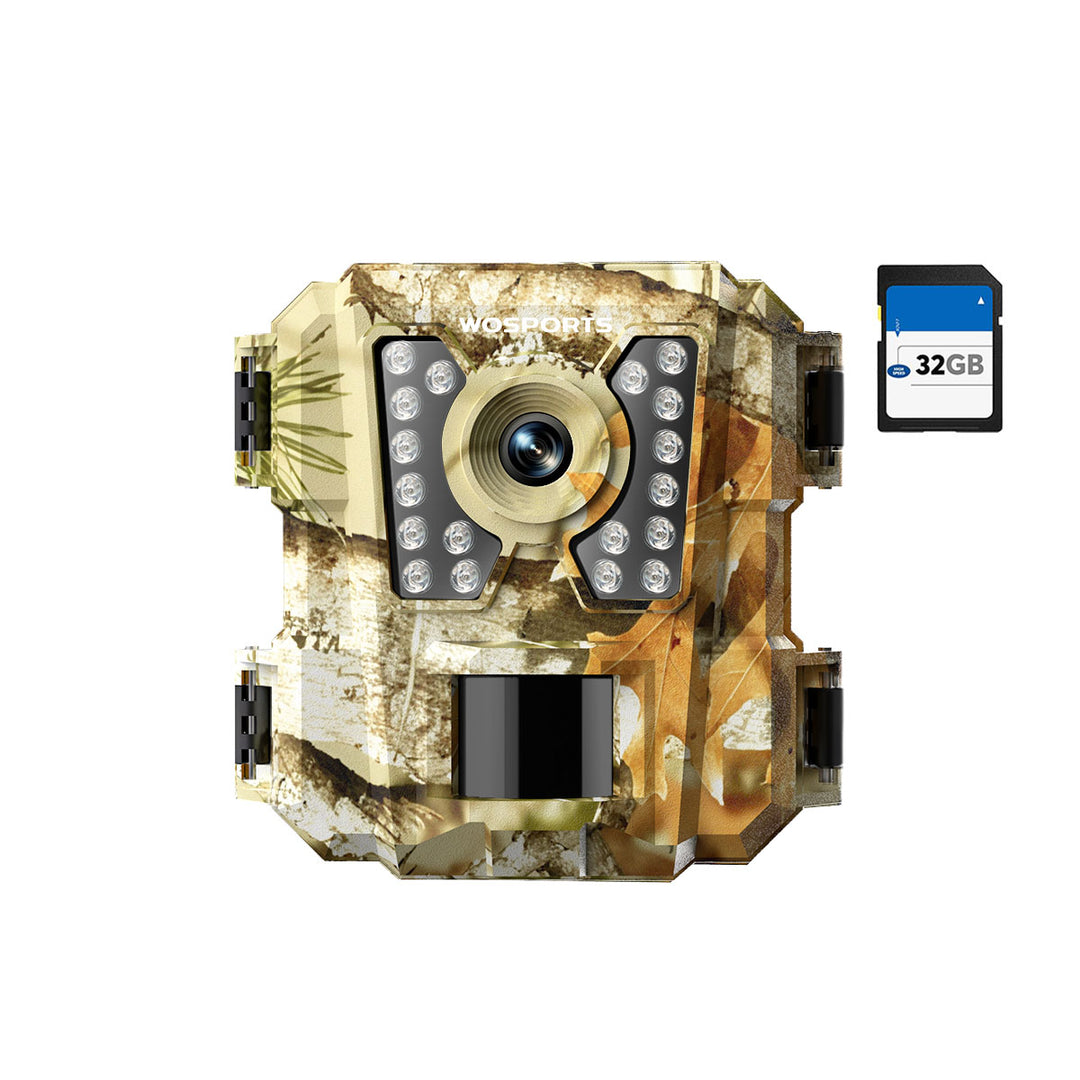
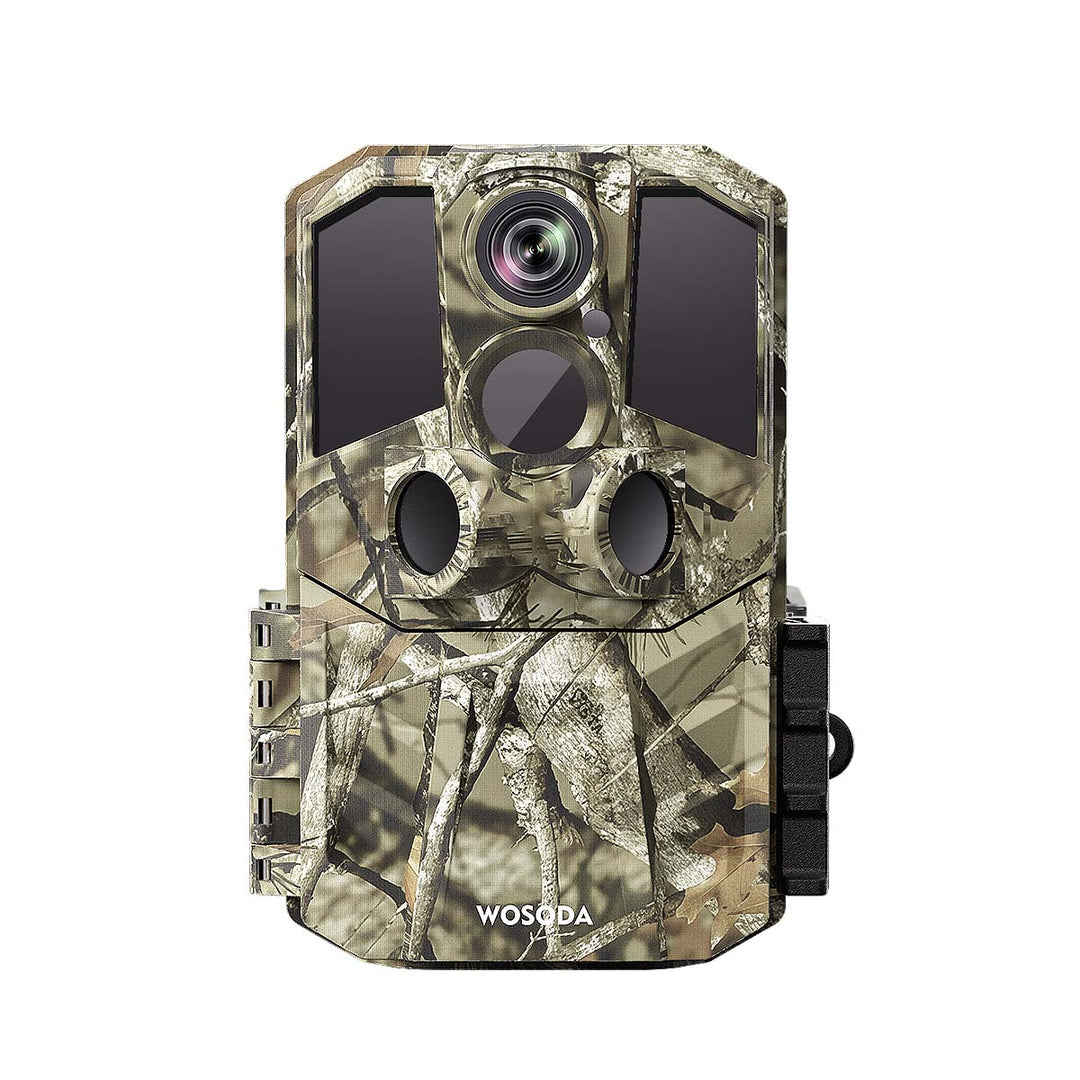
Modern trail cameras such as the WOSPORTS G600 are designed to automatically switch between daytime and nighttime monitoring, allowing you to capture wildlife activity around the clock.
But how exactly does trail camera night vision work?
Let's take a closer look.
Quick Answer: How Does a Trail Camera See at Night?
A trail camera typically uses several systems working together:
1. PIR motion sensor
Detects movement and changes in infrared energy.
2. Image sensor
Captures the image or video.
3. Infrared illumination
Provides invisible or low-visible light so the camera can record in darkness.
4. Night-mode processing
Adjusts the camera for low-light conditions.
The basic process is:
Animal approaches
↓
PIR sensor detects movement
↓
Camera activates
↓
Infrared illumination turns on
↓
Camera captures photo/video
This allows the camera to record wildlife even when there is little or no visible light.
What Is Infrared Night Vision?
Infrared, often abbreviated as IR, refers to light wavelengths that are outside the range of normal human vision.
Humans cannot normally see infrared light.
A trail camera can use infrared illumination to provide enough light for its image sensor to capture an image in darkness.
This is why a trail camera can record a deer at night even when the surrounding area appears completely dark to your eyes.
Think of infrared illumination as an invisible light source for the camera.
Do Trail Cameras Use Infrared?
Yes, many modern trail cameras use infrared illumination for nighttime photography and video.
Infrared is particularly useful because it allows the camera to capture nighttime images without relying on a conventional visible-light flash.
This is important for wildlife observation because a bright visible flash can potentially affect the scene.
Infrared systems are therefore commonly used for:
- Deer monitoring
- Wildlife observation
- Hunting scouting
- Property monitoring
- Outdoor security
How Does a Trail Camera Detect Animals at Night?
Nighttime detection generally starts with the camera's PIR sensor.
PIR stands for:
Passive Infrared
The sensor detects changes in infrared radiation associated with movement.
A warm animal moving through the detection area can create a detectable change.
The camera then responds according to its programmed settings.
For example:
Deer enters detection zone
→
PIR sensor detects movement
→
Camera triggers
→
Night vision activates
→
Photo or video is captured
The entire process can happen very quickly.
The G600 has an approximately 0.2-second trigger speed, helping it respond rapidly when wildlife enters the detection area.
Can Trail Cameras Take Pictures in Complete Darkness?
Yes, trail cameras equipped with infrared night vision can capture images in very dark conditions.
However, "complete darkness" does not mean the camera can see infinitely far.
Nighttime image quality depends on factors such as:
- Infrared illumination
- Image sensor
- Lens
- Animal distance
- Weather
- Vegetation
- Camera angle
- Environmental conditions
A deer standing 20 feet from the camera may be much easier to capture clearly than a deer 70 feet away.
That's why both detection range and usable image range matter.
How Far Can a Trail Camera See at Night?
There is no universal answer.
The useful nighttime range depends on the camera and environmental conditions.
The G600 provides up to 70 feet of PIR detection.
But remember:
Detection range is not the same as image-quality range.
A camera may detect movement at a certain distance, but the animal may still appear relatively small in the resulting image.
When setting up your camera, consider both:
How far can it detect movement?
and
How far can it capture useful detail?
Can Deer See Infrared From Trail Cameras?
This is a common question among hunters.
The answer depends on the type of infrared illumination used by the camera and the visual sensitivity of the animal.
Trail cameras can use different types of infrared systems, including different wavelengths and illumination approaches.
For wildlife scouting, the important consideration is whether the camera's nighttime illumination is likely to create a noticeable disturbance.
A camera designed for wildlife monitoring should aim to minimize unnecessary visible disturbance while still providing sufficient illumination for the image sensor.
What Is No-Glow Night Vision?
No-glow refers to infrared illumination designed to minimize visible light emitted from the camera during nighttime operation.
This can be useful for wildlife monitoring because the camera is less visually obvious when it activates.
The basic goal is:
Provide infrared illumination to the sensor
while
minimizing visible light to people and wildlife.
When shopping for a nighttime trail camera, no-glow or low-glow infrared can be an important consideration depending on your application.
What Is Low-Glow Night Vision?
Low-glow infrared systems can emit a faint visible red glow when activated.
The light may be subtle, but it can sometimes be noticeable in dark conditions.
The difference between no-glow and low-glow systems is therefore primarily related to how much visible light is emitted.
Neither is automatically better for every application.
For wildlife scouting where minimizing visible disturbance is a priority, users may prefer systems designed to minimize visible illumination.
Does Night Vision Affect Image Quality?
Yes.
Nighttime photography is more challenging than daytime photography because there is much less available light.
The camera has to rely on its infrared illumination and sensor.
Night image quality can be affected by:
- Sensor sensitivity
- Infrared illumination
- Lens quality
- Image processing
- Animal distance
- Motion
- Weather
- Camera position
This is why a trail camera's daytime megapixel rating does not tell you everything about its nighttime performance.
A camera advertised with high photo resolution may still produce poor nighttime images if its low-light system is weak.
Why Are Some Trail Camera Night Photos Black and White?
Many infrared trail cameras produce black-and-white images at night because color information is difficult to capture under infrared illumination.
During daylight:
Visible light → Color image
At night:
Infrared illumination → Typically monochrome image
Black-and-white night images can still provide useful information such as:
- Animal identification
- Body shape
- Movement direction
- Antler structure
- Number of animals
- Relative size
The purpose of nighttime mode is not necessarily to reproduce daytime color.
It's to capture useful information under low-light conditions.
Why Are Some Nighttime Trail Camera Images Blurry?
Motion blur is one of the most common challenges in nighttime wildlife photography.
Imagine a deer running through the frame.
The camera has much less available light at night.
The system must balance:
- Exposure
- Shutter speed
- ISO
- Infrared illumination
- Image processing
If the animal moves quickly while the camera is capturing the image, some motion blur may occur.
This is one reason trigger speed matters.
A fast trigger can help the camera begin recording the event quickly, but trigger speed alone cannot eliminate every type of motion blur.
Why Do Nighttime Trail Camera Photos Sometimes Look Washed Out?
Overexposure can occur when the camera's infrared illumination interacts with the scene in an unfavorable way.
Possible causes include:
- The animal is extremely close to the camera
- Reflective objects are nearby
- The camera is pointed at a reflective surface
- Environmental conditions
- Lens contamination
- Camera settings
For example, if a deer stands only a few feet from the camera, the infrared illumination can produce a very bright subject.
Proper placement can help.
Why Do Night Trail Camera Photos Have White Eyes?
This can happen when infrared illumination reflects from an animal's eyes.
The eyes of many animals reflect light strongly.
When infrared illumination reaches the animal, some of that light can reflect back toward the camera.
The result may be:
Bright or glowing eyes
This is normal behavior for many infrared imaging systems.
It does not necessarily mean there is a problem with the camera.
Can a Trail Camera Record Video at Night?
Yes.
Trail cameras equipped with night vision can record video after dark.
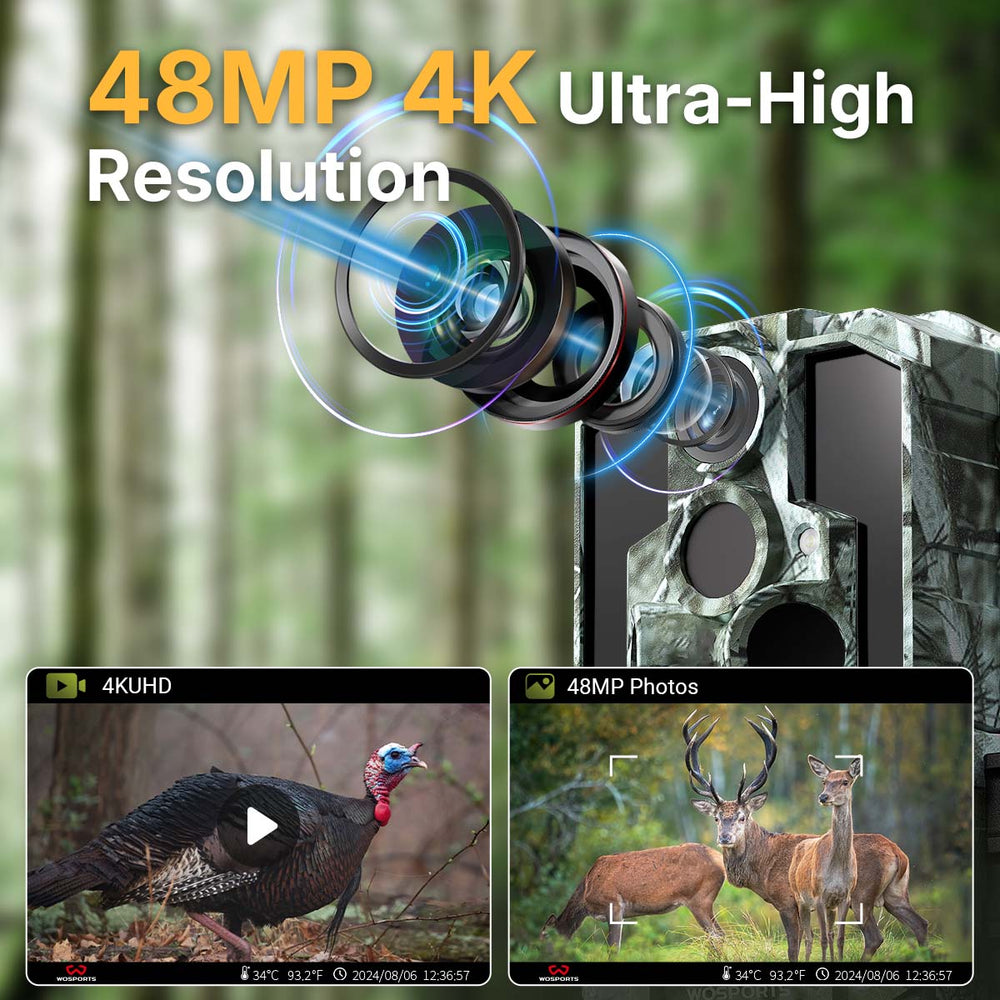
The G600 supports 4K video recording, including automatic day/night monitoring.
Nighttime video can provide information that a still image cannot.
For example, video can show:
- How an animal enters the frame
- Where it came from
- Where it goes
- How long it stays
- Interactions between animals
- Movement patterns
This can be particularly useful for wildlife behavior observation.
Is 4K Important for Nighttime Trail Camera Video?
4K can provide more detail, but resolution is only one part of nighttime video quality.
At night, the camera still needs sufficient infrared illumination and a capable image sensor.
Think of it as:
4K resolution
Good low-light imaging
Adequate infrared illumination
=
Useful nighttime video
If the nighttime image is poorly exposed or heavily blurred, simply increasing resolution will not solve the problem.
How Does the WOSPORTS G600 Work at Night?
The G600 is designed for automatic day/night monitoring.
During daylight, it operates in normal color imaging mode.
As lighting conditions change, the camera switches to nighttime operation and uses its night-vision system to continue monitoring wildlife.
The G600 combines nighttime monitoring with:
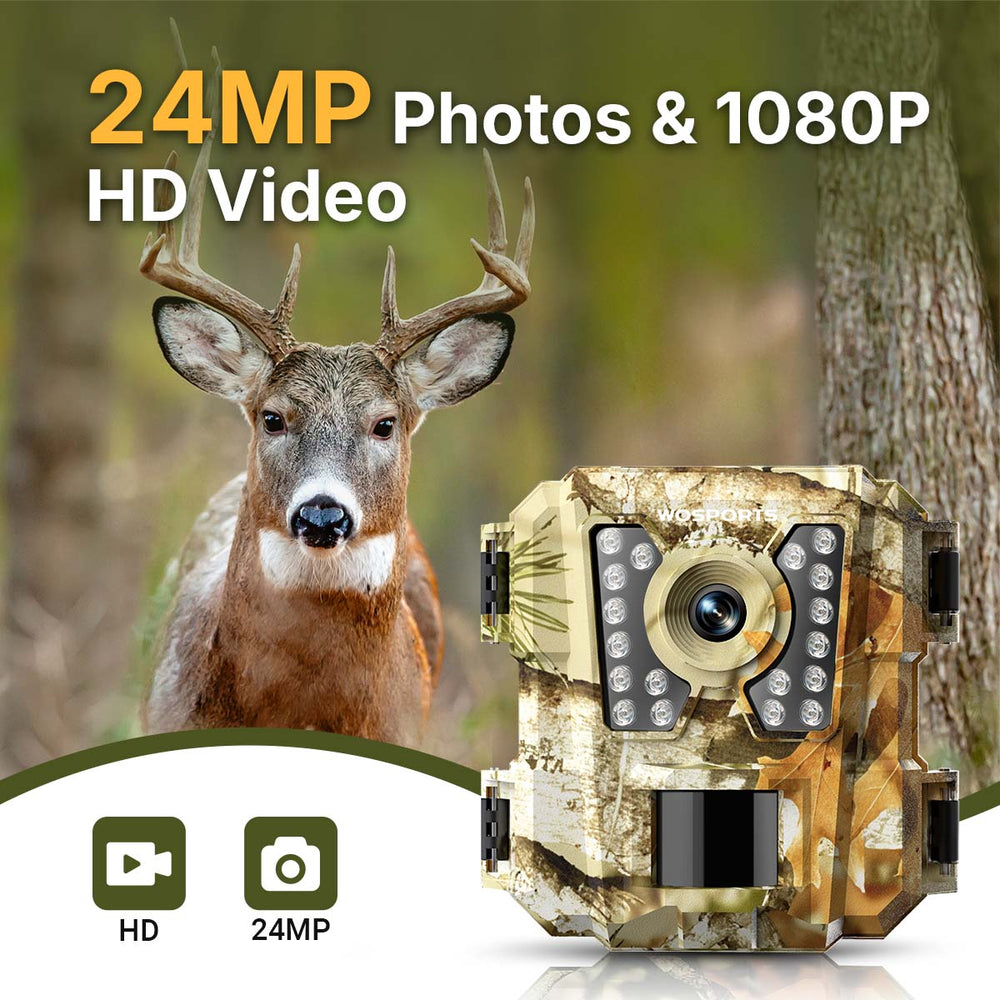
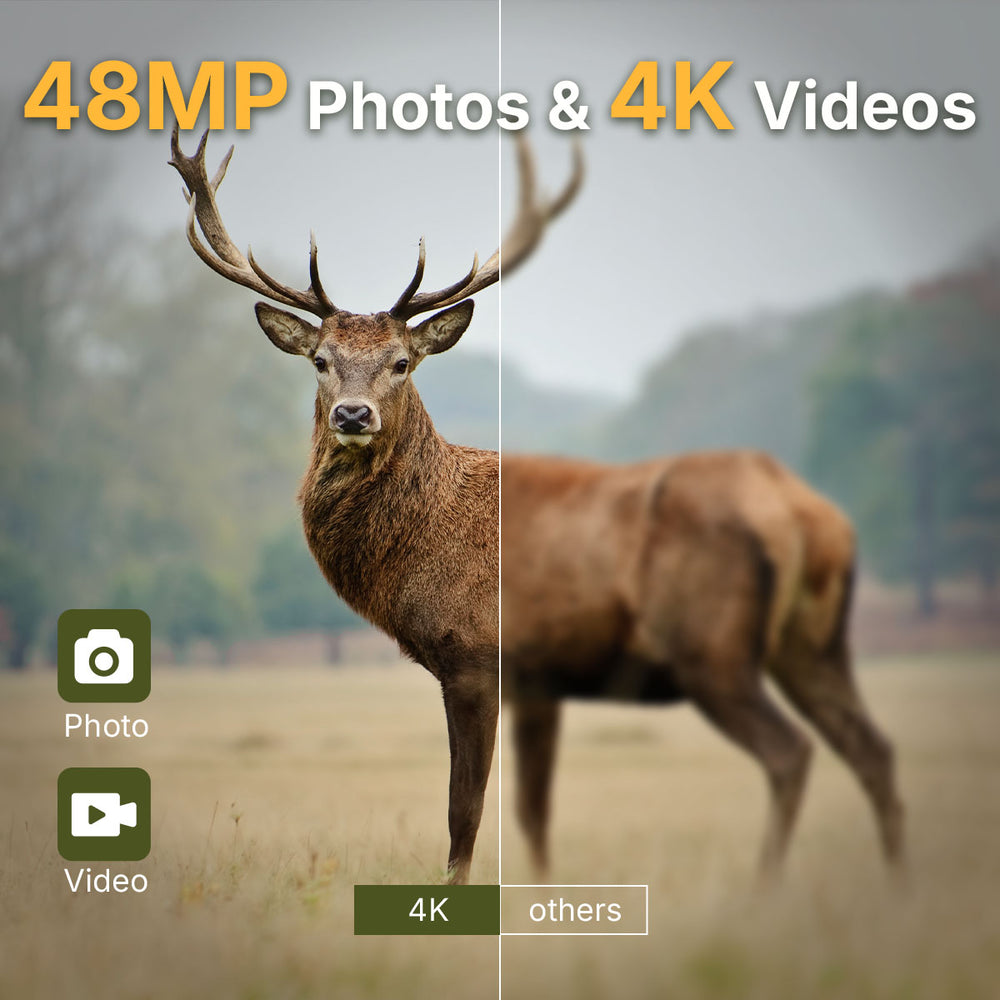
- Up to 48MP photos
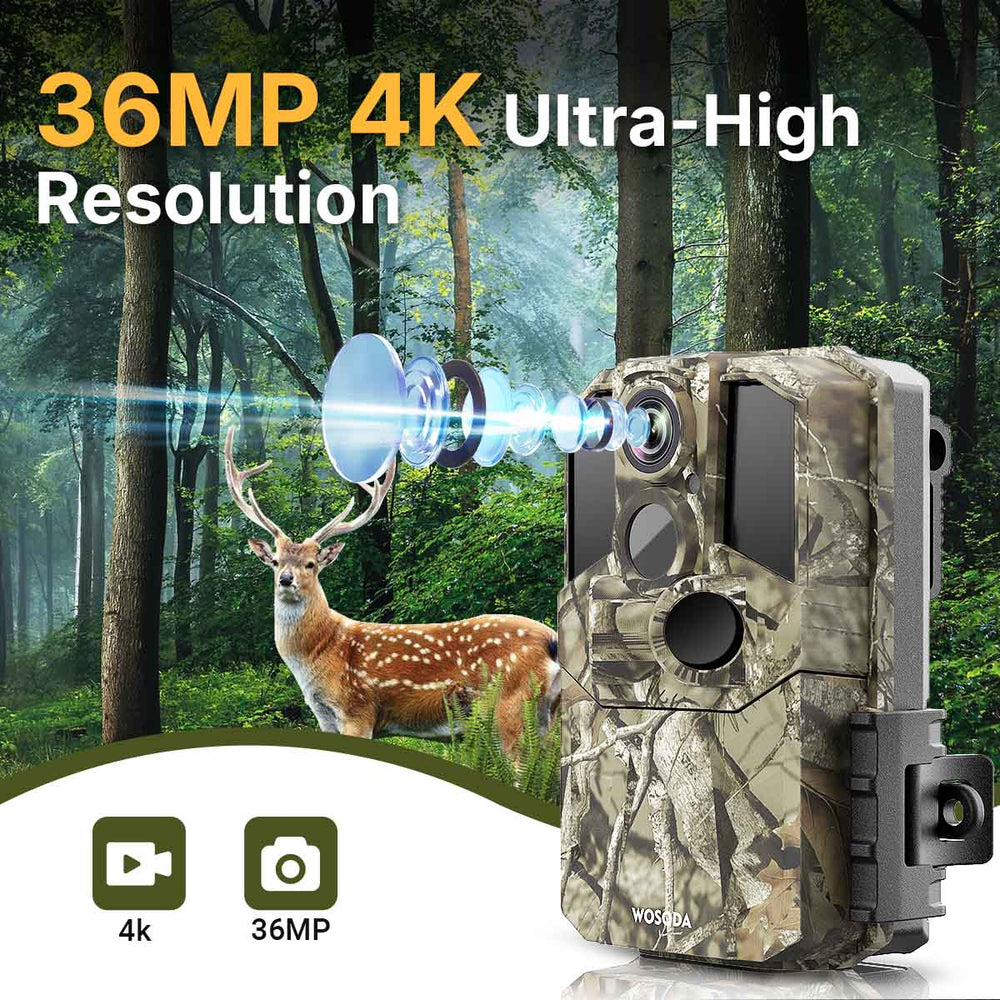
- 4K video
- Approximately 0.2-second trigger speed
- Up to 70 feet PIR detection
- 120° field of view
- Automatic day/night monitoring
- Night vision
- IP66 weather protection
This makes it suitable for monitoring wildlife activity around the clock.
How Should You Set Up a Trail Camera for Night Vision?
Good nighttime footage starts with good placement.
1. Avoid Direct Artificial Light
Don't position the camera directly toward bright lights or other strong light sources.
2. Check Nearby Vegetation
Branches close to the camera can reflect infrared light and create unwanted bright areas.
3. Avoid Reflective Objects
Metal objects and reflective surfaces can cause strong infrared reflections.
4. Keep the Lens Clean
Dust, water droplets, and dirt can affect image quality.
5. Consider Animal Distance
Don't place the camera so close to the expected path that animals constantly fill the entire frame.
6. Test the Camera Before Leaving
Walk through the detection zone after dark if possible and review the resulting footage.
A short test can reveal problems before the camera is left unattended for weeks.
Where Should You Place a Trail Camera for Nighttime Deer Activity?
For deer scouting, good locations may include:
- Deer trails
- Food plots
- Water sources
- Funnel areas
- Property crossings
- Travel corridors
- Trail intersections
If you're monitoring a trail, consider positioning the camera so deer move across the field of view rather than directly toward the camera.
This can provide:
- Better side profiles
- More natural movement
- More useful body proportions
- More opportunities for detection
The exact placement should depend on terrain and animal behavior.
What Time of Night Are Trail Cameras Most Useful?
There is no universal "best" time.
Different wildlife species have different activity patterns.
Deer, for example, can be active around:
- Dusk
- Night
- Dawn
Other species may be primarily nocturnal.
This is why automatic 24-hour monitoring can be valuable.
Instead of guessing when animals are active, you can use the camera to collect actual observations.
Over time, your footage can reveal patterns.
Does Weather Affect Night Vision?
Yes.
Environmental conditions can affect nighttime image quality.
Examples include:
- Rain
- Fog
- Snow
- Dust
- Humidity
- Temperature changes
Water droplets on the lens can also scatter infrared illumination.
If nighttime images suddenly become hazy or blurry, check the lens before assuming the camera has a technical problem.
Why Is Trail Camera Placement So Important at Night?
Nighttime scenes provide less natural light, making the camera more dependent on its own illumination.
That means poor placement can become even more noticeable.
For example:
Poor Setup
Camera pointed toward:
- Dense vegetation
- Reflective surfaces
- Very close objects
Result:
Bright spots + cluttered images + reduced useful visibility
Better Setup
Camera pointed toward:
- Open trail
- Appropriate subject distance
- Clear detection zone
Result:
Cleaner nighttime images + better subject visibility
The camera can only work with the scene you give it.
How Can You Improve Nighttime Trail Camera Images?
If your nighttime images aren't as good as expected, try these steps.
Check the Lens
Clean away dirt, fingerprints, water, and spider webs.
Reposition the Camera
Avoid placing it directly against vegetation.
Adjust the Distance
Move the camera farther from the expected animal path if subjects are consistently too close.
Check the Angle
Avoid pointing directly at highly reflective surfaces.
Review Trigger Settings
Make sure the camera is configured appropriately for the level of wildlife activity.
Test at Night
Don't judge nighttime performance based only on daytime testing.
Night Vision vs. Thermal Imaging
These technologies are sometimes confused.
They are not the same.
Trail Camera Night Vision
Uses infrared illumination and an image sensor to create an image of the scene.
Thermal Imaging
Detects differences in infrared radiation emitted by objects based primarily on their heat signatures.
A conventional digital night-vision trail camera is not a thermal camera.
For wildlife scouting, traditional infrared night vision is often sufficient for identifying animals and recording their behavior.
Thermal imaging is a different technology designed for different applications.
Can You Identify Deer at Night With a Trail Camera?
Yes, if the camera provides sufficient nighttime image quality and the deer is within a useful range.
Nighttime footage can help you identify:
- Deer presence
- Number of deer
- Approximate size
- Movement direction
- Antler characteristics
- Travel timing
However, identification accuracy depends heavily on distance and image quality.
A deer close to the camera can be much easier to identify than one near the edge of the detection zone.
What Should You Look for in a Trail Camera's Night Vision?
When comparing trail cameras, don't simply look for the words "night vision."
Consider:
Infrared System
How does the camera illuminate the scene?
Detection
How far can the PIR sensor detect movement?
Image Quality
Can the camera capture useful detail in low light?
Trigger Speed
How quickly does it respond?
Video Capability
Can it record nighttime video?
Field of View
How much of the scene can it capture?
Weather Protection
Can it operate reliably outdoors?
Battery Performance
How long can it remain deployed?
A strong nighttime system is a combination of multiple components.
WOSPORTS G600 Night Vision: Key Specifications
| Feature | G600 |
|---|---|
| Photo Resolution | Up to 48MP |
| Video Resolution | 4K |
| Trigger Speed | Approx. 0.2 sec |
| PIR Detection | Up to 70 ft |
| Field of View | 120° |
| Day/Night Monitoring | Automatic |
| Night Vision | Yes |
| Storage | SD Card |
| Weather Protection | IP66 |
These specifications work together rather than independently.
For example:
0.2-second trigger speed
helps the camera respond quickly.
70-foot PIR detection
provides a broad detection area.
120° field of view
helps cover a wider scene.
Night vision
allows monitoring after dark.
4K video + up to 48MP photos
provides detailed recordings.
Frequently Asked Questions
How do trail cameras work at night?
Trail cameras use PIR motion detection, infrared illumination, and an image sensor to detect and record wildlife after dark.
Do trail cameras use infrared?
Yes. Many trail cameras use infrared illumination for nighttime photography and video.
Can trail cameras see in complete darkness?
Trail cameras equipped with infrared night vision can capture images in very dark conditions using their own infrared illumination.
Can deer see trail camera infrared?
Visibility depends on the type of infrared system and the animal's visual sensitivity. Different cameras can produce different levels of visible illumination.
What is no-glow infrared?
No-glow infrared is designed to minimize visible light emitted by the camera while providing infrared illumination for nighttime imaging.
Why are trail camera night photos black and white?
Many infrared systems produce monochrome images because the camera is capturing the scene primarily under infrared illumination rather than normal visible light.
Why are my trail camera night photos blurry?
Motion, limited light, camera settings, distance, and environmental conditions can all contribute to nighttime blur.
Why are my trail camera night photos too bright?
Very close subjects, reflective surfaces, vegetation, or other environmental factors can cause infrared light to reflect strongly back toward the camera.
Can trail cameras record 4K video at night?
A trail camera that supports 4K video and nighttime recording can capture high-resolution video after dark. The G600 supports 4K video and automatic day/night monitoring.
How far can a trail camera see at night?
The useful range depends on the camera, infrared system, environment, and subject distance. The G600 provides up to 70 feet of PIR detection, but detection range and useful image range are not necessarily the same.
Is night vision the same as thermal imaging?
No. Digital infrared night vision uses infrared illumination and an image sensor, while thermal imaging primarily detects heat signatures.
Is the WOSPORTS G600 good for nighttime wildlife?
The G600 is designed for day-and-night wildlife monitoring and combines night vision with up to 48MP photos, 4K video, approximately 0.2-second trigger speed, up to 70 feet of PIR detection, and a 120° field of view.
Final Verdict: What Makes Good Trail Camera Night Vision?
Good nighttime trail camera performance isn't determined by one specification.
It depends on how well several systems work together:
PIR Detection
↓
Fast Trigger
↓
Infrared Illumination
↓
Image Sensor
↓
Night Image Processing
↓
Useful Photo or Video
When choosing a trail camera, don't simply ask:
"Does it have night vision?"
Ask:
"Can it reliably detect and capture useful wildlife footage after dark?"
For wildlife scouting, the answer depends on the entire camera system.
The WOSPORTS G600 is designed to provide around-the-clock monitoring with:
48MP Photos
4K Video
0.2-Second Trigger Speed
Up to 70 ft Detection
120° Wide-Angle Coverage
Automatic Day/Night Monitoring
Night Vision
IP66 Weather Protection
Whether you're monitoring a deer trail, food plot, water source, or wildlife corridor, nighttime footage can reveal activity that daylight-only cameras simply cannot capture.
Because when the sun goes down, wildlife doesn't stop moving.
Don't just monitor the daylight. Know what's happening after dark.
Search
Popular Posts
Recent Posts


Nov 28, 2024
Troubleshooting Common Trail Camera Issues
Jan 10, 2025
Why Does My Trail Camera Stop Working at Night?