What Should You Look for When Buying a Trail Camera?
What Should You Look for When Buying a Trail Camera?
The best trail camera is not necessarily the one with the most megapixels or the longest advertised detection range. The right camera depends on how you plan to use it, where you will install it, and which features matter most for your wildlife scouting goals.
If you're buying a trail camera for the first time, the number of specifications can be overwhelming.
You may see terms such as:
- Trigger speed
- Megapixels
- 4K video
- PIR detection
- Detection range
- Field of view
- Night vision
- IR illumination
- Recovery time
- SD card storage
- Cellular connectivity
- Battery life
- IP ratings
But which ones actually matter?
For most wildlife and hunting applications, a good trail camera should provide a balance of:
Fast detection + useful image quality + reliable day/night monitoring + appropriate coverage + dependable outdoor performance.
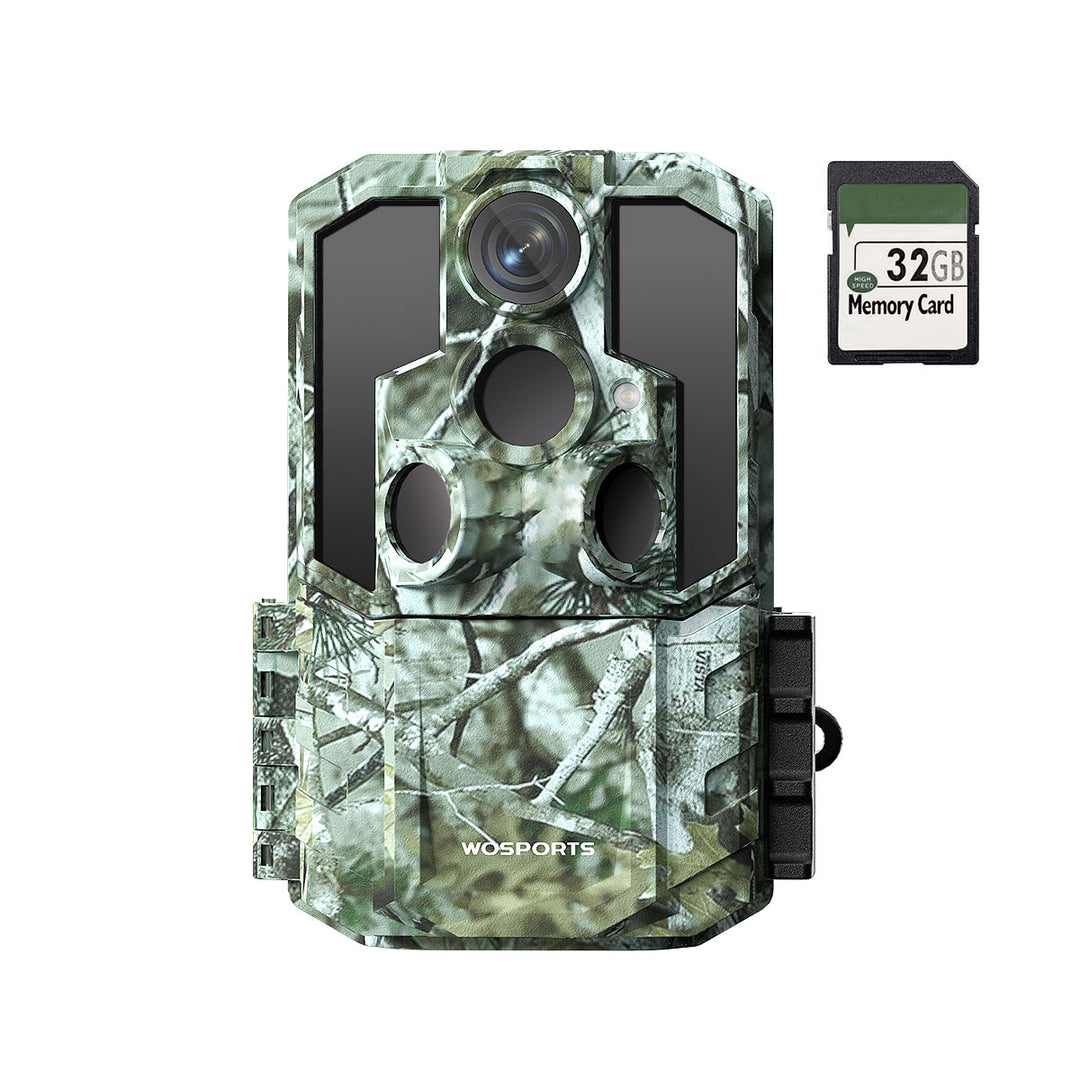
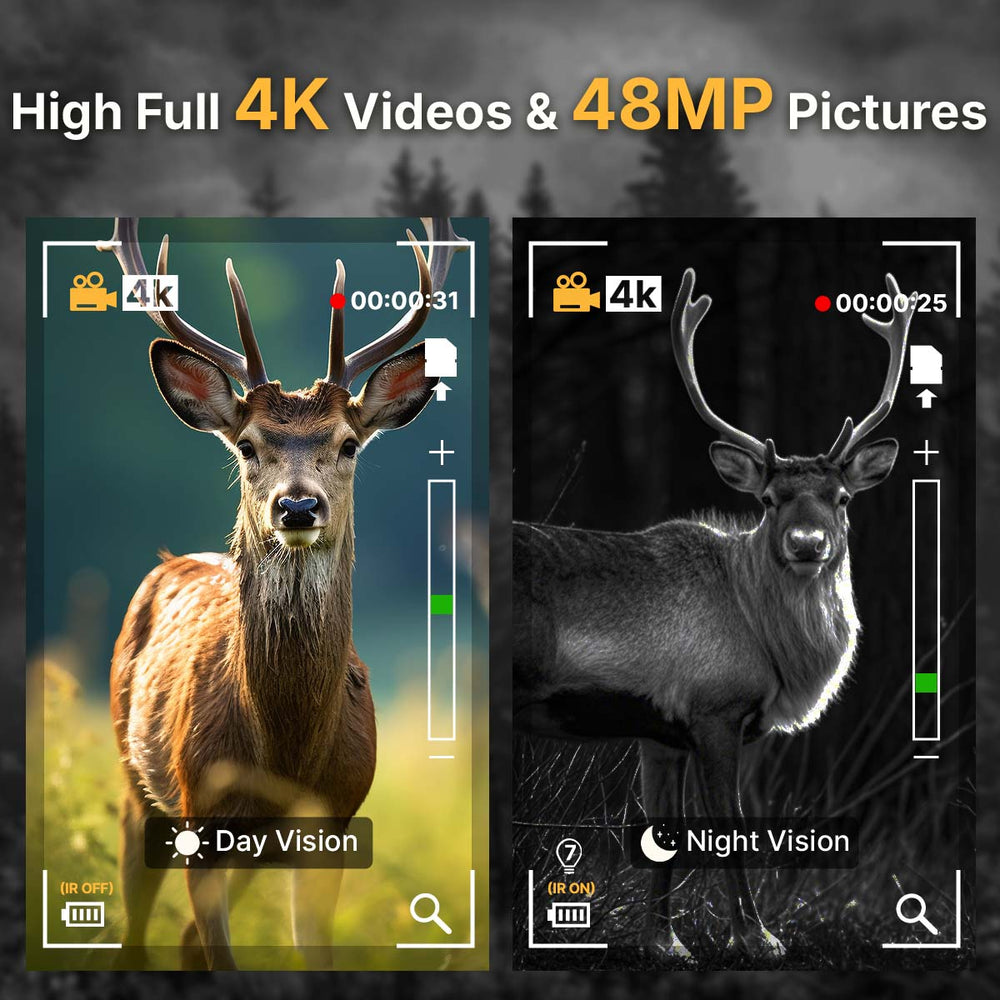
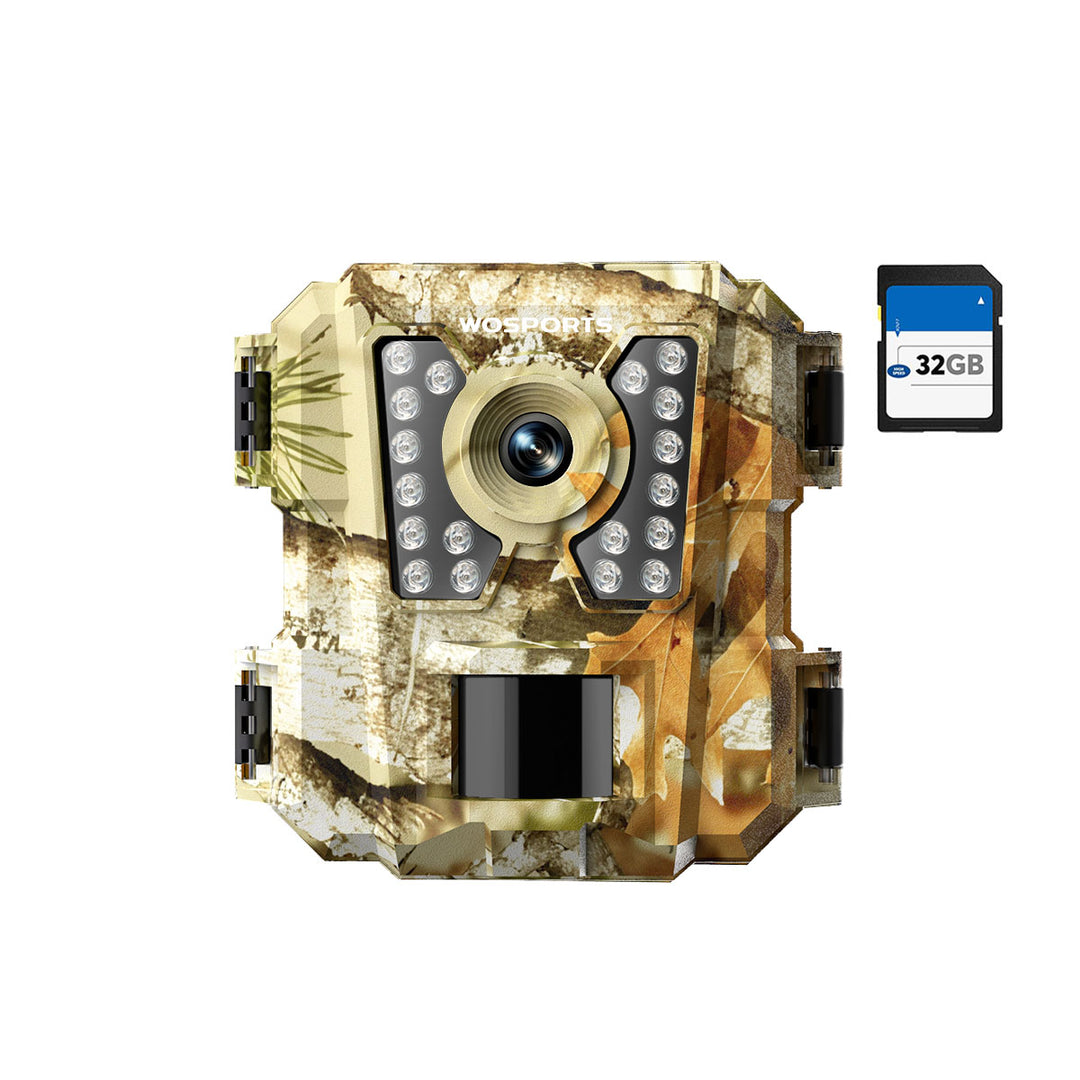
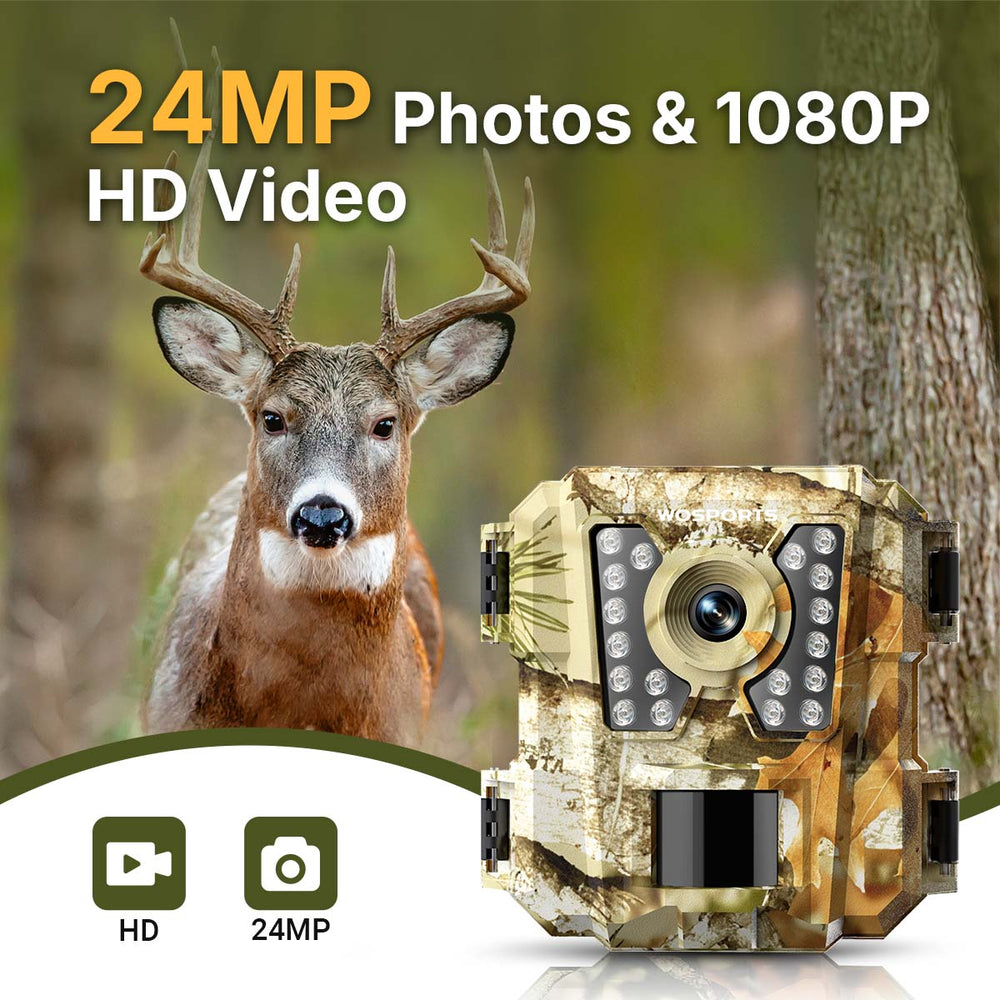
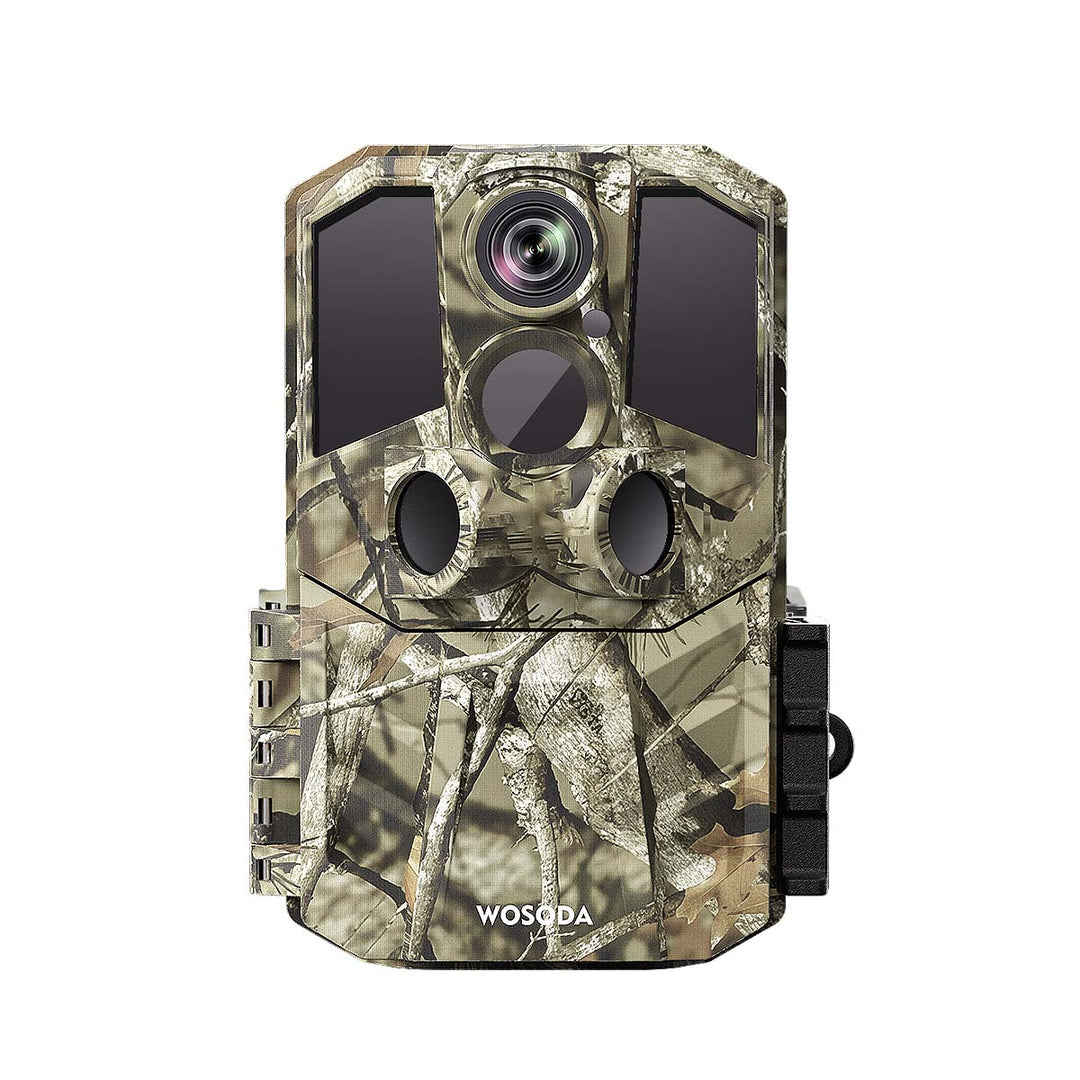
The WOSPORTS G600 combines these priorities with up to 48MP photos, 4K video, approximately 0.2-second trigger speed, 120° wide-angle coverage, up to 70 feet of PIR detection, automatic day/night monitoring, night vision, SD card storage, and IP66 weather protection.
Here's what to look for before buying.
Quick Answer: What Makes a Good Trail Camera?
If you want the short version, pay attention to these features:
| Feature | Why It Matters |
|---|---|
| Trigger Speed | Helps capture moving animals quickly |
| Photo Resolution | Determines still-image detail |
| Video Resolution | Determines video detail and context |
| Detection Range | Determines how far away movement can trigger the camera |
| Field of View | Determines how much of the scene the camera can capture |
| Night Vision | Allows monitoring after dark |
| Recovery Time | Determines how quickly the camera can capture another event |
| Storage | Determines how much footage can be saved |
| Battery Life | Determines how long the camera can operate |
| Weather Protection | Helps the camera withstand outdoor conditions |
| Connectivity | Determines whether footage can be accessed remotely |
You don't necessarily need the highest specification in every category.
You need the right combination for your specific use.
1. Start With Your Purpose
Before comparing specifications, ask one question:
What do I want this trail camera to do?
Your answer can change which features matter most.
Deer Scouting
You may prioritize:
- Fast trigger speed
- Good nighttime performance
- Detection range
- High-resolution photos
- Reliable battery life
Wildlife Observation
You may prioritize:
- High-quality video
- Wide field of view
- Day/night monitoring
- Image detail
- Long-term storage
Property Monitoring
You may prioritize:
- Wide coverage
- Reliable detection
- Weather resistance
- Battery life
- Easy installation
Remote Monitoring
You may prioritize:
- Cellular connectivity
- Remote access
- Notifications
- Cloud storage
There is no universal "best trail camera."
The best camera is the one that matches your use case.
2. How Important Is Trail Camera Trigger Speed?
Trigger speed is one of the most important specifications when monitoring moving wildlife.
It measures how quickly the camera responds after detecting movement.
For example:
Animal enters detection zone
→
Motion detected
→
Camera triggers
→
Photo captured or video begins
A faster trigger can reduce the amount of time an animal moves between detection and capture.
The WOSPORTS G600 has an approximately 0.2-second trigger speed.
This can be especially useful for:
- Deer crossing trails
- Coyotes
- Foxes
- Small mammals
- Animals moving quickly through the frame
However, trigger speed should not be considered by itself.
Camera placement remains critical.
A poorly positioned fast camera can still produce poor images.
3. How Many Megapixels Do You Need?
More megapixels can provide more detail in still photos, but megapixels alone do not determine image quality.
A higher-resolution image can be useful when you want to inspect:
- Antlers
- Animal markings
- Fur detail
- Facial features
- Multiple animals
- Distant subjects
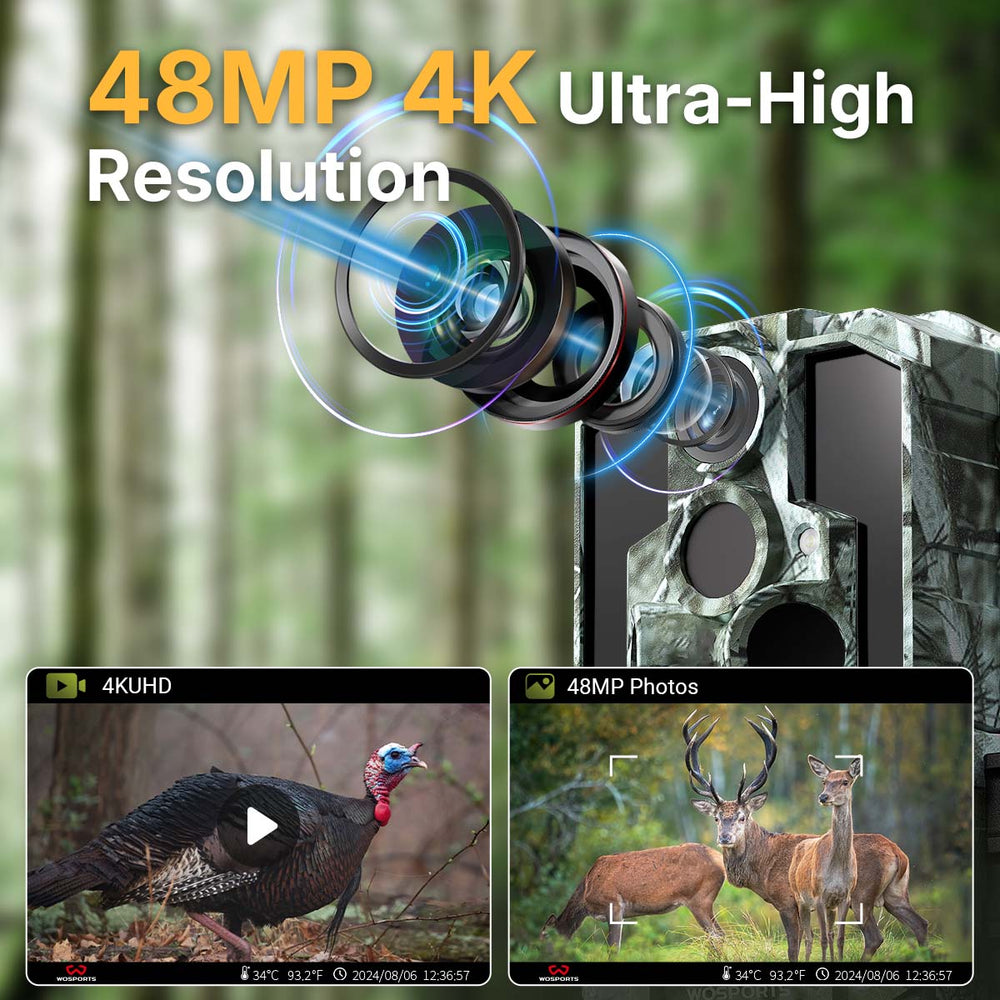
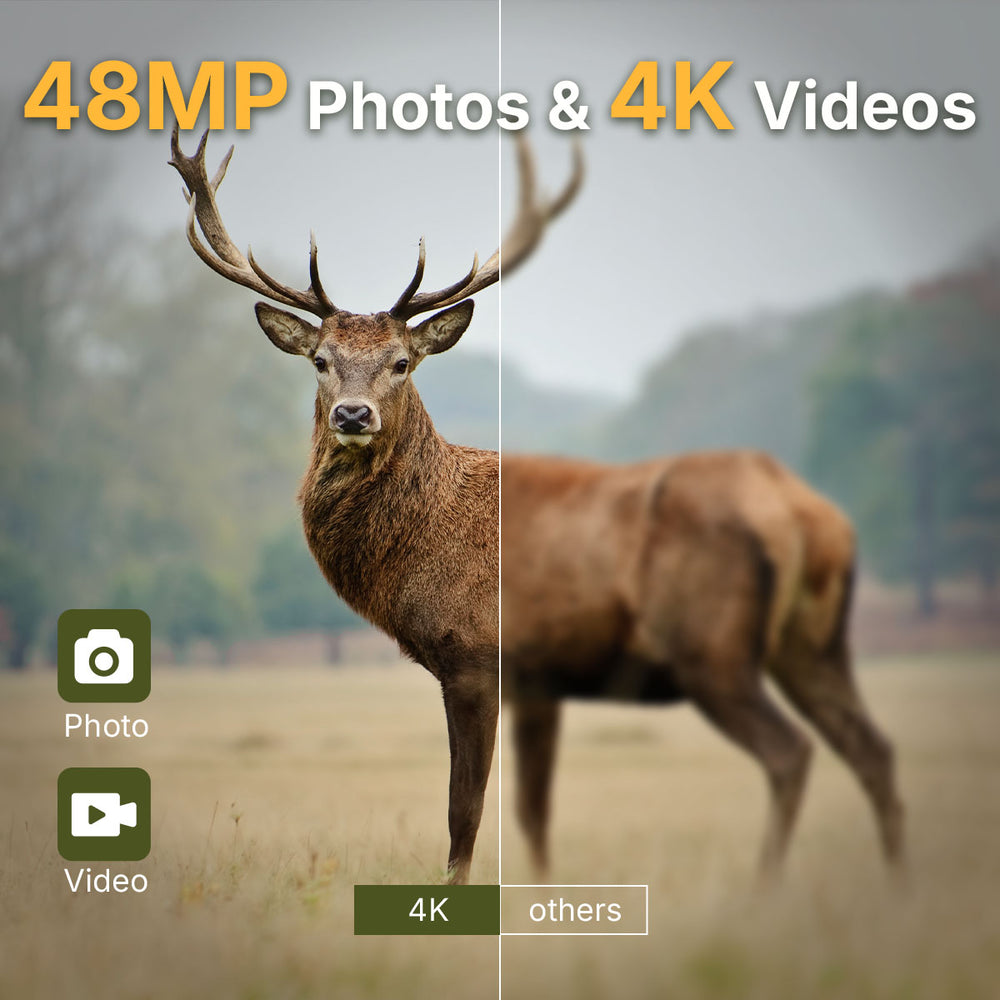
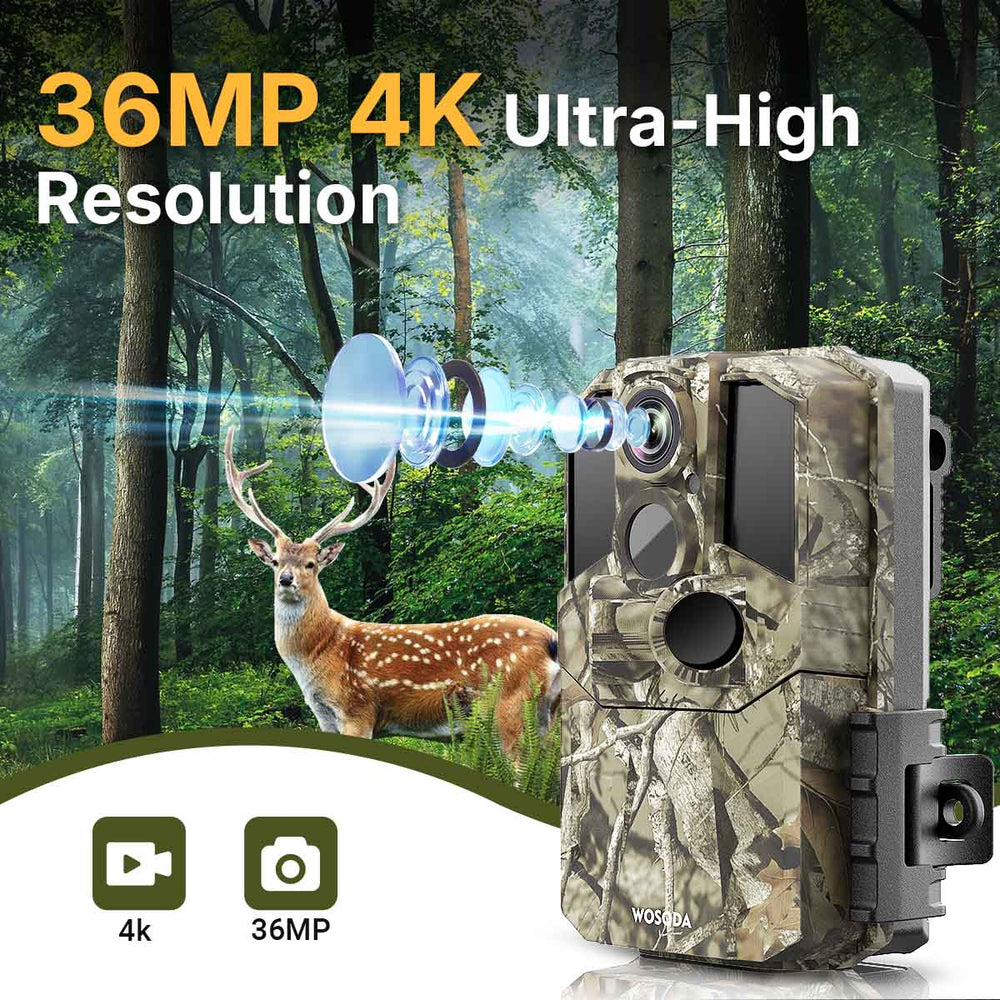
The G600 supports up to 48MP photos.
But don't assume that a 48MP camera automatically produces better photos than every camera with fewer megapixels.
Image quality also depends on:
- Sensor
- Lens
- Image processing
- Lighting
- Exposure
- Camera placement
- Distance to the subject
Think of megapixels as one part of the image-quality equation.
4. Is 4K Video Important for a Trail Camera?
4K video can be useful when you want more than a single snapshot of wildlife activity.
A photo tells you what happened at one moment.
Video can provide additional context.
For example, a photo may show:
A buck standing near a trail.
Video may show:
The buck approaching from the woods, stopping near the trail, looking around, and continuing in a specific direction.
That additional information can be useful for wildlife observation and scouting.
The G600 supports 4K video recording, giving users the option to capture more detailed video footage.
If video is important to you, 4K is a useful feature to consider.
5. What Is PIR Detection?
PIR stands for Passive Infrared.
Trail cameras commonly use PIR sensors to detect changes in infrared energy caused by moving objects.
When an animal enters the detection area, the sensor can recognize the movement and trigger the camera.
The practical result is:
Movement → Detection → Capture
PIR detection is particularly useful because wildlife is usually warmer than the surrounding environment.
However, detection performance can be affected by:
- Temperature
- Animal size
- Movement direction
- Distance
- Vegetation
- Environmental conditions
6. How Much Detection Range Do You Need?
Detection range determines approximately how far away movement can trigger the camera.
The G600 provides up to 70 feet of PIR detection.
But maximum detection distance should not be confused with ideal image distance.
Imagine an animal is detected 70 feet away.
The camera may know that something moved.
But the animal may occupy only a small portion of the resulting image.
This is why you should think about two separate questions:
Detection Range
How far away can the camera detect movement?
Useful Image Range
How far away can I capture the level of detail I actually want?
These are not always the same.
7. What Field of View Should a Trail Camera Have?
Field of view determines how much of the scene the camera can capture.
A wider field of view can be useful when:
- Monitoring open areas
- Covering wide trails
- Watching feeding areas
- Monitoring multiple movement paths
The G600 provides a 120° wide-angle view.
A wide field of view can help capture more of the surrounding environment.
But wider is not automatically better.
If you place a wide-angle camera too far from a narrow trail, the animal may appear small in the frame.
Again, placement matters.
8. Does Night Vision Matter?
Yes, especially for deer and wildlife species that are active after sunset.
A trail camera that only performs well during daylight can miss a significant portion of wildlife activity.
Night monitoring allows you to observe:
- Nighttime travel
- Feeding activity
- Animal movement
- Property activity
- Wildlife behavior
The G600 provides automatic day/night monitoring and night vision.
For more information, see:
[How Do Trail Cameras Work at Night?]
9. What Type of Night Vision Should You Look For?
Night vision performance depends on more than simply having "infrared" listed in the specifications.
Consider:
- Night image clarity
- Illumination
- Detection distance
- Sensor performance
- Animal movement
- Camera placement
- Environmental conditions
The goal isn't simply to see something.
The goal is to capture useful information about what happened.
For wildlife scouting, that can mean being able to identify:
- Species
- Number of animals
- Direction of movement
- Approximate size
- Antler characteristics
- Behavior
10. Should You Choose a Cellular Trail Camera?
This depends on whether you need remote access.
Cellular Trail Camera
Useful when you want to:
- Receive photos remotely
- Monitor distant properties
- Reduce physical camera checks
- Manage multiple remote locations
Non-Cellular Trail Camera
Useful when you want:
- Local SD card storage
- No cellular subscription
- Simple operation
- Lower ongoing costs
- Independence from cellular coverage
The G600 uses local SD card storage.
This means it is designed for users who prefer to retrieve their footage directly rather than rely on cellular transmission.
For a detailed comparison:
[Cellular vs. Non-Cellular Trail Cameras: Which Is Right for You?]
11. How Much Storage Do You Need?
Storage becomes particularly important if you plan to record frequently or use high-resolution video.
A camera recording:
- 48MP photos
- 4K video
- Multiple events per day
can generate a significant amount of data.
Before buying an SD card, consider:
Capture frequency × file size × deployment time
For example, a camera placed in a highly active wildlife area may generate far more files than a camera monitoring a quiet property.
If you're recording lots of 4K video, higher-capacity storage can be particularly useful.
12. Does Battery Life Matter?
Yes. Battery life is especially important for cameras installed in locations that are difficult to access.
Imagine installing a camera several miles into the woods.
You don't want to return every few days simply because the batteries are depleted.
Battery performance depends on factors such as:
- Number of triggers
- Photo frequency
- Video length
- Nighttime activity
- Temperature
- Battery type
- Settings
A camera with heavy nighttime activity and frequent 4K video recording may consume more power than one taking occasional daytime photos.
This is why battery expectations should always be considered in the context of actual use.
13. What Weather Protection Should a Trail Camera Have?
Outdoor trail cameras need protection from rain, dust, moisture, and changing weather conditions.
The IP rating provides a standardized way to describe protection against solids and water.
The WOSPORTS G600 has an IP66 rating.
This is useful for outdoor wildlife monitoring where the camera may be exposed to changing conditions.
However, weather protection does not mean a camera should be installed carelessly.
Always:
- Close battery and card compartments properly
- Check seals
- Mount the camera securely
- Avoid unnecessary exposure to standing water
- Keep the lens clean
14. Is Recovery Time Important?
Yes, particularly when multiple animals may pass through the camera in a short period.
Trigger speed and recovery time are different.
Trigger Speed
How quickly the camera responds to movement.
Recovery Time
How quickly it becomes ready to capture another event.
Imagine five deer crossing a trail.
A fast trigger can capture the first event quickly.
But if the camera takes too long to become ready again, some subsequent movement may not be captured as effectively.
Therefore, when comparing trail cameras, consider:
Trigger speed + recovery time
rather than focusing on trigger speed alone.
15. How Important Is Camera Placement?
Extremely important.
Even an excellent trail camera can produce poor results if it is installed incorrectly.
Common placement mistakes include:
- Pointing directly into the sun
- Mounting too high
- Mounting too low
- Placing the camera too close to the trail
- Pointing directly toward approaching animals
- Allowing branches to block the detection zone
- Installing near reflective surfaces
For deer trails, it is often useful to position the camera so the animal moves across the field of view rather than directly toward the lens.
This can provide a more useful side profile and give the camera more opportunity to capture movement.
16. What Is the Best Height for a Trail Camera?
There is no single height that works in every environment.
The appropriate height depends on:
- Target species
- Terrain
- Camera angle
- Trail elevation
- Distance from the animal
For deer scouting, a camera is commonly positioned around the animal's body level and angled appropriately toward the trail.
The important point is not a specific number.
The camera should provide a useful perspective of the animal while keeping the detection zone clear.
Always check the actual framing before leaving the camera.
17. Should You Buy a Trail Camera With More Features?
Not necessarily.
More features can be useful, but unnecessary features can also increase:
- Price
- Complexity
- Setup time
- Power consumption
- Maintenance
For example, if you never need remote access, paying extra for cellular connectivity may not provide much value.
If you only need basic wildlife confirmation, you may not need the highest possible video resolution.
Before buying, separate features into three categories:
Must Have
Features you actually need.
Nice to Have
Features that would improve your experience.
Don't Need
Features that don't contribute to your use case.
This is often the easiest way to choose a trail camera.
18. What Is a Good All-Around Trail Camera?
For general wildlife scouting, look for a balanced combination of:
- Fast trigger
- High-resolution photos
- High-resolution video
- Good nighttime monitoring
- Adequate detection range
- Wide enough field of view
- Reliable storage
- Weather protection
- Practical battery performance
The WOSPORTS G600 is designed around this type of balanced setup.
Its key specifications include:
| G600 Feature | Specification |
|---|---|
| Photo Resolution | Up to 48MP |
| Video | 4K |
| Trigger Speed | Approx. 0.2 sec |
| Field of View | 120° |
| PIR Detection | Up to 70 ft |
| Day/Night Monitoring | Automatic |
| Night Vision | Yes |
| Storage | SD Card |
| Weather Protection | IP66 |
Rather than focusing on one headline specification, the G600 combines several features that are useful for everyday wildlife scouting.
19. Is the G600 Good for Deer?
The G600 is designed to be suitable for deer and general wildlife scouting.
Its combination of fast trigger speed, wide-angle coverage, high-resolution imaging, night monitoring, and PIR detection makes it useful for locations such as:
- Deer trails
- Food plots
- Water sources
- Bedding-area approaches
- Wildlife corridors
- Property edges
For deer scouting, placement remains just as important as the camera's specifications.
A good camera in the wrong location can produce worse information than a properly positioned camera with more basic specifications.
20. Is the G600 Good for Nighttime Wildlife?
Yes.
The G600 supports automatic day/night monitoring and night vision.
Combined with its approximately 0.2-second trigger speed, this allows it to respond to wildlife activity after dark.
The camera can be used to observe animals such as:
- Deer
- Coyotes
- Foxes
- Raccoons
- Other wildlife
The exact results will depend on animal movement, distance, environmental conditions, and installation.
21. What Is the Most Important Trail Camera Feature?
There is no single most important feature for every user.
If you are monitoring fast-moving deer, trigger speed may be very important.
If you are studying animal behavior, video quality may matter more.
If your camera is installed in a remote location, battery life may be critical.
If you need remote updates, cellular connectivity becomes important.
If you're monitoring a property close to home, simplicity and local storage may be more valuable.
So instead of asking:
"What is the best trail camera feature?"
Ask:
"Which feature matters most for the way I use my trail camera?"
That question will lead you to a much better buying decision.
Trail Camera Buying Checklist
Before purchasing a trail camera, use this checklist.
Image & Video
☐ Photo resolution
☐ Video resolution
☐ Night image quality
Detection
☐ Trigger speed
☐ Recovery time
☐ Detection range
☐ PIR sensitivity
Coverage
☐ Field of view
☐ Camera placement options
Storage
☐ SD card compatibility
☐ Storage capacity
☐ File size
Outdoor Performance
☐ Weather protection
☐ Battery performance
☐ Operating conditions
Connectivity
☐ Cellular or non-cellular
☐ Remote access requirements
☐ Subscription costs
Usability
☐ Setup process
☐ Settings
☐ Display
☐ Ease of retrieving footage
Frequently Asked Questions About Buying a Trail Camera
What is the most important feature of a trail camera?
There is no single most important feature. For wildlife scouting, trigger speed, image quality, night vision, detection range, storage, and weather protection are all important.
What is a good trigger speed for a trail camera?
Around 0.3 seconds or faster is a useful target for many wildlife applications. A trigger speed around 0.2 seconds can be particularly useful for fast-moving animals.
How many megapixels should a good trail camera have?
There is no universal requirement. Higher-resolution photos can provide more detail, but sensor quality, lens quality, lighting, and image processing also affect the final image.
Is 4K worth it on a trail camera?
4K can be worthwhile if video detail and wildlife behavior are important to you. It provides more resolution than 2K or Full HD video.
Do trail cameras work at night?
Yes. Trail cameras equipped with night vision can capture wildlife activity in low-light and nighttime conditions.
Is a cellular trail camera better?
Not necessarily. Cellular cameras are better for remote monitoring, while non-cellular cameras can be simpler and less expensive to operate.
Do trail cameras need Wi-Fi?
Traditional non-cellular trail cameras do not need Wi-Fi. They can save photos and videos directly to an SD card.
How far should a trail camera detect animals?
The ideal detection range depends on your property and use case. A longer range is not automatically better if the camera cannot capture useful image detail at that distance.
How long should a trail camera battery last?
Battery life varies depending on the number of triggers, video recording, nighttime activity, temperature, battery type, and camera settings.
What weather rating should a trail camera have?
Look for a camera designed specifically for outdoor use with an appropriate IP protection rating. The WOSPORTS G600 has an IP66 rating.
What is the best trail camera for deer?
The best choice depends on your scouting setup. For deer, useful features include fast trigger speed, good nighttime imaging, adequate detection range, high-quality photos and video, and appropriate field of view.
Is the WOSPORTS G600 a good trail camera for wildlife scouting?
The G600 is designed for wildlife scouting and combines up to 48MP photos, 4K video, approximately 0.2-second trigger speed, 120° coverage, up to 70 feet of PIR detection, automatic day/night monitoring, night vision, SD card storage, and IP66 weather protection.
Final Verdict: How Do You Choose the Right Trail Camera?
Choosing a trail camera doesn't have to mean choosing the camera with the biggest number on every specification.
Instead, start with your actual scouting needs.
If you're monitoring fast-moving wildlife, prioritize trigger speed.
If you want to identify animals in detail, consider image resolution.
If you want to understand behavior, consider 4K video.
If wildlife activity after sunset matters, prioritize night vision.
If you're monitoring a large area, consider detection range and field of view.
If you want simple operation without recurring cellular costs, consider local SD card storage.
And if the camera will remain outdoors for extended periods, weather protection and battery performance matter.
The WOSPORTS G600 brings many of these requirements together in one wildlife scouting camera:
48MP Photos
4K Video
0.2-Second Trigger Speed
120° Wide-Angle View
Up to 70 ft PIR Detection
Automatic Day/Night Monitoring
Night Vision
SD Card Storage
IP66 Weather Protection
The right trail camera isn't necessarily the one with the most features.
It's the one that gives you the information you need, where and when you need it.
Ready to see what's happening on your land?
Search
Popular Posts
Recent Posts


Nov 28, 2024
Troubleshooting Common Trail Camera Issues
Jan 10, 2025
Why Does My Trail Camera Stop Working at Night?