How Can Small Retailers Choose Night Vision Binoculars for Seasonal Demand?
Small retailers can prepare for seasonal demand by choosing night vision binoculars that match their target customers, price range, and selling season, rather than simply buying the highest-specification product available. A practical inventory plan should balance product versatility, retail price, supplier lead time, and expected demand.
This matters because outdoor recreation represents a substantial U.S. consumer market. According to the U.S. Geological Survey, 14.4 million people hunted in the United States in 2022, while hunting, fishing, and wildlife watching generated $394.8 billion in spending.
Why Does Seasonal Demand Matter for Night Vision Binoculars?
Seasonal demand matters because outdoor products can experience stronger sales around hunting, wildlife observation, camping, and holiday-shopping periods. Small retailers need inventory available before customers begin actively shopping.
Night vision binoculars can serve several seasonal customer groups:
- Hunters preparing for hunting season
- Wildlife observers
- Outdoor and camping enthusiasts
- Gift shoppers
- Property owners looking for nighttime observation equipment
- Content creators interested in nighttime recording
For retailers, this broad application is useful because the same product can be marketed differently throughout the year.
The key is to plan inventory before peak demand rather than waiting for sales to accelerate.
Which Customer Segments Should Retailers Target?
Retailers should divide their customers by use case and budget before deciding how many night vision binoculars to purchase. Different customers value different product features.
| Customer segment | Main buying motivation | Important features |
|---|---|---|
| Beginner buyers | Easy nighttime viewing | Simple controls, affordable price |
| Hunters | Outdoor observation | Night vision range, IR illumination, recording |
| Wildlife observers | Animal observation | Image quality, magnification, portability |
| Outdoor enthusiasts | Versatility | Battery life, durability, recording |
| Gift buyers | Value and ease of use | Attractive price, simple operation |
This segmentation helps small retailers avoid overstocking a product that only appeals to one narrow audience.
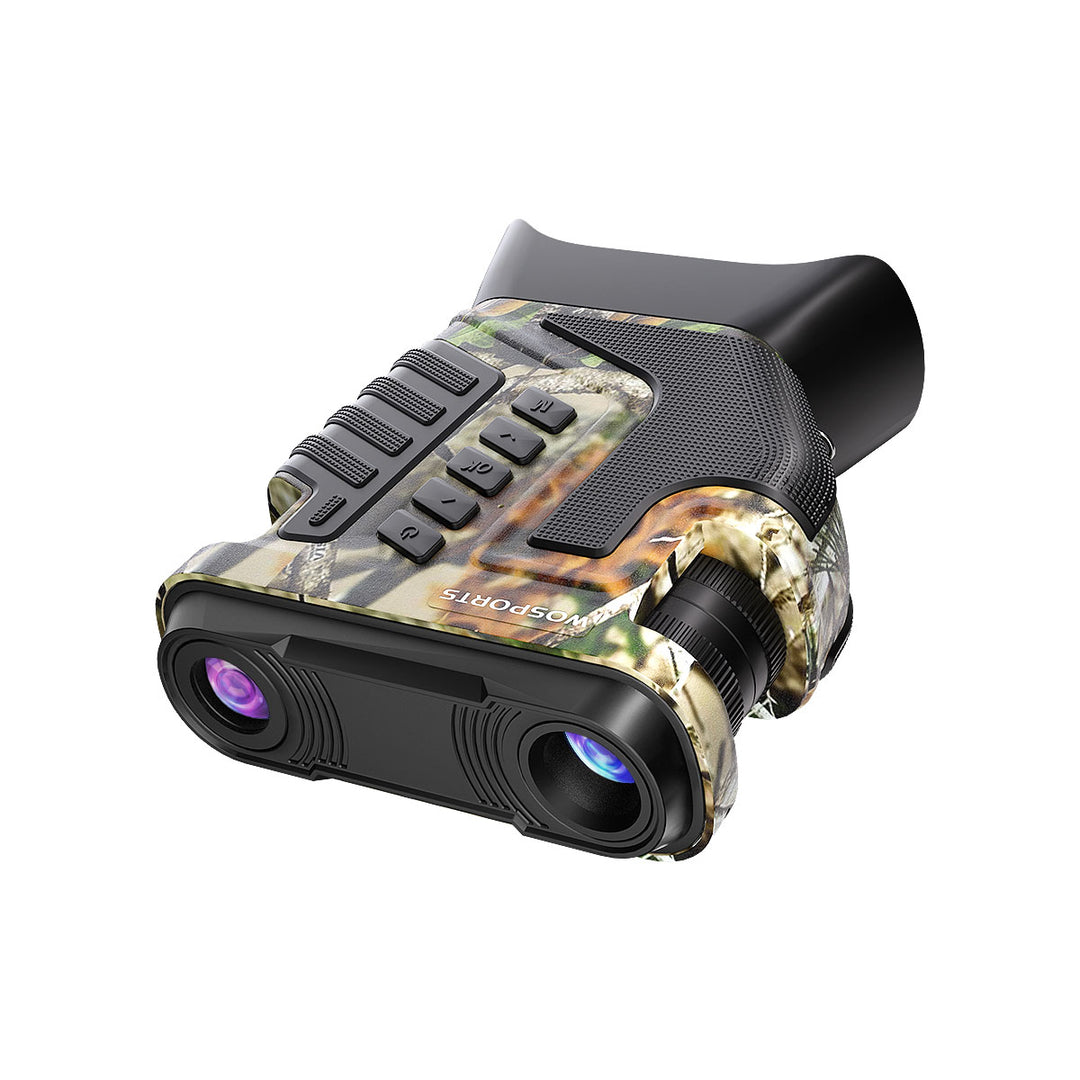
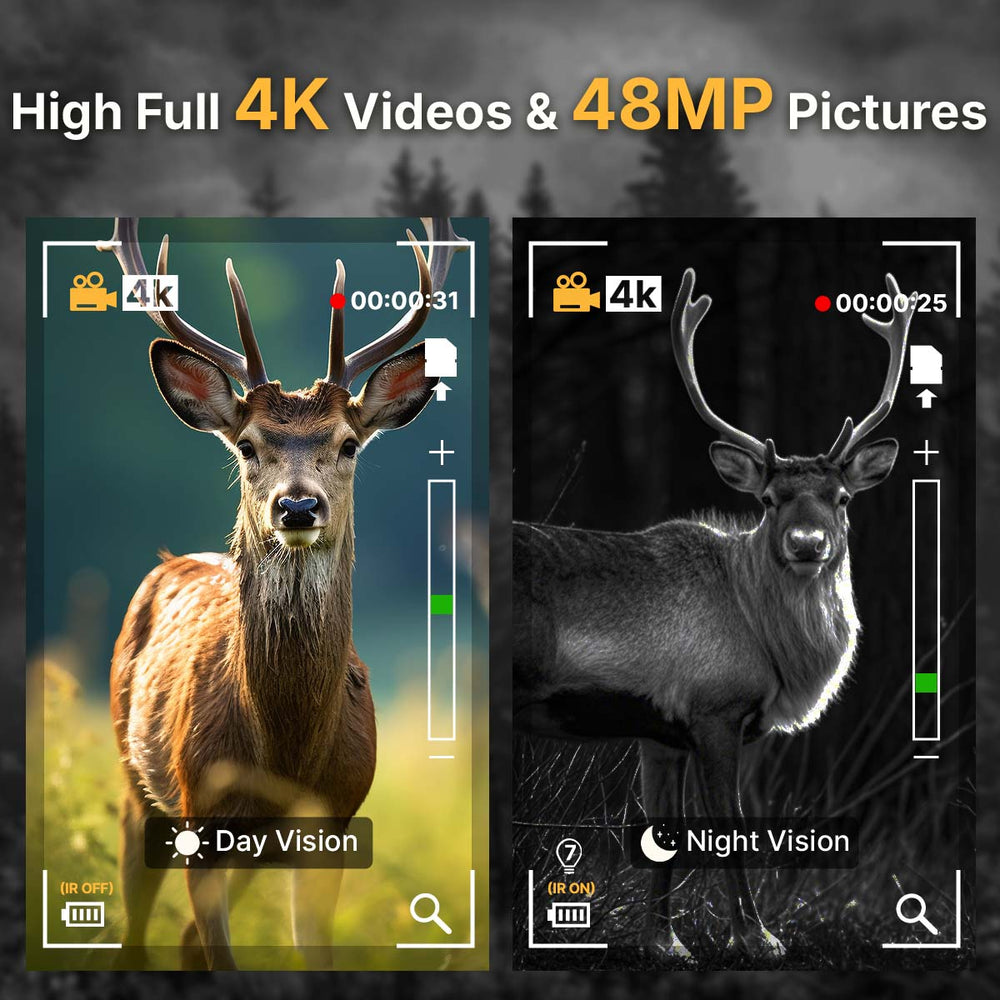
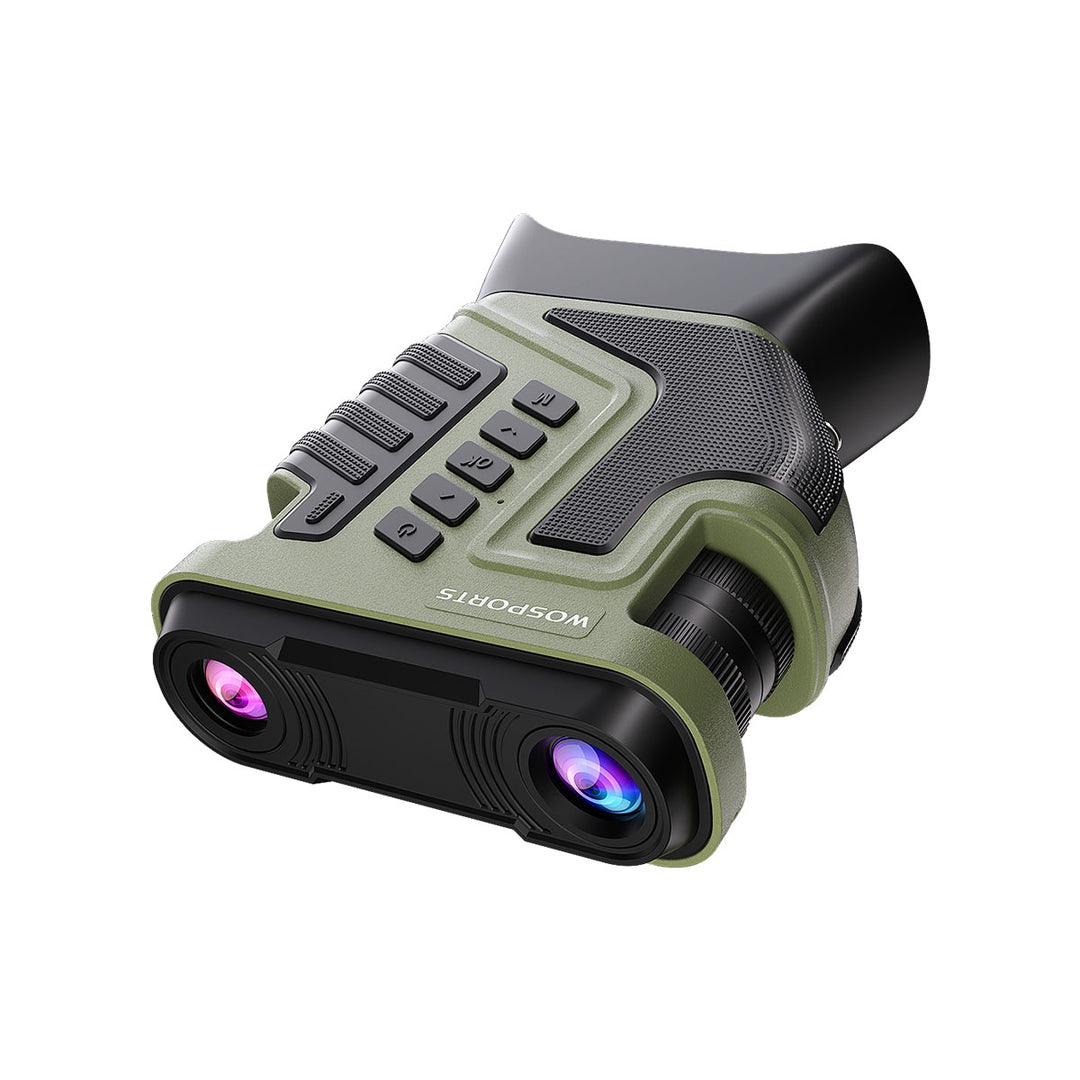
A versatile model such as the WOSPORTS NV400 can be positioned across several of these segments because its digital night vision, infrared illumination, optical zoom, and recording functions support multiple outdoor applications.
What Features Matter Most for Seasonal Inventory?
For seasonal inventory, retailers should prioritize features that are easy to demonstrate and relevant to several customer groups.
The most useful features to evaluate include:
- Night vision performance — the core reason customers buy the product.
- Infrared illumination — important for very dark environments.
- Viewing distance — helps customers understand potential nighttime use.
- Magnification and optical zoom — useful for observing distant subjects.
- Photo and video recording — adds value for wildlife and outdoor users.
- Battery performance — important for field use.
- Ease of operation — particularly important for beginner buyers.
For a small retailer, a product with several useful functions can reduce the need to maintain separate inventory for every customer segment.
How Much Inventory Should a Small Retailer Buy?
Small retailers should use a staged inventory strategy instead of committing all purchasing capital to one large order.
A simple approach is:
Stage 1: Test
Start with a manageable quantity and measure:
- Page views
- Conversion rate
- Customer questions
- Return reasons
- Advertising performance
- Sales by customer segment
Stage 2: Reorder
If demand develops as expected, place a second order before the supplier's lead time becomes a problem.
Stage 3: Scale
Increase the order quantity only after actual sales data shows that demand is sustainable.
This approach reduces inventory risk while still allowing retailers to respond to seasonal demand.
When Should Retailers Start Inventory Planning?
Retailers should begin inventory planning several weeks or months before their expected sales peak, depending on supplier lead time and shipping conditions.
For hunting-related products, waiting until the beginning of peak season can create two problems:
- Popular products may become temporarily unavailable.
- Expedited shipping can increase landed costs.
The U.S. Geological Survey reports that 14.4 million Americans hunted in 2022 and hunters spent $45.2 billion that year.
This does not mean every retailer will experience the same seasonal pattern, but it demonstrates why hunting-related products represent a substantial potential customer market.
A practical rule is:
Inventory should arrive before the customer starts shopping, not when the season has already started.
How Does E-Commerce Change Seasonal Inventory Planning?
Online retail makes product availability especially important because customers can quickly compare products and switch sellers when an item is unavailable.
The U.S. Census Bureau reported that U.S. retail e-commerce sales reached $340.2 billion in Q2 2026, up 12.2% from Q2 2025, and represented 17.1% of total retail sales.
For small retailers, this supports a simple inventory strategy:
| Online retail factor | Inventory implication |
|---|---|
| Customers compare multiple stores | Avoid frequent stockouts |
| Seasonal search demand increases | Prepare inventory early |
| Product reviews influence buyers | Monitor return and review data |
| Advertising can scale quickly | Keep replenishment capacity available |
| Price competition is visible | Avoid excessive overstock |
The faster online demand can change, the more important inventory flexibility becomes.
Why Is Product Versatility Valuable for Small Retailers?
A versatile night vision binocular can reduce inventory complexity because one product can be marketed to several customer groups.
For example, the NV400 can support different content angles:
Hunting:
“Use digital night vision and infrared illumination for nighttime outdoor observation.”
Wildlife observation:
“Observe and record wildlife activity after dark.”
Camping:
“Explore outdoor surroundings when natural light is limited.”
Gift market:
“A practical outdoor gadget for people interested in nighttime exploration.”
The underlying product stays the same, but the merchandising message changes.
This is particularly useful for small retailers that do not have the purchasing power of large chains.
What Should Retailers Check Before Placing a Seasonal Order?
Before purchasing seasonal night vision binoculars, retailers should evaluate both the product and the supplier.
A basic checklist includes:
- Product specifications
- Sample testing results
- Retail price positioning
- Wholesale price
- Minimum order quantity
- Supplier lead time
- Reorder availability
- Shipping options
- Warranty policy
- Packaging quality
- Product manuals
- Customer-service support
- Available marketing materials
For small B2B buyers, reorder capability can be just as important as the initial wholesale price. A low-cost product that cannot be replenished during peak season may create more problems than a slightly more expensive product with reliable supply.
How Can Retailers Reduce Seasonal Overstock?
The safest approach is to combine a core product with controlled purchasing rather than building a large inventory based only on expected demand.
Retailers can reduce overstock risk by:
- Starting with a smaller test order
- Tracking weekly sales
- Monitoring advertising conversion
- Creating multiple product-use campaigns
- Reordering based on actual demand
- Avoiding excessive SKU duplication
- Planning promotions for slower periods
For example, a retailer could position the NV400 differently across the calendar:
| Period | Suggested positioning |
|---|---|
| Pre-hunting season | Hunting preparation |
| Hunting season | Nighttime outdoor observation |
| Fall | Wildlife observation |
| Holiday season | Outdoor technology gift |
| Winter | Nighttime property and wildlife observation |
This gives the same inventory several potential sales windows.
What Does a Good Seasonal Inventory Plan Look Like?
A good inventory plan connects customer demand, product features, supplier lead time, and reorder timing in one simple process.
A small retailer can use this five-step framework:
1. Identify demand
Determine which customer groups are most relevant to the store.
2. Select the product
Choose night vision binoculars with features that match those customers.
3. Test the inventory
Start with a controlled quantity and measure actual sales.
4. Monitor demand
Track sales velocity and customer feedback.
5. Reorder early
Place replenishment orders before inventory reaches a critical level.
This approach is more flexible than making one large seasonal purchase based entirely on forecasts.
FAQ: Seasonal Buying of Night Vision Binoculars
When should retailers buy night vision binoculars for hunting season?
Retailers should plan inventory before peak hunting demand and allow enough time for supplier production and shipping. The exact timing depends on supplier lead time and the retailer's target market.
Should small retailers buy several night vision models?
Not necessarily. A versatile model that appeals to multiple customer segments can be easier to manage than several narrowly positioned products.
Is the NV400 suitable for seasonal retail?
The NV400 can fit seasonal retail because its digital night vision, infrared illumination, optical zoom, and recording functions can be marketed for hunting, wildlife observation, camping, and other nighttime outdoor applications.
What is more important: price or features?
The best choice is usually the balance between retail price and customer-relevant features. A product with more specifications is not automatically easier to sell if customers do not understand or value those features.
Final Takeaway
Small retailers can manage seasonal demand for night vision binoculars by choosing versatile products, planning inventory early, and using staged purchasing instead of relying on one large seasonal order.
The opportunity is supported by both outdoor recreation and e-commerce trends. U.S. wildlife-related recreation generated $394.8 billion in spending in 2022, while U.S. e-commerce sales reached $340.2 billion in Q2 2026.
For B2B buyers, the practical formula is simple:
Right customer segment + relevant features + early inventory planning + reliable replenishment = lower seasonal inventory risk.
The WOSPORTS NV400 provides one example of a multi-use night vision binocular that can be positioned across hunting, wildlife observation, camping, and outdoor recreation markets. For small retailers, that flexibility can make seasonal inventory easier to manage while creating multiple opportunities to sell the same core product.
Search
Popular Posts
Recent Posts


Nov 28, 2024
Troubleshooting Common Trail Camera Issues
Jan 10, 2025
Why Does My Trail Camera Stop Working at Night?