What Are Common Mistakes When Deploying Trail Cameras in Bulk Projects?
Executive Summary
In large-scale trail camera deployment, especially for commercial or environmental projects, small operational mistakes can multiply into major performance losses. Whether used for bulk usage in wildlife monitoring, farm security, or outdoor surveillance, improper planning often leads to coverage gaps, high maintenance costs, and unreliable data collection.
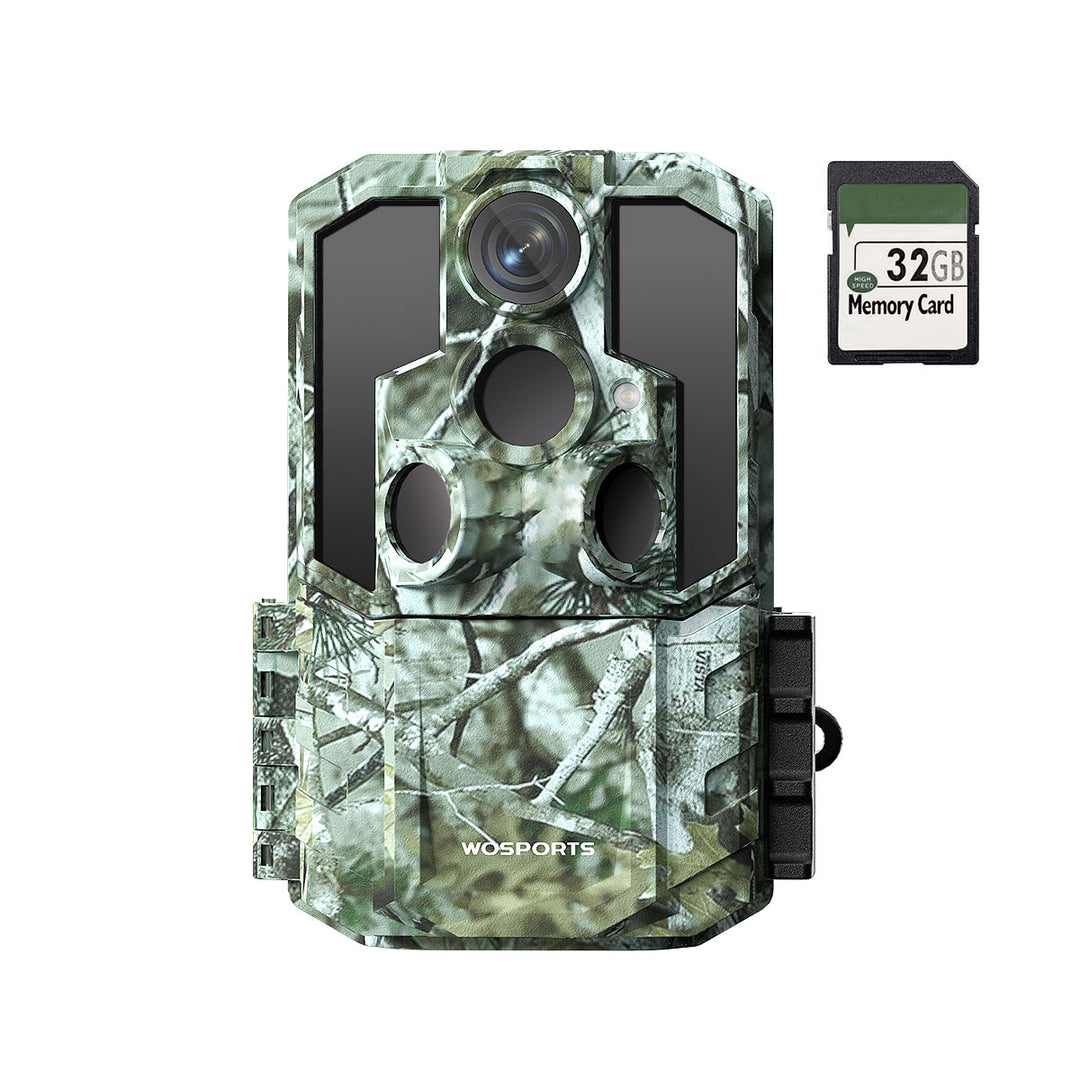
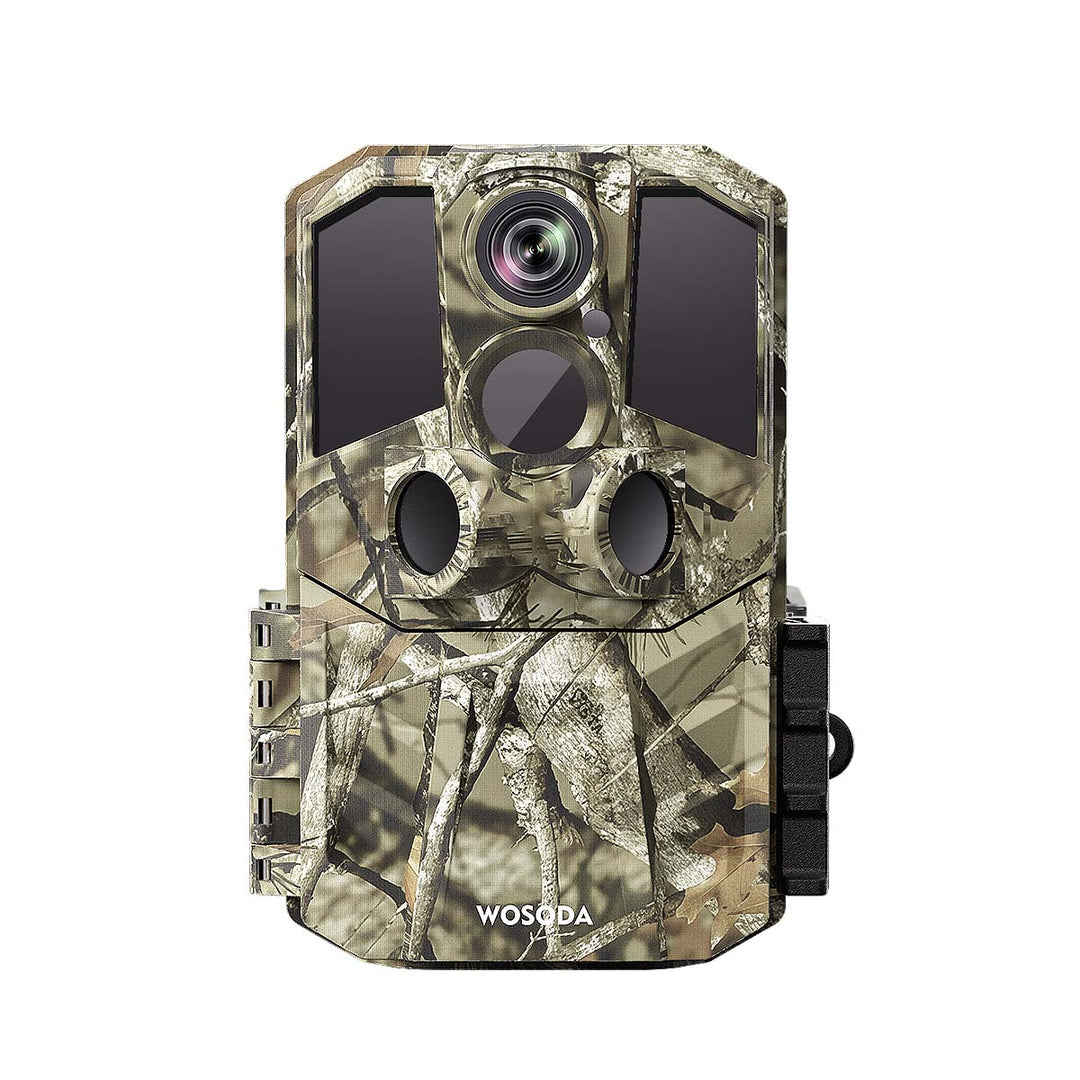
This article breaks down the most common monitoring mistakes in bulk trail camera projects and explains how structured deployment—supported by devices like the WOSPORTS G600 Trail Camera—can significantly improve system reliability.
Why Bulk Trail Camera Deployment Often Fails in Practice
Most bulk deployment failures are not caused by hardware limitations, but by planning and execution errors.
Typical consequences include:
- Inconsistent data across monitoring zones
- High battery replacement frequency
- Missed wildlife or security events
- Increased operational cost per unit
Key Insight
In trail camera deployment, scaling without system design leads to exponential inefficiency rather than linear performance gains.
Mistake #1: Random Placement Without Coverage Planning
One of the most common monitoring mistakes is placing cameras without spatial strategy.
What Goes Wrong
- Cameras clustered in high-visibility areas only
- Large blind spots between units
- Overlapping coverage in low-risk zones
Correct Approach
Use structured grid or corridor-based deployment:
- Fence lines
- Wildlife trails
- Entry/exit points
- Water sources
Mistake #2: Ignoring Environmental Conditions
Environmental mismatch is a major cause of bulk failure.
Common Issues
| Environment Factor | Deployment Error | Result |
|---|---|---|
| Direct sunlight | Wrong camera angle | Overexposed images |
| Dense vegetation | Insufficient detection range | Missed triggers |
| Heavy rain zones | Low IP rating devices | Hardware failure |
| Cold climates | Poor battery selection | Power loss |
Mistake #3: Overlooking Power and Storage Planning
In bulk usage systems, power and storage are often underestimated.
Problems Observed
- Frequent battery swaps
- SD card overflow
- Data loss due to overwriting
Best Practice
- Standardize battery type across deployments
- Use scheduled data retrieval cycles
- Match storage capacity to trigger frequency
Mistake #4: Lack of Standardized Setup Configuration
Different configuration settings across cameras create inconsistent data.
Common Configuration Errors
- Mixed resolution settings
- Different trigger sensitivity levels
- Inconsistent night vision modes
Impact
- Data becomes non-comparable
- Analysis accuracy decreases
- System-level insights become unreliable
Industry Insight: Growth of Bulk Monitoring Systems
According to U.S. Department of Agriculture (USDA) field technology reports, standardized remote monitoring systems significantly improve data reliability in agricultural and environmental tracking applications.
Source: USDA Research Service
https://www.usda.gov
Case Study: Bulk Trail Camera Deployment Failure vs Optimization
A rural monitoring project initially deployed 200 trail cameras without standardized configuration.
Before Optimization
| Metric | Performance |
| Data consistency | 58% |
| Device failure rate | High |
| Maintenance cost | Increasing |
| Coverage gaps | Frequent |
After Structured Deployment
| Metric | Performance |
| Data consistency | 92% |
| Device failure rate | Reduced |
| Maintenance cost | Lower |
| Coverage gaps | Minimal |
Key Insight
System design improved performance more than hardware upgrades.
Expert Commentary on Monitoring Mistakes
“In distributed sensing systems, the primary failure point is not the sensor itself, but inconsistent deployment methodology across units.”
Source: National Institute of Standards and Technology (NIST) – Distributed Sensor Systems Guidance
https://www.nist.gov
How the WOSPORTS G600 Trail Camera Reduces Deployment Errors
The WOSPORTS G600 Trail Camera is designed to minimize common bulk usage mistakes through stable performance and standardized configuration support.

Key Advantages
- Uniform imaging settings across units
- Fast trigger speed for consistent detection
- Wide-angle coverage to reduce blind spots
- IP66-rated durability for outdoor environments
- Stable batch production for wholesale consistency
Best Practices Checklist for Bulk Trail Camera Deployment
| Area | Best Practice |
| Placement | Grid-based or route-based planning |
| Configuration | Standardized settings across all units |
| Power | Unified battery system |
| Data | Scheduled retrieval cycles |
| Maintenance | Rotational inspection system |
FAQ: Bulk Trail Camera Deployment Mistakes
What is the most common mistake in trail camera deployment?
Random placement without structured coverage planning is the most common failure point.
Why does bulk deployment often fail?
Because scaling increases the impact of small configuration inconsistencies.
How does the G600 help reduce errors?
It ensures consistent imaging, stable trigger response, and standardized performance across all units.
Conclusion
Most failures in trail camera deployment for bulk projects come from planning and operational errors—not from the devices themselves.
Avoiding monitoring mistakes requires:
- Structured spatial planning
- Standardized configurations
- Environmental adaptation
- Consistent device performance
The WOSPORTS G600 Trail Camera supports these requirements, making it suitable for scalable bulk usage in wildlife, farm, and outdoor monitoring systems.
Sources
-
U.S. Department of Agriculture (USDA) Research & Field Technology Reports
https://www.usda.gov -
National Institute of Standards and Technology (NIST) – Distributed Sensor Systems
https://www.nist.gov -
U.S. Geological Survey (USGS) Environmental Monitoring Systems
https://www.usgs.gov
Search
Popular Posts
Recent Posts


Nov 28, 2024
Troubleshooting Common Trail Camera Issues
Jan 10, 2025
Why Does My Trail Camera Stop Working at Night?