How Can Retailers Compare Battery Life When Sourcing Night Vision Binoculars?
Retailers comparing night vision binoculars for wholesale sourcing should not judge battery life by a single number printed on a specification sheet. A better comparison considers battery type, expected operating time, infrared usage, recording frequency, temperature conditions, charging requirements, and the product's intended customer.
For small B2B buyers, battery life is ultimately an inventory and customer-satisfaction issue. A night vision binocular that performs well for several hours in real-world outdoor use can be easier to sell than a model with an impressive theoretical specification but unpredictable runtime.
Why Does Battery Life Matter When Sourcing Night Vision Binoculars?
Battery life matters because night vision binoculars are often used outdoors, where access to power may be limited. For hunters, wildlife observers, campers, and outdoor enthusiasts, running out of power during nighttime use can make the product significantly less useful.
For retailers, battery performance also affects:
- Customer reviews and return rates
- Product positioning
- Accessory sales
- Seasonal demand
- Customer expectations
- After-sales questions
- Product differentiation
This makes battery life more than a technical specification. It is part of the product's retail value proposition.
When evaluating several suppliers, buyers should therefore ask: “How long can the customer realistically use this product under normal conditions?” rather than simply asking: “What is the battery capacity?”
What Is the Difference Between Battery Capacity and Battery Life?
Battery capacity describes how much energy a battery can store, while battery life describes how long the device can operate under particular conditions. A larger capacity does not automatically guarantee proportionally longer runtime.
Battery performance depends on the total power consumed by the device, including:
- Infrared illumination
- Display brightness
- Digital or optical functions
- Video recording
- Image processing
- Standby operation
- Wireless connectivity, if available
- Ambient temperature
Penn State's agricultural engineering resources explain that battery capacity is a fundamental specification, but temperature and operating conditions also affect actual battery performance.
For wholesale buyers, this means two products with similar battery specifications can still deliver different customer experiences.
Which Features Consume the Most Power in Night Vision Binoculars?
Infrared illumination and continuous screen operation are typically important power considerations because night vision binoculars need electronic components to process and display images in darkness.
Retailers should pay particular attention to how a supplier defines its claimed runtime.
Ask whether the stated battery life was measured with:
- IR turned on or off
- Continuous viewing or intermittent use
- Video recording active or inactive
- Maximum or normal display brightness
- Fully charged batteries
- Room-temperature conditions
- New batteries or partially used batteries
This distinction is important because a laboratory-style runtime number may not represent how customers actually use the binoculars outdoors.
B2B takeaway: Always compare battery life under similar test conditions, not just the headline number.
How Does Infrared Use Affect Battery Runtime?
Infrared illumination can increase power consumption because the night vision system must actively provide illumination when ambient light is insufficient.
This creates an important difference between daytime and nighttime battery claims. A customer may use binoculars for several hours during the day but experience a shorter runtime during continuous nighttime viewing with IR illumination enabled.
For this reason, retailers should request two pieces of information whenever possible:
| Battery Test | What It Tells the Retailer |
|---|---|
| Standby/low-power runtime | Useful for occasional users |
| Normal viewing runtime | Better representation of everyday use |
| Continuous IR runtime | Important for nighttime customers |
| Recording + IR runtime | Useful for demanding users |
This information makes product comparisons more meaningful and gives retailers better material for product listings.
Does Cold Weather Reduce Night Vision Binocular Battery Life?
Yes. Cold temperatures can reduce the usable performance of many battery systems, so retailers targeting hunting and outdoor customers should consider temperature when comparing battery life.
Research from Texas A&M University explains that conventional batteries can suffer in cold conditions because lower temperatures affect the movement of charge through the battery's electrolyte.
UC Berkeley researchers have also reported that lithium-ion batteries can experience substantial reductions in usable energy at very low temperatures. Their research found that a typical commercial lithium-ion cell could deliver only about 20% of its room-temperature capacity at -20°C under the conditions discussed in their study.
For retailers, the practical lesson is simple: a battery-life claim measured at room temperature should not automatically be treated as a winter-use guarantee.
What Battery Information Should Wholesale Buyers Request?
Wholesale buyers should request enough information to compare suppliers on an equivalent basis. A good battery specification request should include both the hardware and the testing conditions.
Ask suppliers for:
- Battery type
- Battery quantity
- Battery capacity, if applicable
- Rated operating time
- Operating time with IR enabled
- Charging method
- Charging time
- Standby time, if available
- Recommended operating temperature
- Storage temperature
- Whether batteries are included
- Whether rechargeable batteries are supported
- Recommended replacement batteries
A supplier that can provide clear testing conditions is generally easier for a retailer to evaluate than one that provides only a large runtime number.
How Should Retailers Compare Different Battery-Life Claims?
The easiest approach is to build a standardized comparison table before choosing a supplier. This prevents one product from being judged using ideal conditions while another is evaluated using more realistic conditions.
A practical wholesale comparison could look like this:
| Factor | Supplier A | Supplier B | Supplier C |
|---|---|---|---|
| Battery type | — | — | — |
| Battery quantity | — | — | — |
| Claimed runtime | — | — | — |
| IR-on runtime | — | — | — |
| Recording runtime | — | — | — |
| Rechargeable option | — | — | — |
| Charging method | — | — | — |
| Operating temperature | — | — | — |
| Battery included | — | — | — |
| Replacement availability | — | — | — |
| Warranty/support | — | — | — |
The important point is that runtime should be compared alongside usability and ownership cost, not in isolation.
Should Retailers Prefer Rechargeable or Replaceable Batteries?
There is no universal winner. The better option depends on the target customer and sales channel.
Replaceable batteries can be attractive for users who spend long periods away from electrical outlets because spare batteries can be carried and installed quickly.
Rechargeable systems can appeal to customers who use the device frequently and prefer convenient charging.
For small retailers, the key questions are:
- Who is the target customer?
- How long are typical outdoor sessions?
- Will customers have access to charging?
- Is carrying spare batteries practical?
- Is the product positioned for occasional or frequent use?
- What replacement or accessory products can the retailer sell?
A retailer targeting hunters may emphasize field reliability and backup power, while a retailer targeting casual wildlife observers may emphasize convenient charging.
How Does Battery Life Affect Retail Positioning?
Battery life can support different product positions depending on the target market. Retailers should translate technical performance into a customer benefit instead of simply listing numbers.
For example:
| Customer Segment | Battery Message to Emphasize |
|---|---|
| Hunters | Reliable nighttime field use |
| Wildlife observers | Longer observation sessions |
| Campers | Less frequent charging |
| Beginners | Simple and convenient operation |
| Gift buyers | Easy setup and practical use |
| Outdoor professionals | Consistent performance during extended use |
This approach is particularly useful for small retailers because they may not have the marketing budget to educate customers extensively.
A simple rule: sell the use case behind the battery life, not just the battery specification.
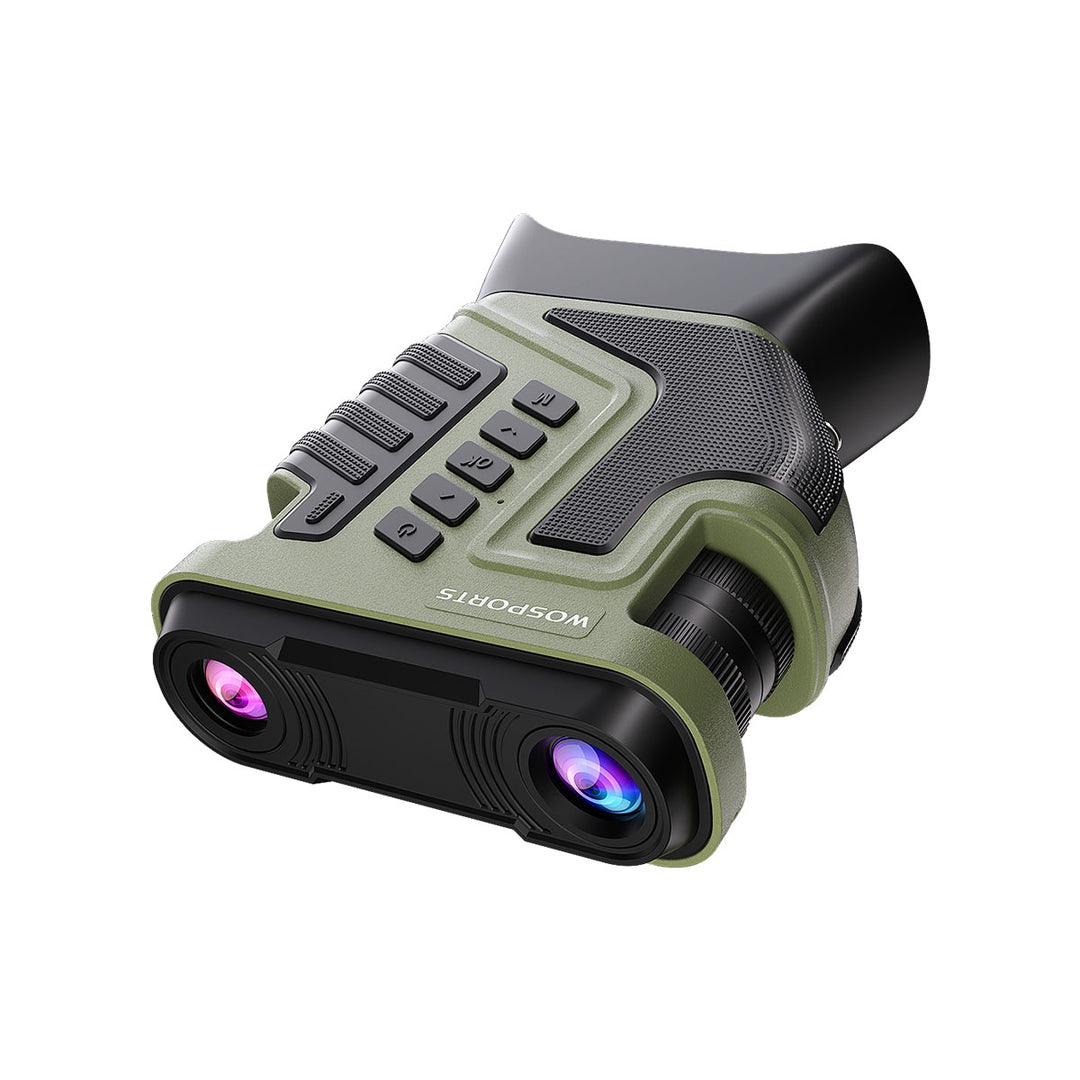
How Does the WOSPORTS NV400 Fit Into This Comparison?
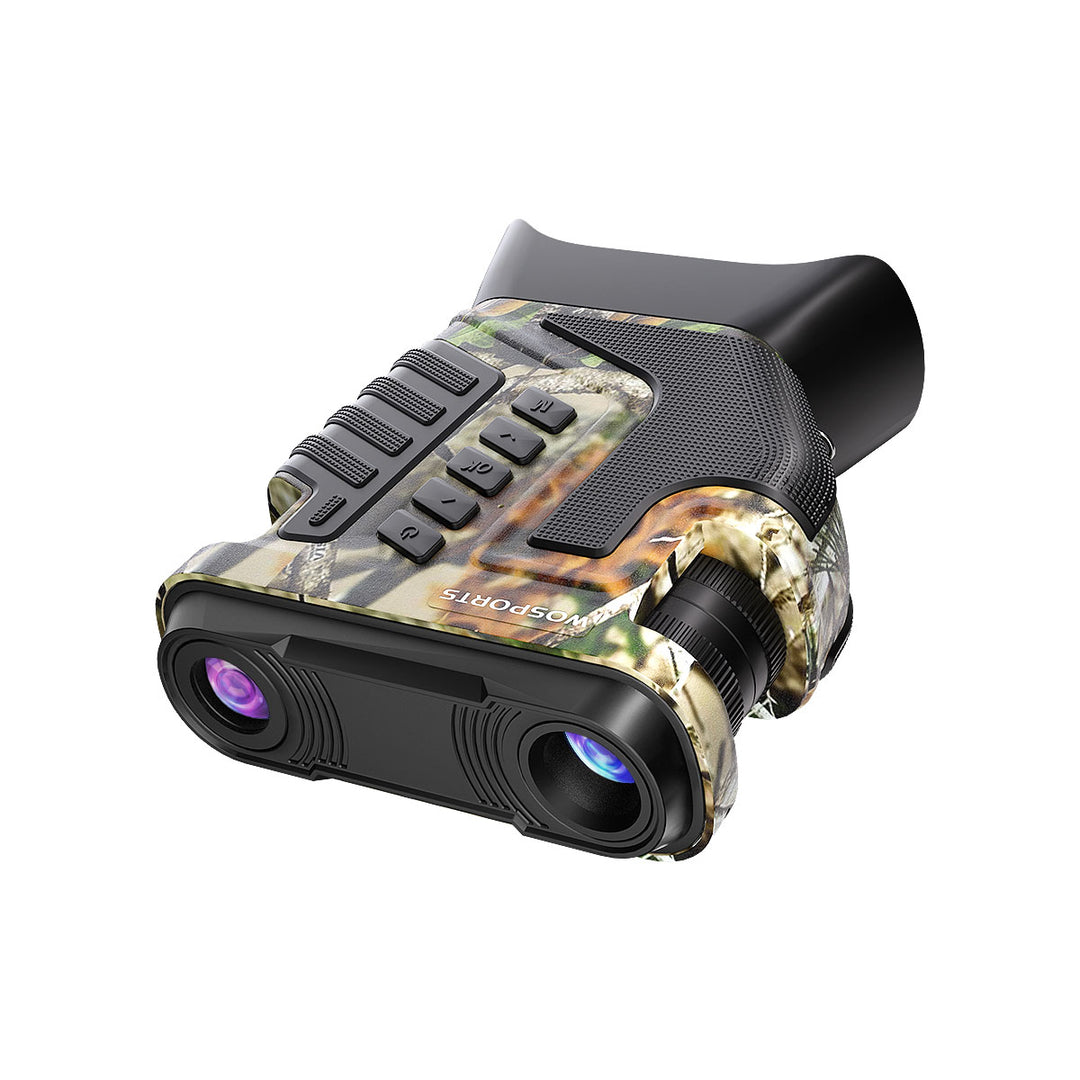
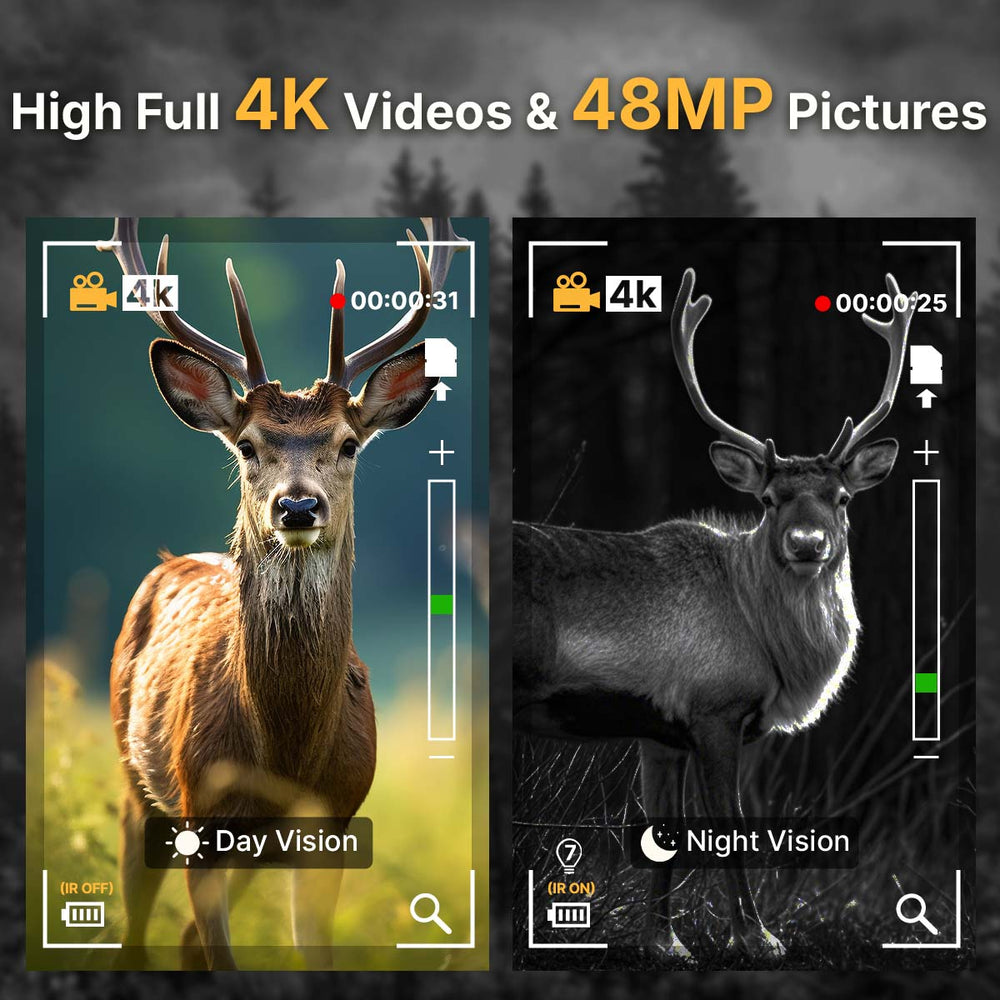
The WOSPORTS NV400 is designed around the needs of customers who want digital night vision capability with useful imaging and magnification functions. It combines 4K digital night vision, 36MP photos, and true 1–10X optical zoom.
For a retailer evaluating the NV400, battery performance should be considered together with these features. Higher imaging capability and continuous nighttime viewing can affect power requirements, so the most useful evaluation is not simply the battery specification but how the device performs during the intended customer workflow.
For wholesale sourcing, retailers can test the NV400 using a consistent procedure:
- Fully charge or install fresh batteries.
- Record the starting battery condition.
- Test daytime viewing.
- Test nighttime viewing with IR enabled.
- Test continuous video recording.
- Measure the actual operating period.
- Repeat the test under similar conditions.
- Record any changes in image or display performance before shutdown.
This gives a retailer a more useful real-world battery profile than relying entirely on a single specification.
What Is the Best Way to Test Battery Life Before a Wholesale Order?
A small sample test is one of the safest ways to validate battery performance before committing to larger inventory. The goal is not to reproduce a laboratory test but to create a consistent retail-oriented test.
Test 1: Normal Observation
Use the binoculars for ordinary viewing and record how long the device remains functional.
Test 2: Continuous Night Vision
Operate the device at night with infrared illumination enabled. This provides a more demanding scenario.
Test 3: Recording
Record video continuously or at regular intervals to determine how recording affects runtime.
Test 4: Temperature
If the retailer serves customers in cold-weather regions, conduct additional testing at a lower temperature where practical and safe.
Test 5: Recharge or Battery Replacement
Measure how convenient it is to restore the product to working condition.
The result should be recorded as a range, rather than assuming one test represents every customer.
What Does Battery Life Mean for Wholesale Inventory Planning?
Battery performance can influence which accessories and replacement products a retailer should stock alongside night vision binoculars.
For example, a retailer selling devices with replaceable batteries may consider stocking:
- Compatible replacement batteries
- Rechargeable battery options
- Battery chargers
- Carrying cases
- Memory cards
- Lens accessories
This creates an additional opportunity for small retailers: the binocular itself can become the anchor product for an outdoor electronics accessory category.
Battery-related accessories may also provide a lower-priced entry point for customers who are not ready to purchase a higher-value night vision device.
What Do Retailers Need to Know About Battery Storage?
Battery storage is important because wholesale inventory may remain in warehouses for weeks or months before being sold. Retailers should follow the battery manufacturer's storage recommendations rather than assuming that every battery type can be stored under the same conditions.
The University of Maryland's CALCE battery research archive demonstrates why temperature and state of charge are important variables in battery storage testing. Its research datasets include battery storage tests conducted at temperatures ranging from -40°C to 50°C and at different states of charge.
For wholesale buyers, this highlights an important inventory principle:
Battery management starts before the product reaches the customer.
Ask suppliers about recommended storage conditions, battery shelf life, and whether products should be periodically checked during long-term inventory storage.
What Should Small Retailers Ask Suppliers About Battery Life?
Before placing a wholesale order, retailers should ask direct questions that can be answered with measurable information.
Battery Questions
- What battery type does the product use?
- How many batteries are required?
- What is the rated battery capacity?
- What is the expected runtime?
- How long does it run with IR enabled?
- How does recording affect runtime?
- What temperature was used for the runtime test?
- Are batteries included?
- Are rechargeable batteries supported?
- How long does charging take?
- What replacement batteries are recommended?
Wholesale Questions
- What is the MOQ?
- Can I order a small test quantity first?
- What is the wholesale price at different quantities?
- Are batteries included in bulk shipments?
- How are batteries packaged for transportation?
- What is the lead time?
- What after-sales support is provided?
These questions allow a retailer to evaluate battery life, wholesale sourcing risk, and total product value at the same time.
What Battery-Life Mistakes Should Retailers Avoid?
The most common mistake is treating the manufacturer's maximum runtime as a universal customer experience. Battery life varies with operating conditions, so retailers should avoid presenting one number without context.
Other mistakes include:
- Comparing different battery types without considering capacity.
- Ignoring IR usage.
- Ignoring video recording.
- Testing only during daytime.
- Forgetting cold-weather customers.
- Comparing products using different test conditions.
- Failing to test a sample before bulk sourcing.
- Not checking battery replacement availability.
- Storing inventory under unsuitable conditions.
A more reliable sourcing process combines supplier specifications + sample testing + customer use cases.
FAQ: Battery Life and Wholesale Sourcing of Night Vision Binoculars
How many hours should night vision binoculars last?
There is no universal runtime requirement because battery life depends on the battery system, IR usage, recording, display settings, temperature, and other operating conditions. Retailers should compare products using the same test conditions.
Does using IR reduce battery life?
Continuous infrared illumination can increase power consumption, so retailers should request a separate runtime figure or conduct their own IR-on test when comparing night vision binoculars.
Does cold weather affect battery life?
Yes. Battery performance can decrease at low temperatures, and research from university laboratories has documented significant temperature-related effects on battery capacity and performance.
Should wholesale buyers test battery life before placing a large order?
Yes. A sample test can reveal differences between the supplier's stated specifications and the retailer's actual use case. Testing is particularly valuable for products intended for extended nighttime outdoor use.
Is battery capacity enough to compare two night vision binoculars?
No. Capacity is only one part of the comparison. Retailers should also consider power consumption, IR usage, recording, temperature, charging requirements, and the intended customer.
What battery information should appear on a retail product listing?
Retailers should provide the battery type, power requirements, charging information where applicable, and a realistic description of expected use. Avoid presenting laboratory-style maximum runtime as a guaranteed customer experience.
Final Takeaway: How Should Retailers Compare Battery Life?
When sourcing night vision binoculars for wholesale, retailers should compare battery life using a standardized, real-world approach rather than choosing the product with the biggest number on the specification sheet.
The most useful sourcing checklist is:
- Identify the battery type and capacity.
- Check normal operating runtime.
- Ask for IR-on runtime.
- Consider continuous recording.
- Evaluate cold-weather performance for outdoor markets.
- Check charging or battery replacement requirements.
- Review battery storage recommendations.
- Test a sample before placing a larger wholesale order.
- Compare runtime together with product features and retail price.
- Translate battery performance into a clear customer benefit.
For small B2B retailers, the best night vision binocular is not necessarily the one with the highest advertised battery capacity. It is the one that provides a predictable combination of runtime, nighttime performance, usability, and retail value.
When evaluating products such as the WOSPORTS NV400, retailers can use this framework to move beyond specification-sheet comparisons and make more informed wholesale sourcing decisions.
Sources
- Texas A&M University — Building batteries that don’t break in the cold: Texas A&M University – Battery Performance in Cold Conditions
- Penn State University — Interpreting Battery Parameters and Specification Sheets: Penn State – Battery Parameters and Specification Sheets
- University of California, Berkeley — Berkeley ingenuity keeps lithium-ion batteries at temps even Goldilocks would love: UC Berkeley Engineering – Lithium-Ion Battery Temperature Performance
- University of Maryland CALCE — Battery Data Archive: University of Maryland – CALCE Battery Data Archive
Search
Popular Posts
Recent Posts


Nov 28, 2024
Troubleshooting Common Trail Camera Issues
Jan 10, 2025
Why Does My Trail Camera Stop Working at Night?