Why Are Solar Trail Cameras Becoming Popular for Hunting Season Buyers?
Solar trail cameras are gaining attention among hunting-season buyers because they can reduce battery maintenance and support longer outdoor deployments. For retailers and small wholesale buyers, the appeal is especially practical: a solar trail camera can be positioned not only as hunting gear, but also as a solution for outdoor monitoring, wildlife observation, and property surveillance.
The trend is also supported by the size of the outdoor recreation market. The U.S. Fish & Wildlife Service's 2022 National Survey recorded 14.4 million U.S. hunters and 148.3 million wildlife watchers, with participants spending an estimated $394.8 billion on wildlife-related recreation overall.
Why Does Solar Power Matter During Hunting Season?
Solar power matters because hunters often want to leave cameras in the field for extended periods without repeatedly replacing batteries. This is particularly useful when cameras are installed in remote locations that are inconvenient to visit regularly.
Traditional battery-powered cameras can require periodic maintenance. A solar-assisted model can potentially reduce the frequency of those visits when the camera receives sufficient sunlight.
For retail buyers, the value proposition is easy to communicate:
- Less frequent battery replacement
- Longer potential deployment periods
- Reduced maintenance trips
- Better suited to remote monitoring
- Useful for extended wildlife observation
However, solar does not mean “maintenance-free.” Camera placement, weather, shade, battery capacity, and power consumption still affect real-world performance.
Are Solar Trail Cameras Good for Remote Hunting Locations?
Yes, solar trail cameras can be particularly useful in remote hunting areas where regular battery replacement is inconvenient. The further a camera is from a road, home, or frequently visited hunting area, the more valuable low-maintenance power becomes.
This creates a useful comparison for retailers:
| Camera Type | Main Advantage | Best Use |
|---|---|---|
| Battery-only | Simple and flexible | Shorter deployments |
| Solar-assisted | Reduced battery maintenance | Long-term outdoor monitoring |
| Solar + rechargeable battery | Better energy management | Remote hunting locations |
| Cellular + solar | Remote monitoring + power | Larger properties |
For wholesale buyers, the important point is that solar power solves a specific operational problem, rather than simply being another feature on the specification sheet.
What Do Hunters Actually Need From a Solar Trail Camera?
Hunters need more than solar charging; they need a camera that continues to deliver useful images while operating outdoors for long periods.
A strong hunting-oriented product should balance:
- Solar power
- Rechargeable battery capacity
- Trigger speed
- Detection range
- Image quality
- Night vision
- Weather resistance
- Storage
- Ease of setup
This is where product positioning becomes important. A retailer selling a solar trail camera should avoid focusing exclusively on “solar powered.” The stronger message is:
Solar-assisted power + reliable imaging + outdoor durability = lower-maintenance wildlife monitoring.
How Does the G600 PRO Fit the Solar Trail Camera Trend?
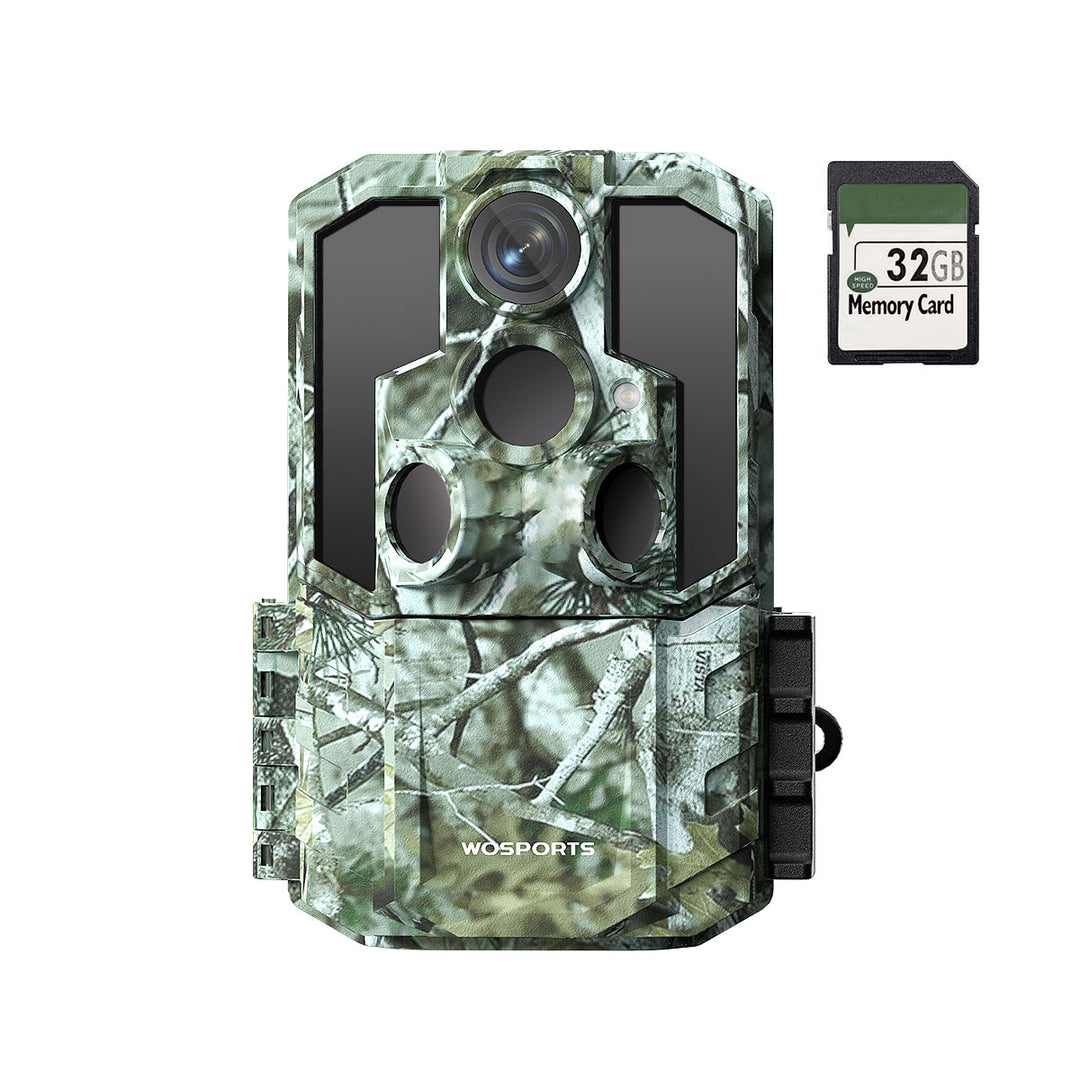
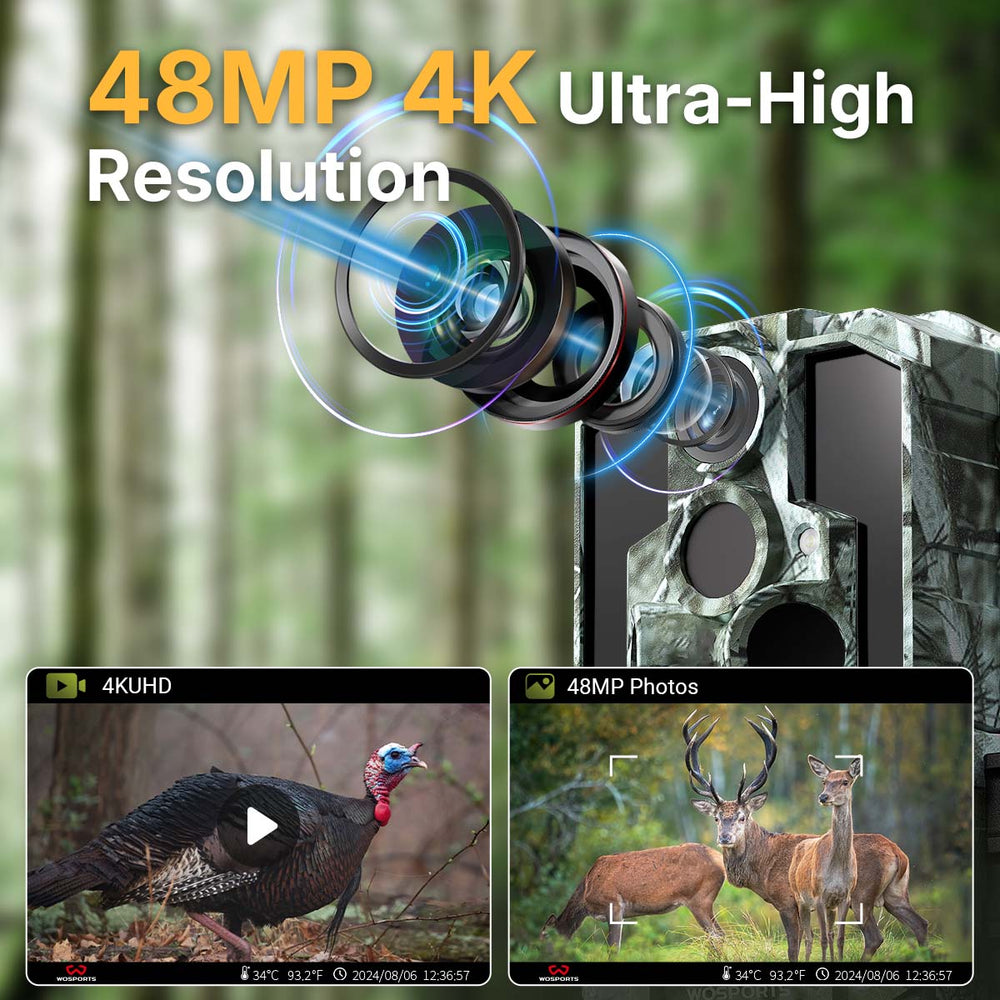
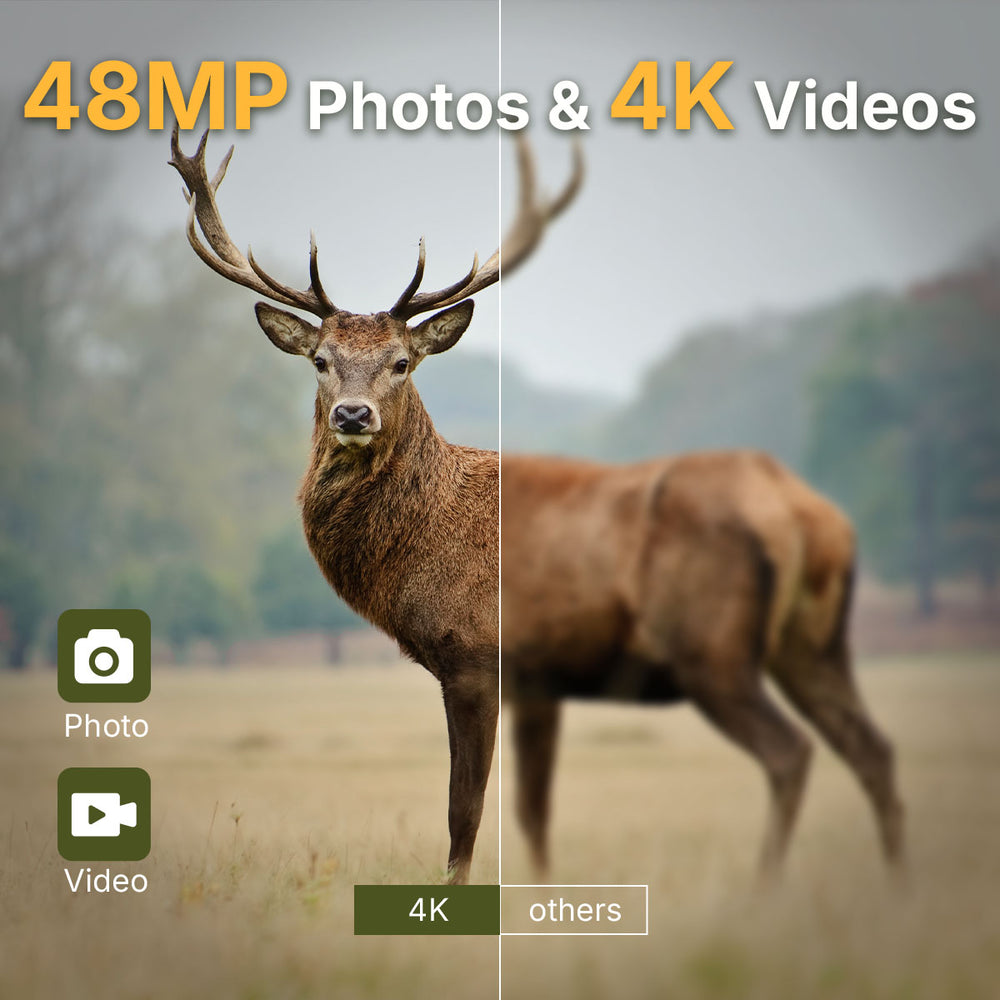
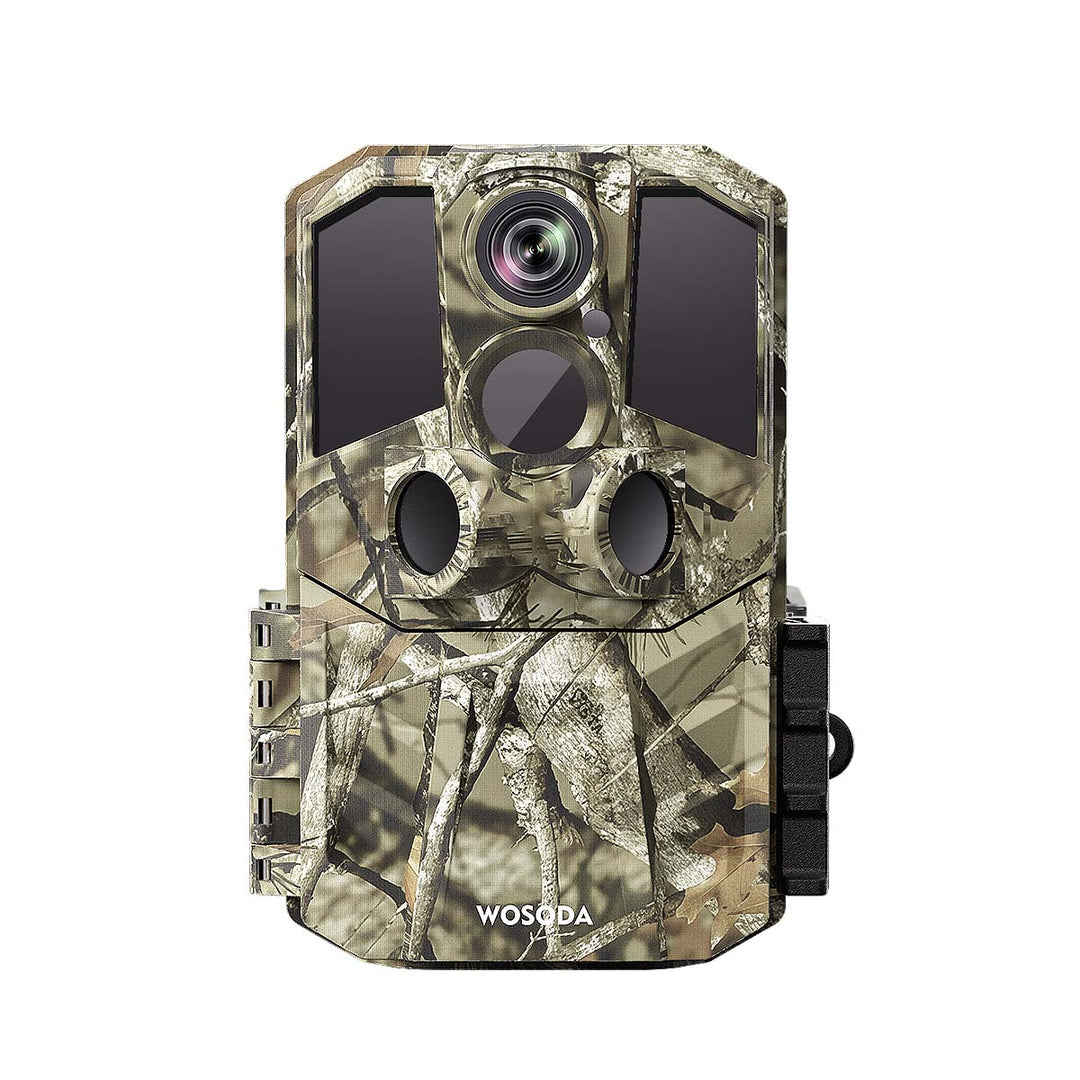
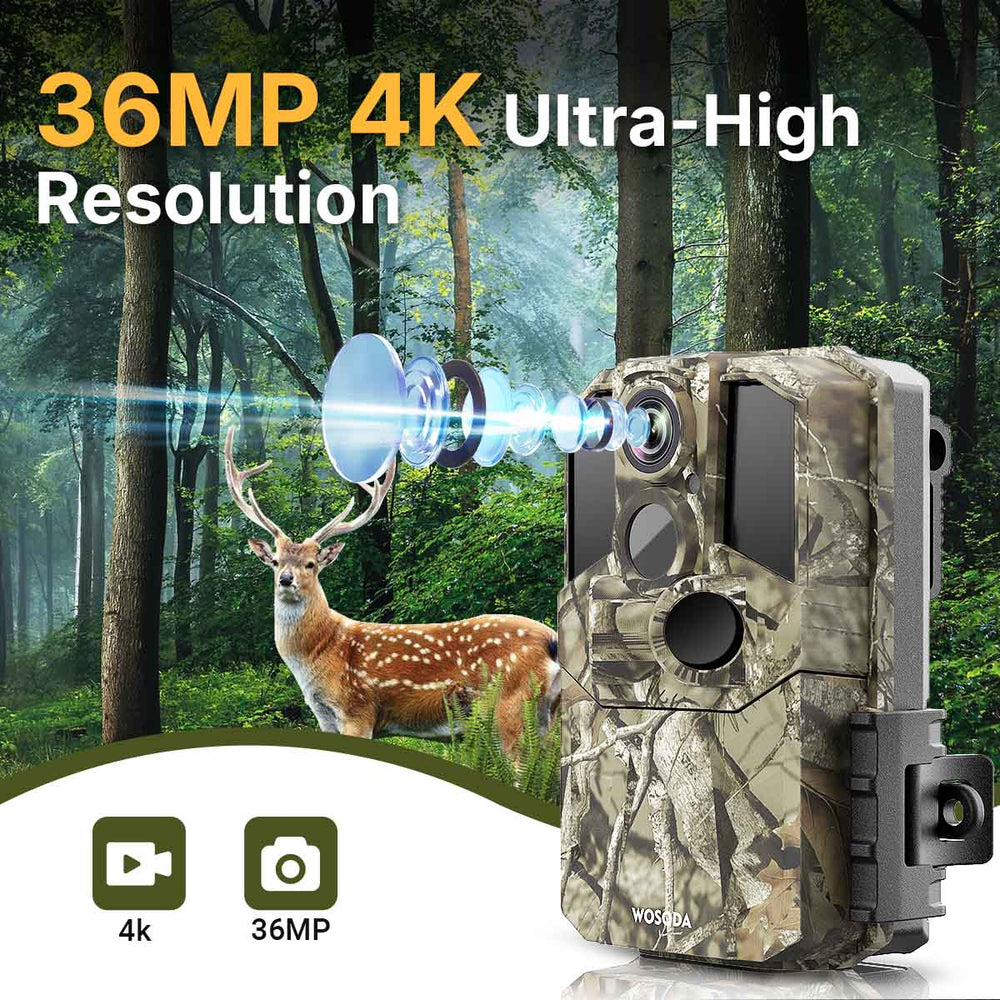
The WOSPORTS G600 PRO combines solar power with features designed for extended outdoor monitoring. According to WOSPORTS' current product specifications, the G600 PRO includes a solar-powered continuous-operation system, 7,800mAh rechargeable battery, 48MP photos, 2K video, 120° wide-angle coverage, and a 0.1-second trigger speed.
For hunting-season retailers, this combination creates several selling points:
| G600 PRO Feature | Retail Customer Benefit |
|---|---|
| Solar-powered operation | Less frequent battery maintenance |
| 7,800mAh rechargeable battery | Energy storage for outdoor use |
| 48MP images | Detailed wildlife photographs |
| 2K video | More visual information |
| 0.1s trigger speed | Fast motion capture |
| 120° wide-angle lens | Broader monitoring coverage |
| Wi-Fi up to 150 ft | Convenient local image transfer |
This makes the G600 PRO particularly relevant for retailers looking to offer a solar trail camera for hunting season without positioning it as a single-purpose hunting product.
Why Is Long-Term Monitoring Becoming More Important?
Long-term monitoring changes the economics of a trail camera because maintenance time becomes part of the total cost of ownership.
Consider two cameras installed in remote locations. If Camera A requires frequent battery changes while Camera B can receive supplemental solar charging, the second camera may reduce maintenance trips even if its initial wholesale price is higher.
This is an important consideration for B2B buyers:
Unit price ≠ total operating cost.
For retailers, that distinction can also become a selling point. Instead of competing solely on the lowest retail price, a solar model can be marketed around convenience and long-term usability.
What Does the Outdoor Market Tell Retailers?
The potential customer base extends well beyond traditional hunters. The latest U.S. Fish & Wildlife Service survey estimated 148.3 million wildlife watchers in 2022, compared with 14.4 million hunters.
That difference suggests an interesting retail opportunity: a solar trail camera can be marketed across multiple outdoor applications.
Potential customer segments
- Deer and big-game hunters
- Wildlife observers
- Nature photographers
- Farmers and landowners
- Rural property owners
- Outdoor enthusiasts
- Wildlife researchers and educators
The same product can therefore support multiple retail campaigns throughout the year.
Is Solar Power Suitable for Every Outdoor Location?
No. Solar trail cameras work best when the solar panel can receive sufficient sunlight. Dense forest canopy, prolonged shade, snow coverage, and poor panel positioning can reduce charging performance.
Retailers should therefore avoid promising unlimited operation.
A better customer education message is:
Solar-assisted cameras are most effective when installed where the panel receives adequate daylight and the internal battery is properly maintained.
This is also why a rechargeable battery is important. Solar power can supplement the stored energy rather than requiring the camera to depend entirely on direct sunlight at every moment.
What Should Wholesale Buyers Check Before Ordering?
Wholesale buyers should evaluate the entire power system rather than simply looking for the words “solar powered.”
Before placing an order, ask the supplier:
- What is the rechargeable battery capacity?
- Is solar charging integrated or external?
- Can the camera continue operating from stored battery power?
- What happens during periods of low sunlight?
- How does cold weather affect battery performance?
- Can the solar panel be positioned for better sunlight?
- What is the expected charging behavior during normal outdoor use?
- Is replacement support available?
These questions can help reduce wholesale sourcing risk and prevent retailers from stocking products whose solar claims do not match their customers' actual environments.
Why Is Solar Especially Relevant Before Hunting Season?
The weeks before hunting season are an important retail preparation window because hunters may want to install cameras before entering the field.
Pre-season monitoring allows users to:
- Identify animal movement patterns
- Check frequently used trails
- Monitor feeding areas
- Evaluate potential hunting locations
- Confirm camera positioning
- Leave equipment operating before hunting activity begins
For retailers, this creates an opportunity to market solar trail cameras as pre-season preparation equipment, rather than waiting until hunting season is already underway.
What Should Retailers Stock for Hunting Season?
A balanced inventory should include products for different price points and use cases rather than relying on one camera category.
A simple assortment could look like:
| Product Position | Target Customer | Key Selling Point |
|---|---|---|
| Entry-level trail camera | Casual users | Affordable monitoring |
| High-performance trail camera | Active hunters | Image + speed |
| Solar trail camera | Remote users | Reduced maintenance |
| Solar + Wi-Fi model | Convenience-focused users | Easier image transfer |
| Cellular trail camera | Large-property users | Remote monitoring |
The G600 PRO can fit naturally into the solar + Wi-Fi segment, giving retailers an option for customers who value reduced maintenance and convenient local image transfer.
FAQ: Solar Trail Cameras for Hunting Season
Are solar trail cameras worth it for hunting?
They can be, particularly for hunters who leave cameras outdoors for extended periods or install them in locations that are difficult to access regularly.
Do solar trail cameras work in forests?
They can, but heavy shade can reduce solar charging efficiency. Placement and available daylight are important considerations.
Do solar trail cameras still need batteries?
Most solar-assisted systems use a rechargeable battery to store energy. Solar charging supplements the stored power rather than eliminating the need for energy storage.
Is the G600 PRO suitable for long-term outdoor monitoring?
The G600 PRO is designed around solar-powered continuous operation and includes a 7,800mAh rechargeable battery, along with 48MP images, 2K video, 120° coverage, and a 0.1-second trigger speed.
Why should retailers consider solar trail cameras before hunting season?
Solar models provide a clear seasonal selling proposition: install earlier, monitor longer, and reduce battery-maintenance requirements. They can also be marketed to wildlife observers and property owners beyond the hunting season.
Final Takeaway
Solar trail cameras are becoming more attractive to hunting-season buyers because they address a practical problem: maintaining cameras in the field for longer periods.
For B2B retailers, the opportunity is broader than simply selling a “solar camera.” The strongest product positioning combines:
- Solar power for reduced maintenance
- Strong image quality for wildlife identification
- Fast trigger speed for moving animals
- Wide coverage for larger monitoring areas
- Rechargeable battery capacity for energy storage
- Convenient connectivity for easier operation
With millions of Americans participating in hunting and wildlife watching, the market extends well beyond a single hunting-season use case.
For retailers preparing their 2026 hunting-season inventory, a product such as the WOSPORTS G600 PRO gives them a way to enter the growing solar trail camera category while also serving customers looking for long-term outdoor monitoring and wildlife observation.
Search
Popular Posts
Recent Posts


Nov 28, 2024
Troubleshooting Common Trail Camera Issues
Jan 10, 2025
Why Does My Trail Camera Stop Working at Night?