Which Trail Camera Features Matter Most to Farmers and Landowners?
For farmers and landowners, a trail camera is more than a wildlife photography tool. It can help monitor animal activity, check remote areas, observe livestock surroundings, and understand what happens on a property when no one is nearby. The most useful trail cameras for farms are not necessarily the ones with the longest feature list. They are the ones that deliver reliable detection, clear day and night images, weather resistance, and manageable maintenance.
For small retailers and wholesale buyers, understanding these practical needs makes it easier to recommend the right outdoor cameras to customers. This guide explains the features that matter most, how to compare them, and what to consider when building a product selection for farm and property monitoring.
1. What Do Farmers and Landowners Use Trail Cameras For?
Farmers and landowners use trail cameras to observe activity in areas that are difficult to check regularly. Common applications include wildlife monitoring, livestock-area observation, crop protection, and checking remote property boundaries.
A single property may have several monitoring needs:
-
Wildlife activity: Identify deer, coyotes, raccoons, and other animals near fields, woods, or water sources.
-
Crop and garden protection: Find out which animals are visiting crops or damaging plants.
-
Livestock surroundings: Observe animal activity around pastures, feeding areas, and water points.
-
Remote property checks: Record movement near gates, access roads, storage areas, and outbuildings.
-
Land management: Understand wildlife patterns before making decisions about habitat or land use.
Trail cameras are especially useful when a location is far from the farmhouse or requires frequent visits to inspect. They provide a visual record without requiring someone to remain on-site.
However, a standard trail camera should not be presented as a complete security system. It records motion-triggered images or video but may not provide live monitoring, instant alerts, or continuous surveillance.
2. Which Image Quality Features Matter Most?
Image quality matters because farmers need to recognize what appeared in front of the camera, not simply confirm that something moved. A useful camera should capture enough detail to help distinguish animals, observe their behavior, and review activity in different lighting conditions.
Three specifications deserve particular attention:
| Feature | Why It Matters on a Farm or Property |
|---|---|
| Photo resolution | Helps capture details such as animal appearance and movement |
| Video resolution | Provides context about how an animal or person moved through the area |
| Night vision | Makes it possible to record activity after dark |
Photo Resolution: Look Beyond the Megapixel Number
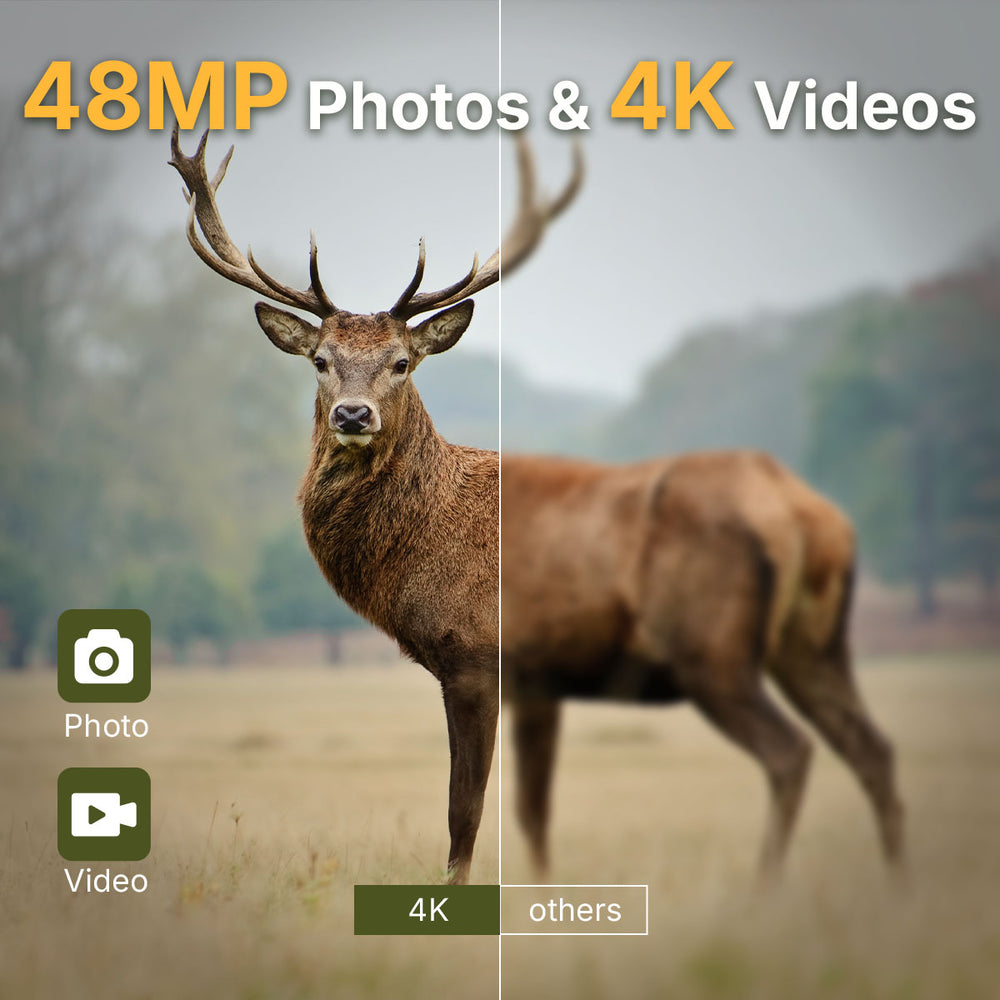
A higher advertised megapixel count can be attractive, but it should not be the only purchasing criterion. Retailers should encourage buyers to check actual sample images, especially images taken at night and at different distances.
The University of California Agriculture and Natural Resources program highlights an important point in its guidance for forest landowners: advertised megapixel figures can be misleading when image resolution is increased through interpolation. Reviewing real sample images is a more useful way to evaluate image quality.
Source: University of California Agriculture and Natural Resources, Wildlife Camera Use for Forest Landowners
https://ucanr.edu/site/forestry-research-and-outreach/document/fsenews0426
Video Helps Explain What Happened
Photos capture individual moments, while video can show the movement leading up to and following a detection. This can be useful when a landowner wants to understand whether an animal was passing through, feeding, or lingering in an area.
For retailers, offering a camera with both high-resolution photos and video gives customers more flexibility across wildlife observation and general property monitoring.
3. Why Are Trigger Speed and Detection Range Important?
Trigger speed and detection range affect whether a trail camera captures useful footage when an animal or person enters its detection area. For properties with active wildlife or moving livestock, these features can matter more than extra digital functions.
Trigger Speed: Capture Movement Before It Leaves
Trigger speed refers to how quickly a camera takes a picture after detecting movement. A slow trigger may result in empty frames or images captured after an animal has already passed.
Oregon State University Extension recommends looking for trigger speeds below half a second for many wildlife-monitoring situations. A faster trigger can be particularly useful along trails and paths where animals move through the frame quickly.
Source: Oregon State University Extension Service, Wildlife Cameras: A Snapshot of What You Need to Know
https://extension.oregonstate.edu/forests/health-managment/wildlife-cameras-snapshot-what-you-need-know
Detection Range and Field of View Work Together
Detection range describes how far away the motion sensor can detect movement under specified conditions. Field of view describes how much of the surrounding area the camera can capture.
These specifications should be evaluated together:
-
A wide field of view can cover more of a trail, entrance, or open area.
-
A suitable detection range helps capture movement before the subject leaves the frame.
-
Camera placement and angle determine how effectively the specifications work in the real environment.
A camera with a wide viewing angle is not automatically the best choice for every location. A narrow path may need a more focused setup, while an open field entrance may benefit from broader coverage.
4. What Makes a Trail Camera Suitable for Long-Term Outdoor Use?
Weather resistance, dependable power, and practical maintenance are essential for trail cameras installed outdoors for extended periods. Farmers and landowners may not be able to visit every camera frequently, so equipment should be able to handle changing outdoor conditions.
Weather Resistance
Rain, dust, humidity, and temperature changes can affect outdoor equipment. Look for a clearly stated weather-resistance rating, such as IP66, and check whether the camera is designed for outdoor installation.
Weather resistance does not mean a camera is indestructible. Proper installation, secure mounting, and routine inspection still matter.
Battery Life and Power Options
Battery requirements influence maintenance frequency and operating costs. Before buying, check:
-
Battery type and quantity
-
Whether the camera supports external power
-
Whether solar accessories are available
-
How frequently the camera needs to be checked under the intended settings
For small farms and rural properties, a straightforward battery-powered camera may be a practical starting point. Larger properties with many cameras may benefit from comparing battery costs and maintenance schedules before choosing a model.
Storage and Maintenance
Storage options affect how customers retrieve and organize their footage. Traditional non-cellular trail cameras usually save images and videos to a memory card. Users need to visit the camera to retrieve the files.
This approach can work well for landowners who prefer local storage and do not need remote access. It also means retailers should explain the need for compatible memory cards and periodic manual checks.
5. Do Farmers Need Cellular or Wi-Fi Trail Cameras?
Not every farm needs a connected camera. The right choice depends on how far away the monitoring location is, how often the owner can visit it, and whether remote access is important.
| Camera Type | Main Advantage | Best-Suited Use |
|---|---|---|
| Standard non-cellular | Local storage and straightforward operation | Wildlife observation and routine property checks |
| Wi-Fi-enabled | Convenient file access within supported wireless range | Locations where the user can connect to the camera locally |
| Cellular | Can send images or alerts remotely through a cellular network | Remote areas where frequent physical visits are inconvenient |
Connectivity adds convenience, but it may also introduce recurring data costs, network coverage requirements, and additional setup steps.
For example, a landowner who checks a wooded property every weekend may not need cellular transmission. Someone managing several distant properties may place greater value on remote access.
Retailer insight: A useful product range should not consist entirely of connected cameras. Offering both standard and connected models allows customers to choose based on their actual monitoring habits and budget.
6. Which Trail Camera Features Are Most Useful for Different Farm Applications?
The best trail camera features depend on the location being monitored. Retailers can simplify product selection by matching common farm applications with the specifications that matter most.
| Application | Priority Features | Practical Consideration |
|---|---|---|
| Wildlife trails | Fast trigger speed, night vision, clear images | Position the camera to capture animals moving across the frame |
| Crop fields | Suitable detection range, wide viewing angle | Avoid excessive movement from nearby vegetation |
| Farm entrances | Reliable motion detection, weather resistance | A trail camera records activity but is not a full-time security system |
| Livestock areas | Clear photos and video, durable housing | Install where the camera can observe activity without interfering with animals |
| Remote woodland | Battery efficiency, local or cellular storage | Choose connectivity based on how often the owner can visit |
A practical recommendation should start with the customer's monitoring location and purpose, rather than the camera's most impressive specification.
For example, a customer monitoring a deer trail may prioritize trigger speed and night vision. A customer checking a farm entrance may care more about weather resistance, image clarity, and a suitable field of view.
7. How Does the WOSPORTS G600 Fit Farm and Property Monitoring?
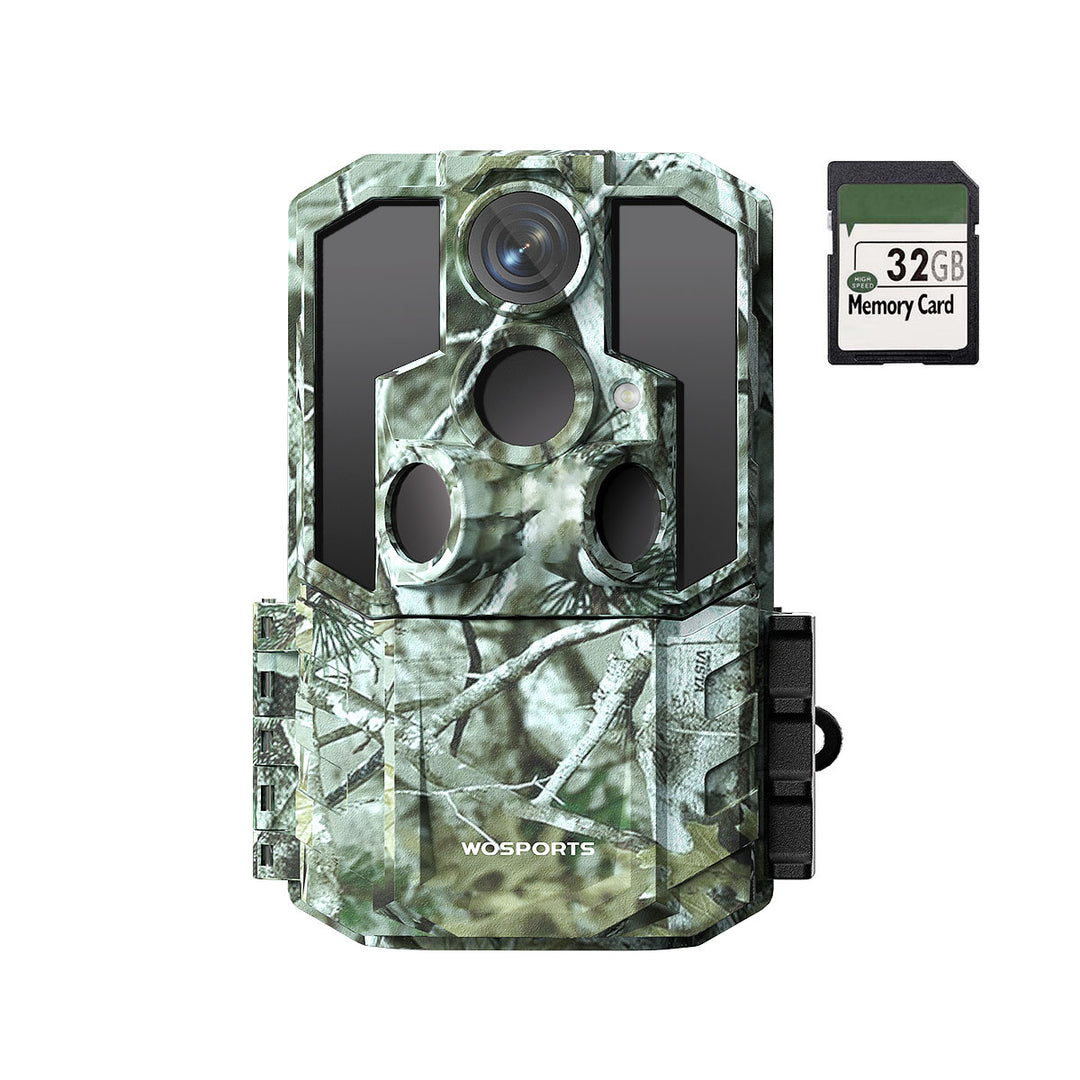
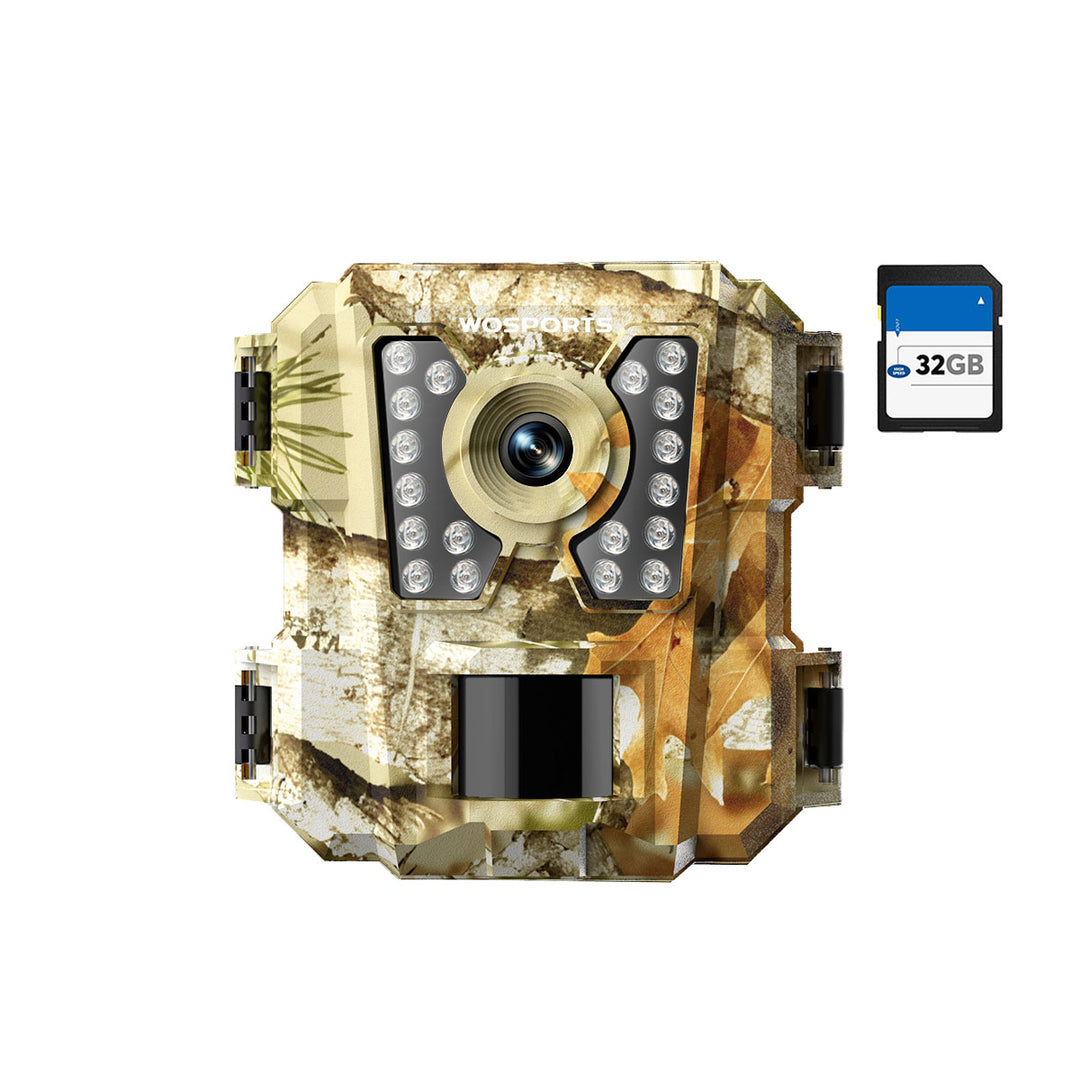
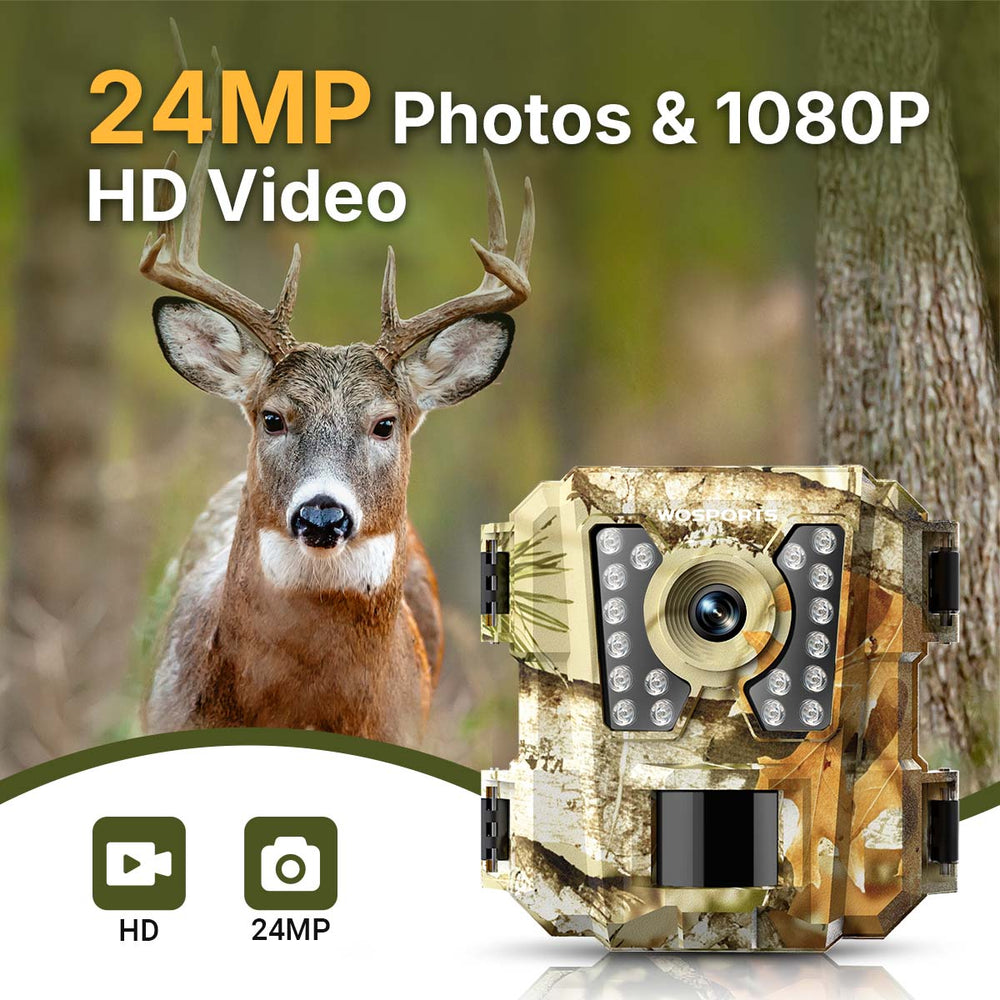
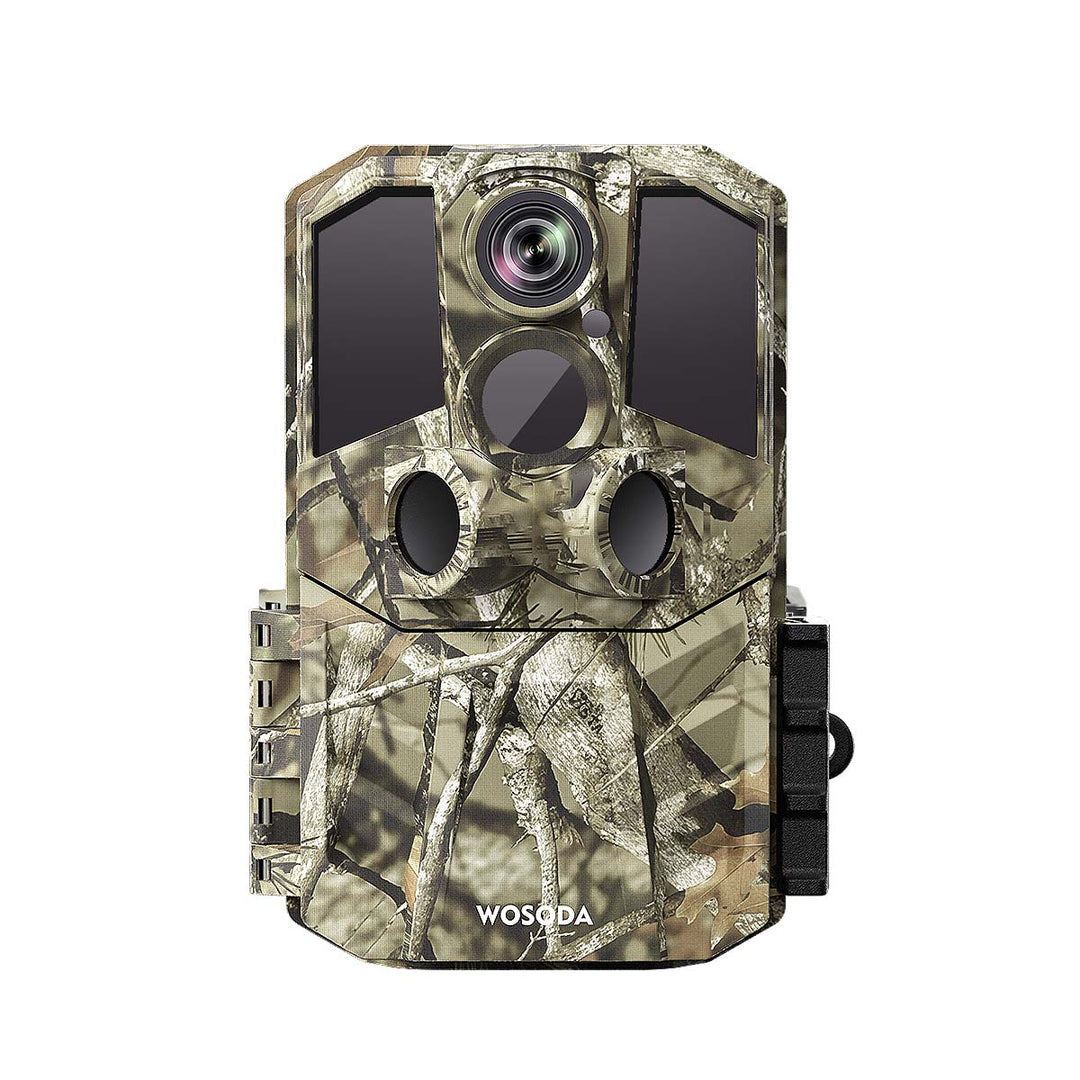
The WOSPORTS G600 is a traditional non-cellular trail camera designed for users who want motion-triggered photo and video recording with local storage. Its combination of image quality, detection performance, and weather resistance makes it a practical option for wildlife observation and routine outdoor property monitoring.
Key specifications include:
| G600 Feature | Specification | Practical Benefit |
|---|---|---|
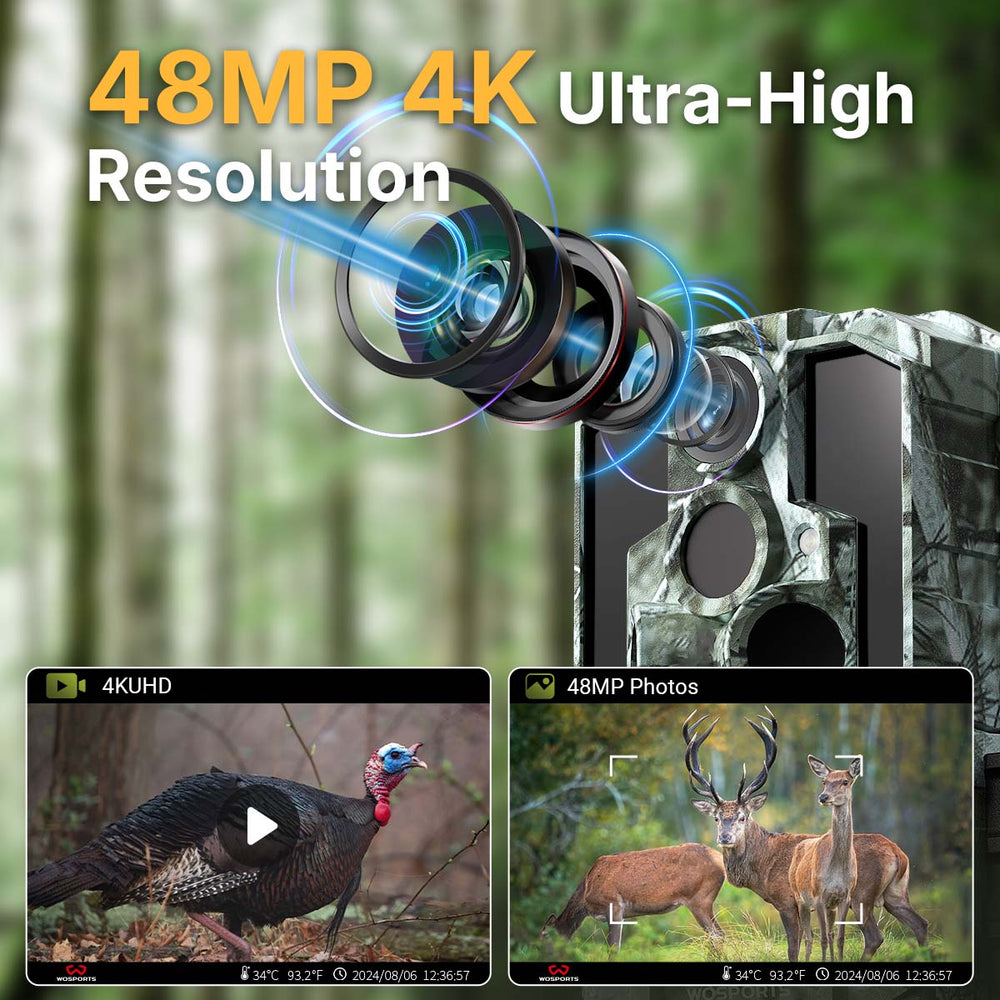
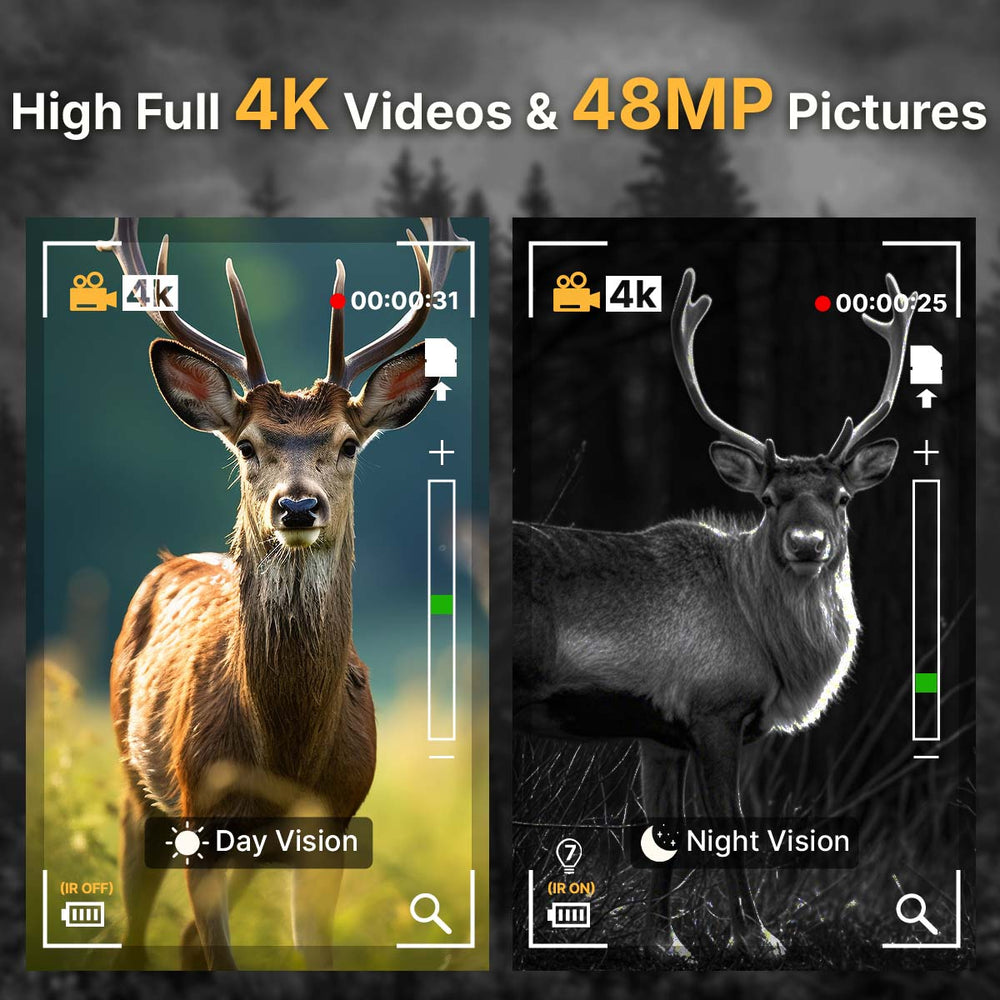
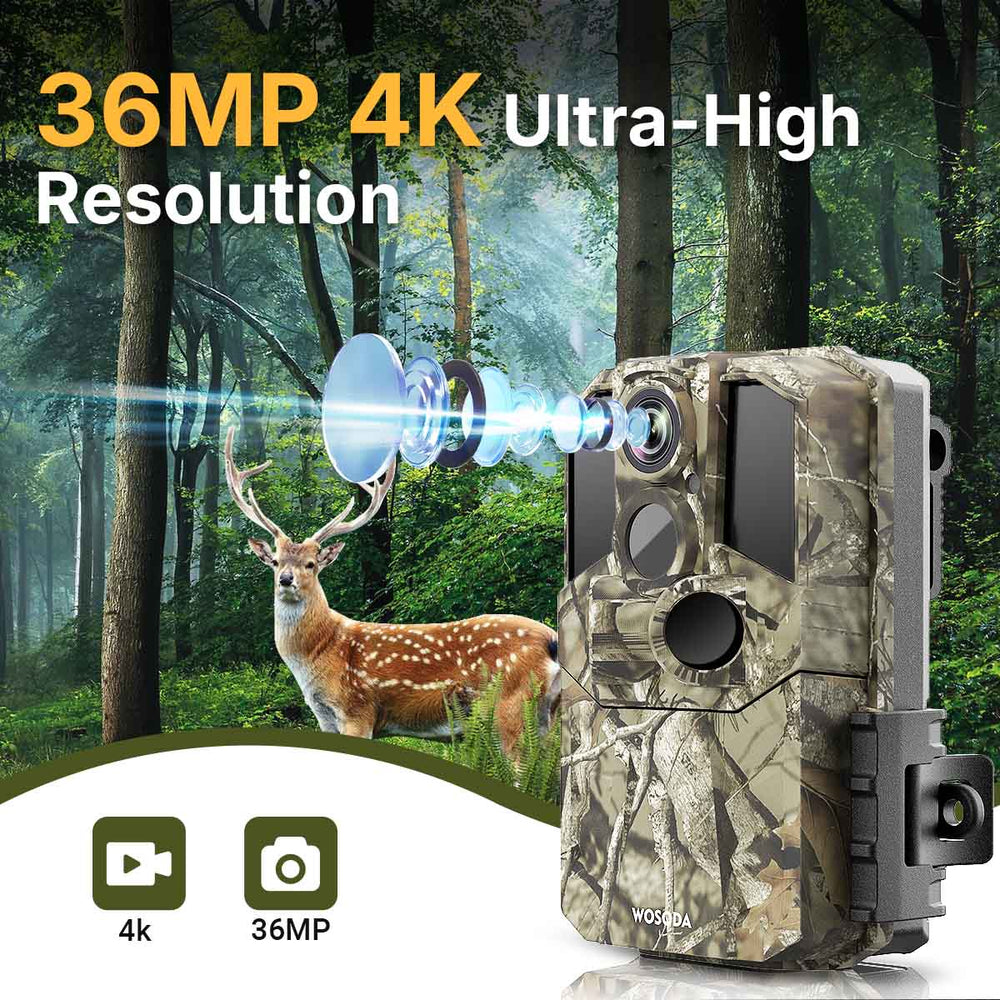
| Photo resolution | Up to 48MP | Captures detailed still images |
| Video resolution | 4K | Records movement and activity |
| Trigger speed | Approximately 0.2 seconds | Helps capture fast-moving subjects |
| Lens angle | 120° | Covers a broad viewing area |
| PIR detection distance | Up to 70 ft | Detects movement within the specified range |
| Display | 2-inch TFT LCD | Allows users to review footage on the device |
| Weather resistance | IP66 | Designed for outdoor conditions |
| Power | 8 AA batteries | Uses a familiar, replaceable battery format |
| Storage | Local SD card storage | Does not require a cellular data plan |
The G600 does not use Wi-Fi, Bluetooth, or cellular transmission. Users retrieve footage from the memory card or review it on the camera's built-in screen.
This makes it suitable for customers who prefer a straightforward camera without recurring connectivity costs. It can be used near wildlife trails, field edges, farm entrances, and other outdoor locations where periodic on-site checks are practical.
Product information: WOSPORTS G600 Trail Camera
https://wosports.com/products/g600-trail-camera
A Customer Example: Monitoring Deer Across Private Land
A WOSPORTS-published customer testimonial from David M. in Michigan describes purchasing 20 G600 cameras to monitor deer movement across his land. He reported that the cameras had been running for months without issues and considered them good value.
This example illustrates a practical use case for multi-camera monitoring: instead of relying on one camera to cover an entire property, a landowner can place several cameras at different locations to observe wildlife activity across the land.
This is an individual customer account published by WOSPORTS, not an independent product test or a guarantee of identical results. Actual performance depends on installation, settings, weather, and usage conditions.
8. What Should Small Retailers Consider When Stocking Trail Cameras for Farms?
Small retailers should prioritize products that solve common customer problems and are easy to explain. A focused selection of entry-level and more advanced outdoor cameras is often easier to manage than stocking many models with overlapping features.
Consider these points when evaluating wholesale products:
-
Clear product positioning: Explain whether a camera is designed for local recording, remote access, or more specialized monitoring.
-
Practical specifications: Compare trigger speed, detection range, image quality, weather resistance, and power requirements.
-
Easy setup: Customers should understand how to install the camera, insert a memory card, and retrieve footage.
-
Maintenance expectations: Explain battery replacement, storage capacity, and how often users should check their equipment.
-
Reliable product information: Make sure specifications, accessories, and product images are consistent across listings and packaging.
Why the Outdoor Monitoring Market Offers More Than Hunting Applications
Trail cameras are often associated with hunting, but their potential customer base is broader. Farmers, rural homeowners, woodland owners, wildlife enthusiasts, and land managers may all have reasons to monitor outdoor activity.
The U.S. Fish and Wildlife Service's 2022 National Survey provides useful context:
| Wildlife-Watching Indicator | 2022 U.S. Estimate |
|---|---|
| Wildlife-watching participants aged 16 and older | Approximately 148.3 million |
| Total wildlife-watching expenditures | Approximately $250.2 billion |
| Spending on wildlife-watching equipment | Approximately $24.6 billion |
Source: U.S. Fish and Wildlife Service, 2022 National Survey of Fishing, Hunting, and Wildlife-Associated Recreation
https://www.fws.gov/sites/default/files/documents/Final_2022-National-Survey_101223-accessible-single-page.pdf
These figures cover the wider wildlife-watching market, not trail cameras alone. However, they show that wildlife observation is a substantial outdoor activity with demand for related equipment. For small retailers, this supports positioning trail cameras for both hunting-related customers and broader outdoor monitoring needs.
9. Frequently Asked Questions
What is the most important feature in a trail camera for farms?
There is no single feature that matters most in every situation. For general farm monitoring, prioritize reliable motion detection, suitable trigger speed, clear day and night images, weather resistance, and manageable power requirements.
Are non-cellular trail cameras suitable for property monitoring?
Yes. Non-cellular trail cameras can be useful for recording activity around fields, trails, gates, and other outdoor areas when users can retrieve footage manually. They are less suitable when immediate remote alerts or live access are essential.
Is a 0.2-second trigger speed good for wildlife monitoring?
A trigger speed of approximately 0.2 seconds is a useful specification for capturing fast-moving animals. However, camera placement, detection settings, and recovery speed also influence the results.
How many trail cameras does a farm need?
The number depends on property size, terrain, and monitoring goals. A small property may need only one or two cameras at key locations, while larger farms may require several cameras to cover separate trails, entrances, fields, and water sources. Start with high-priority locations and expand based on what the footage reveals.
Can trail cameras replace farm security cameras?
No. Standard trail cameras are designed primarily for motion-triggered recording. They may help document activity in remote outdoor areas, but they do not replace a dedicated security system with continuous monitoring, remote alerts, or live video.
Final Takeaway: Choose Trail Cameras Around Real Farm Needs
The most valuable trail camera for a farmer or landowner is one that fits the property, captures useful footage, withstands outdoor conditions, and is practical to maintain. Image quality, trigger speed, detection range, night vision, weather resistance, battery requirements, and storage options should all be considered together.
For small wholesalers and retailers, the opportunity is to offer products with clear use cases rather than simply competing on the number of advertised features. A straightforward model such as the WOSPORTS G600 can serve customers who want dependable local recording for wildlife observation and routine outdoor property monitoring, while connected models can meet the needs of customers who require remote access.
Search
Popular Posts
Recent Posts


Nov 28, 2024
Troubleshooting Common Trail Camera Issues
Jan 10, 2025
Why Does My Trail Camera Stop Working at Night?